


What if the secret to a professional finish isn't just in the pen itself, but in how you treat the surface beneath it? Many Australian artists find that using posca on canvas can feel like a bit of a battle. You've likely felt the frustration of watching your vibrant ink soak into the fibres or seeing your favourite fine-tip nib start to pill on a rough, unprimed texture. It's a common hurdle that can make even the most ambitious creative project feel like a struggle, often resulting in streaky coverage or bleeding lines.
We understand that you want your artwork to look as bold on the canvas as it does in your imagination. This guide is designed to give you the confidence to achieve professional, vibrant results every time you pick up a marker. We'll show you how to turn a standard canvas into the perfect foundation for acrylic paint markers, ensuring your colours stay solid and your lines remain sharp without damaging your tools.
We will explore the complete process from start to finish to help you master this versatile medium. You'll learn about the importance of gesso priming to prevent ink absorption, how to choose the right tip sizes for your specific design, and the best methods for sealing your work with a water based spray varnish to protect it for years to come.
Key Takeaways
- Learn why priming your surface with extra gesso is the best way to prevent ink from soaking into the fibres and looking dull.
- Discover how to master posca on canvas by combining the precision of a marker with the rich, opaque finish of acrylic paint.
- Choose the right tip for your canvas texture, using sturdier nibs like the PC-5M or PC-7M to avoid damaging fine tips on rough weaves.
- Practise professional layering and blending techniques to achieve smooth, solid coverage and vibrant colour transitions.
- Protect your finished work from dust and fading by selecting a compatible water-based spray varnish for a professional finish.
Why Use POSCA on Canvas? The Benefits for Modern Artists
Choosing to use posca on canvas opens up a world of creative possibilities that traditional brushes often can't match. These markers aren't just standard felt-tips; they contain high-quality, water-based pigment ink that behaves remarkably like acrylic paint. This allows you to achieve the same vibrant, opaque finish you'd expect from a tube of paint, but with the ergonomic comfort and control of a pen. For many Australian artists, this precision is the primary draw. You can execute sharp lines, intricate patterns, and consistent lettering without the worry of a brush straying or a bristle losing its shape mid-stroke.
To better understand how these markers perform in a real-world setting, watch this helpful video of a landscape being created entirely with paint pens:
The portability of these tools is another massive advantage for the busy creative. Whether you're sketching at a local park or working in a compact apartment studio, you don't need to worry about water jars, messy palettes, or cleaning brushes. It's a self-contained system that makes it easy to start and stop your creative sessions whenever inspiration strikes. Plus, because canvas is a porous surface, the ink becomes permanent once it's fully dry. This provides a durable foundation for your artwork that won't smudge or budge easily once the pigment has bonded with the fibres.
POSCA vs. Traditional Acrylic Paints
Traditional painting can be a slow process, but individual POSCA pens offer a much faster workflow. The ink dries within minutes, allowing you to layer colours quickly without waiting hours for the surface to set. The unique valve-action system inside each marker ensures a steady flow of paint, while the internal ball keeps the pigment mixed and ready for use. This high opacity means you can easily correct mistakes or add light highlights over dark backgrounds, which is often difficult with standard student-grade paints.
Suitable Canvas Types for Paint Markers
While you can use these markers on almost any canvas, the texture of the surface will change your experience. Stretched canvases provide a classic look, but the "bounce" of the fabric can sometimes make fine detail work tricky. Canvas boards or pads offer a firmer backing that many find easier for controlled drawing. Most canvas art supplies in Australia come pre-primed with gesso. However, the weave of the fabric matters; a fine-weave cotton or linen will allow the marker to glide smoothly, whereas a coarse, heavy grain might cause your marker nibs to wear down faster or produce jittery lines.
Preparing Your Canvas for Seamless Marker Application
Success with posca on canvas starts long before you depress the nib to prime the paint. While most store-bought canvases come with a label claiming they are "triple primed," they are often still quite "thirsty." This means the fabric fibres act like a sponge, pulling the water-based pigment deep into the weave. The result is a finish where your vibrant colours look faded, and your markers run out of ink much faster than they should. Proper preparation ensures the paint sits on top of the surface, maintaining the high opacity and brilliance that POSCA markers are known for.
The Role of Acrylic Gesso
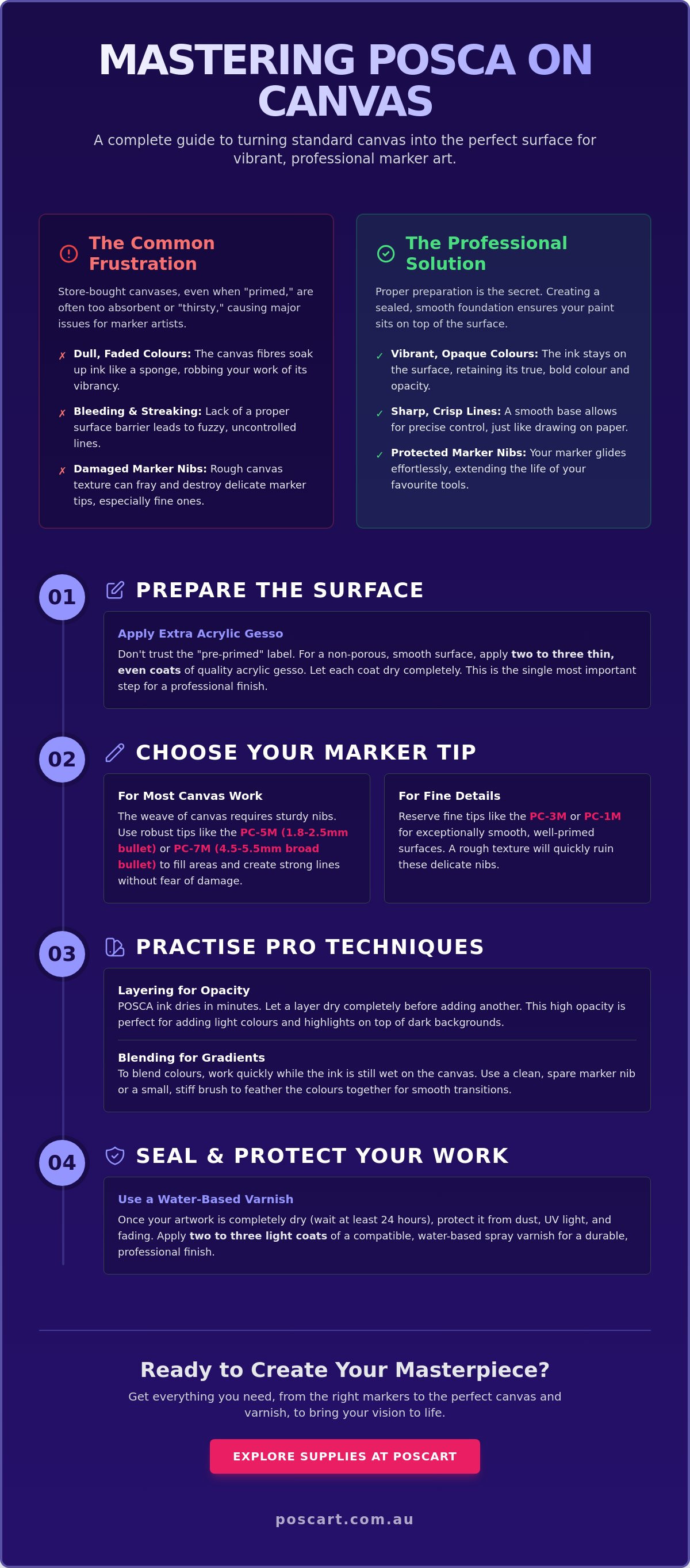
Gesso is essentially the gatekeeper of your artwork. It provides a non-porous barrier that keeps the pigment on the surface where it belongs. Instead of applying one heavy, gloopy layer, aim for two or three thin coats. This method ensures a more even finish and prevents the marker nib from catching on clumps of dried primer. A smoother foundation also stops the pen from "spraying" or splattering when the nib hits a rough patch of fabric. If you're working on a large-scale piece, you might find specialised coverage sets helpful once your surface is ready.
Sanding for a Professional Surface
To achieve that sought-after "glide," you'll need to reduce the "tooth" or roughness of the canvas. Use a fine-grit sandpaper, usually 200-grit or higher, to lightly buff the surface between each coat of gesso. This extra step is a lifesaver for your replacement nibs, as a smooth surface won't shred the felt tips like raw fabric will. You can feel the difference immediately; the marker should move across the canvas without any resistance. For more detail on how different bases react to paint, check out our guide on What Surfaces Do POSCA Pens Work On?.
Understanding the structural needs of your canvas is vital for long-term preservation. Professionals at the Smithsonian discuss these complexities in their resource on Caring for Acrylic Paintings, highlighting how the bond between the medium and the support affects the lifespan of the piece. By sealing the canvas pores with gesso, you're creating a stable environment for the acrylic markers to adhere to.
Following this preparation routine will save you time and money on supplies in the long run. If you're unsure which primer or canvas art supplies are best for your specific project, feel free to reach out to our creative support team for personalised advice. Once your surface is as smooth as paper, you'll be ready to choose the right tools for the job.
- Step 1: Wipe down your canvas with a dry cloth to remove dust.
- Step 2: Apply a thin, even coat of acrylic gesso using a wide brush.
- Step 3: Allow it to dry completely, then sand lightly with 200+ grit sandpaper.
- Step 4: Repeat the process until the canvas weave is barely visible.
Choosing the Right POSCA Tip for Canvas Textures
The texture of your surface dictates which marker will perform best. When working with posca on canvas, the weave of the fabric acts like a microscopic mountain range that your marker nib must navigate. Coarse, heavy-duty canvases with a prominent grain require sturdier, more resilient nibs. Using a delicate marker on a rough surface is a quick way to ruin a good tool. For these textured backgrounds, the PC-5M medium bullet tip or the PC-7M broad bullet tip are your most reliable options. Their felt nibs are dense enough to withstand the friction of the fabric without immediately fraying or losing their shape.
We strongly advise against using ultra-fine tips like the PC-1MR on unprimed or coarse canvas. The metal-clad pin tip of the PC-1MR is designed for precision on smooth surfaces like paper or acetate. On canvas, it tends to catch on the threads, leading to frustrating ink splatters and potential damage to the internal valve. If you have a large background to fill, broad chisel tips like the PC-8K or the massive PC-17K are perfect for achieving solid coverage quickly. Because canvas work is naturally harder on your tools, it's a smart habit to keep a stash of replacement nibs in your kit to ensure your lines stay crisp throughout the project.
The Versatility of the PC-5M on Fabric
The PC-5M is widely considered the all-rounder for Australian artists. Its 1.8mm to 2.5mm line width is substantial enough to be seen against the texture of the fabric while remaining small enough for controlled shapes. For a deeper dive into why this specific marker is a staple in local studios, see our POSCA PC-5M Australia Guide. One professional trick is to use the side of the nib rather than just the point. This allows you to "massage" the paint into the weave of the canvas, providing better opacity without causing the felt to pill or shred prematurely.
Fine Details and Outlining
Once you've established your base layers and the surface is flat and dry, you can introduce the PC-3M fine bullet tip for outlines and highlights. You should still be cautious of the "flicking" effect. If the nib catches a stray thread, it can snap forward and spray tiny droplets of paint across your work. It's often better to work in short, controlled strokes rather than long, continuous lines. For those final touches, many artists prefer to buy individual POSCA pens in high-contrast colours like white, gold, or black to make their details pop. While you focus on these fine points, remember that your choice of marker also affects how you'll eventually apply varnishing techniques to protect the finished piece, as heavier ink applications from broader tips may require longer drying times before sealing.
Professional Techniques: Layering, Blending, and Drying
Achieving a seamless finish with posca on canvas requires a different approach than working on smooth paper. Because canvas is inherently more absorbent, even when primed, you have a narrower window of time to manipulate the paint before it sets. Mastering the "wet-on-wet" technique is essential for gradients. You'll need to apply your second colour immediately after the first, using the marker nib to physically mix the pigments on the fabric. For a softer transition, many Australian artists keep a damp synthetic brush handy to blur the edges before the ink dries completely.
The local climate significantly impacts your workflow. In the humid coastal regions of New South Wales or Queensland, your "open time" for blending might be slightly longer. In the dry heat of Western Australia or Victoria, the paint will set rapidly. If you're struggling with the paint drying too fast, work in smaller sections to ensure you can blend while the surface is still active. Once a layer is dry, you can switch to "wet-on-dry" layering. This is where POSCA truly shines, as the high opacity allows you to place crisp, vibrant details over dark backgrounds without the colours becoming muddy.
Creating Smooth Backgrounds
To avoid unsightly streak marks on large areas, use a consistent circular motion to drive the pigment into the weave. This technique ensures the paint fills the tiny gaps in the canvas texture rather than just sitting on the surface. Working in small, manageable blocks prevents the edges from drying before you can overlap them. Choosing from established POSCA marker sets can help you maintain a harmonious colour palette, making it easier to select transition shades for smooth, professional gradients.
Fixing Mistakes and Layering Light over Dark
One of the best features of these markers is their ability to "erase" errors. If you make a mistake, simply wait for the area to dry completely. Because the ink is opaque, you can paint right over the top with a new colour. Use a white POSCA to block out dark sections or to add sharp highlights that make your artwork pop. For a deeper look at advanced application methods, explore our guide on POSCA Pen Techniques. If you're finding it difficult to get the coverage you need for a specific project, get in touch with our specialist team for practical advice on colour layering.
- Wet-on-Wet: Best for smooth gradients and soft colour transitions.
- Wet-on-Dry: Essential for sharp details, outlines, and highlights.
- Damp Brush: A great way to achieve painterly effects without using a palette.
- Circular Motion: The most effective way to get solid, opaque coverage on textured fabric.
Sealing and Protecting Your Canvas Masterpiece
Once your project is finished, the final step is ensuring its longevity. While using posca on canvas results in a permanent bond once the paint has dried for at least 24 hours, the surface remains susceptible to environmental damage. Dust can settle into the texture of the fabric, and the intense Australian UV levels can eventually cause even high-quality pigments to fade. Sealing your work isn't just about aesthetics; it's about creating a protective shield that preserves your creative effort for years to come.
We always recommend a water-based spray varnish over a brush-on alternative. Even when the paint feels dry to the touch, the friction of a brush can reactivate the pigment and cause smearing, especially in areas with heavy ink application. A spray allows for a contactless finish. Start with a 'mist coat', which is a very light, fine dusting from about 30cm away. Let this set for ten minutes before applying more substantial layers. This initial coat acts as a fixative, locking the design in place before the heavier varnish hits the surface.
Varnishing in the Australian Environment
The local climate presents unique challenges for finishing your work. Avoid sealing your work on high-humidity days, as moisture trapped under the spray can cause a permanent 'cloudy' or milky effect known as blooming. It's best to wait for a clear, dry day. Ensure your chosen spray specifically mentions UV protection to combat the harsh light common in local homes. For more information on how different sealants behave on various surfaces, you might find our guide on Sealing POSCA on Glass useful; it covers the chemical compatibility of several common varnish types.
Long-term Care and Display
Taking care of posca on canvas artwork involves thoughtful placement and cleaning. Keep your canvas out of direct sunlight, even with a UV-protectant seal. If your artwork gets dusty, don't use water or cleaning chemicals. A gentle wipe with a dry microfibre cloth is all you need. To ensure your work remains in gallery condition, always start with acid-free canvas art supplies. These prevent the fabric from yellowing or becoming brittle over time, ensuring your vibrant colours stay crisp for the life of the piece.
- Matt Finish: Eliminates glare and reflection, perfect for brightly lit rooms.
- Satin Finish: Provides a slight sheen that adds depth without being overly reflective.
- Gloss Finish: Makes colours appear deeper and more vibrant, mimicking the look of oil paint.
Ready to Create Your Next Canvas Masterpiece?
Mastering the art of posca on canvas is all about understanding the relationship between your paint pens and the fabric beneath them. By taking the time to prime your surface with gesso and selecting the right nib for your specific canvas weave, you ensure that every line is crisp and every colour remains vibrant. Whether you're blending wet-on-wet for soft gradients or layering light over dark for sharp highlights, these techniques will help you achieve a professional, gallery-quality finish every time.
To find inspiration for your own gallery-quality pieces, you can explore Abstract Art and see how professional contemporary artists use colour and form to create striking works on canvas.
Beyond the canvas, you can also learn more about Art by Ori to see how bold, original illustrations can be adapted for a variety of unique products.
Don't forget that protecting your work from the intense Australian light is just as important as the painting process itself. At PoscART, we're proud to be your specialist Australian POSCA retailer, offering only authentic Uni-ball products. We provide fast national shipping directly from our Aussie warehouse so you can spend less time waiting and more time creating. If you're ready to stock up on the right tools for the job, explore our range of genuine markers and canvas-ready sets to find exactly what you need. We're here to help you bring your most colourful ideas to life with confidence and precision.
Frequently Asked Questions
Do you need to prime a canvas for POSCA pens?
Yes, applying extra coats of gesso is the most effective way to prepare your surface for paint markers. While most store-bought canvases come pre-primed, they're often still quite porous. Adding your own acrylic gesso creates a smoother barrier that prevents the ink from soaking into the fabric fibres. This simple step ensures your colours stay vibrant and helps your markers last much longer by reducing ink consumption.
Will POSCA markers bleed on canvas?
Bleeding is rarely an issue when using posca on canvas if the surface has been properly primed and sanded. On raw or low-quality canvas, the ink can sometimes follow the path of the fabric threads, creating fuzzy edges. To achieve the crispest lines, ensure your base layer of gesso is completely dry before you start. Working in light layers rather than flooding the surface with ink also helps maintain sharp boundaries.
How do you make POSCA permanent on canvas?
POSCA ink is naturally permanent on porous surfaces like canvas once it has fully bonded with the fibres. For the best results, allow your finished artwork to dry for at least 24 hours in a dust-free environment. While the paint is durable on its own, applying a water-based spray varnish is the professional way to ensure your masterpiece remains protected from household dust and handling over the long term.
Can you varnish over POSCA markers on canvas?
You can definitely varnish your work, but you must use a water-based spray rather than a brush-on version. Brushing a liquid varnish directly over the ink can reactivate the pigment and cause your hard work to smudge. We recommend applying two or three light mist coats, waiting about ten minutes between each, to build up a secure protective layer without disturbing the underlying design.
Why is my POSCA pen pilling on the canvas?
Pilling usually happens when the marker nib is used on a surface that is too rough or "toothy." If the canvas weave is very coarse, it acts like sandpaper on the felt tip, causing it to shred and leave small clumps of fibre behind. To prevent this, sand your gesso layers with fine-grit sandpaper before you begin. Switching to a sturdier nib like the PC-5M can also help navigate textured fabric more safely.
Is POSCA on canvas waterproof?
Once dry, the ink used for posca on canvas is water-resistant, meaning it won't smudge if it's lightly touched by a damp finger. However, it isn't fully waterproof in the sense that it can withstand heavy moisture or outdoor conditions without protection. If your artwork is likely to be displayed in a high-humidity area like a kitchen, a UV-protectant spray varnish is essential to provide a truly waterproof seal.
What is the best POSCA size for canvas?
The PC-5M Medium Bullet Tip is the most versatile choice for most Australian canvas projects. It provides enough coverage for filling shapes while still allowing for controlled detail work. For larger backgrounds, the PC-8K or PC-17K chisel tips are much more efficient. If you're adding fine outlines or highlights at the end, the PC-3M is a great companion once your base layers are flat and dry.
General Information
This article is provided as general information only to help customers compare and choose POSCA markers, acrylic markers, art supplies, creative tools and related products. Product details, colours, finishes, surface suitability, availability, pricing and usage results may vary. Always check the individual product page, manufacturer information, age guidance, surface instructions and safety recommendations before purchasing or using a product.