







Best POSCA Markers for Calligraphy: The 2026 Australian Artist’s Guide
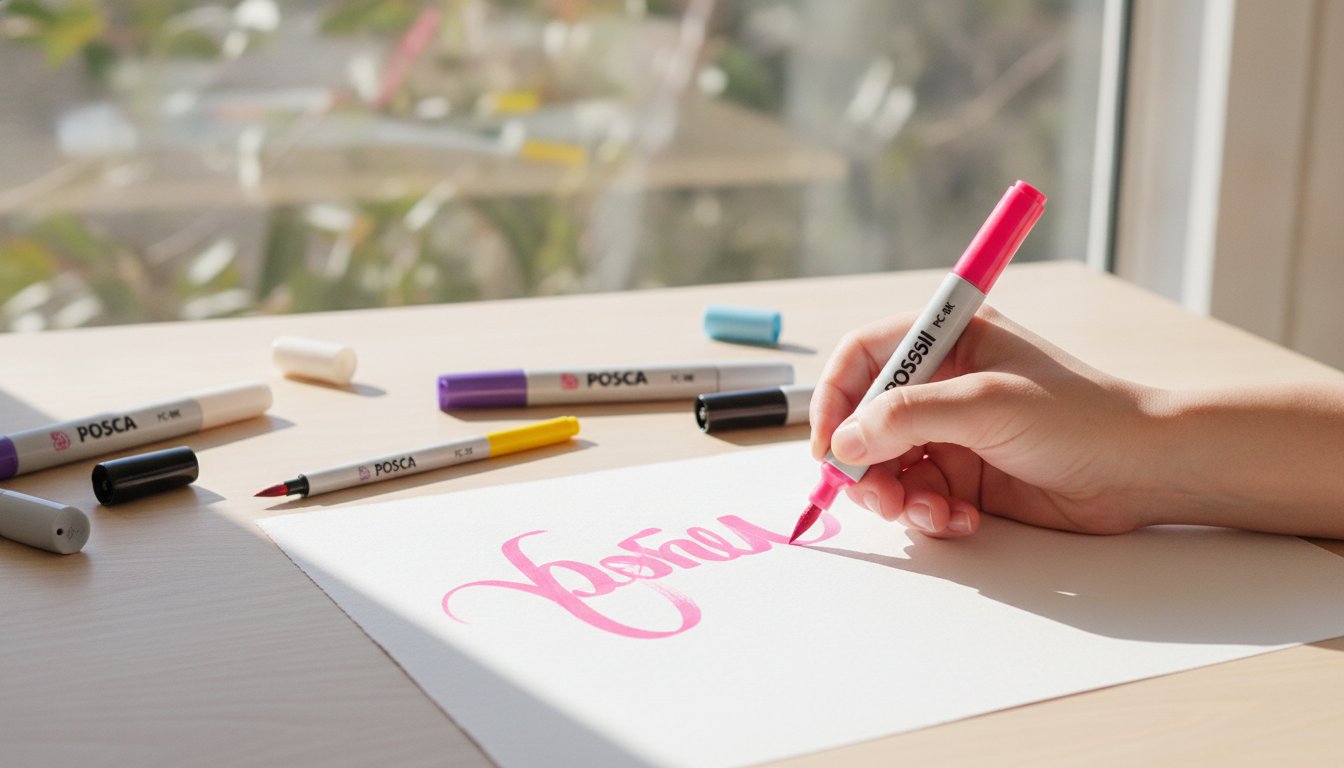
Have you ever wondered why your hand-lettering looks like a masterpiece in your sketchbook but turns into a shaky, inconsistent mess the moment you pick up a paint pen? It's a common hurdle for many Australian artists who want to move beyond basic doodles. Finding the best posca markers for calligraphy isn't just about picking a pretty colour; it's about matching the specific nib geometry to your unique lettering style.
We understand the frustration of a marker skipping across a textured canvas or a tip that feels far too bulky for a delicate script. You want your work to reflect your skill with crisp edges and reliable ink flow. In this guide, we'll show you how to transform your technique by choosing the right tools for the job. We'll explore the vital differences between brush and chisel tips and provide a curated list of markers that will help you build a professional-grade art kit.
Key Takeaways
- Learn how to select the best posca markers for calligraphy by matching specific nib shapes to your preferred lettering style, from modern script to traditional Gothic.
- Compare the flexible PCF-350 Brush Tip for elegant thick-and-thin contrast against the firmer PC-5BR for more controlled hand-lettering.
- Find out how to use the PC-8K Broad Chisel Tip to achieve the structured, fixed angles necessary for authentic Blackletter and broad-edge styles.
- Master "faux calligraphy" and delicate filigree using the PC-1MR Ultra Fine and PC-3M Fine Bullet tips for smaller, detailed creative projects.
- Get practical advice on surface preparation and nib care to prevent skipping and ensure vibrant, opaque colour on every Australian art surface.
Why POSCA Markers are a Game-Changer for Modern Calligraphy
POSCA markers aren't just for street art or school posters. They have revolutionised how we approach Calligraphy by providing a medium that behaves differently than traditional liquid ink. The water-based pigment ink inside every POSCA pen offers a level of opacity that standard inks simply can't match. This makes them some of the best posca markers for calligraphy when you're working on dark or vibrant backgrounds common in Australian creative projects.
The paint formula is designed to sit on top of the surface rather than soaking in. This allows you to layer colours and even correct small mistakes once the paint is dry. It's a huge relief for anyone who has ever ruined a piece with a single stray ink blot. You can simply wait for the paint to set and then go over the area with a fresh layer of colour.
To better understand this concept, watch this helpful video:
Paint vs. Ink: The Calligrapher’s Perspective
The viscosity of POSCA paint creates a distinct "drag" on the page. While liquid ink flows effortlessly, the paint provides a slight resistance that can actually help you control your stroke speed. This is particularly useful for beginners who need to slow down their movements to find the right rhythm. If you're interested in exploring that effortless flow further, you can visit HouseResort Stationery to find a high-quality fountain pen. These pigments are also highly lightfast; your artwork won't fade as quickly as dye-based markers when exposed to the harsh Australian sun. Because the formula is odourless and non-toxic, you can comfortably spend hours in your studio without any harsh chemical smells.
Calligraphy Beyond Paper
One of the biggest advantages is versatility. Traditional calligraphy is often limited to specific paper types, but POSCA markers allow you to take your lettering to surfboards, timber signs, and glass windows. The ink flow remains consistent even during long, sweeping strokes, which is essential for maintaining professional-grade letterforms. For those working on temporary cafe signage or shopfronts, using Uni Chalk Markers is a great alternative that offers the same vibrant look with the ability to wipe it away later. Whether you're customising a gift or creating a large-scale mural, the ability to work on almost any surface is what makes these tools a staple in any modern artist's kit.
The Best POSCA Brush Tips for Fluid Hand-Lettering
Brush calligraphy relies on the seamless transition between delicate upstrokes and bold, heavy downstrokes. To achieve this "swell" effect, you need a nib that responds instantly to changes in pressure. While many artists start with bullet tips, the best posca markers for calligraphy are often those specifically designed with a flexible brush. These tools allow for the fluid, rhythmic movements required for modern script and cursive styles, turning a simple word into a piece of art.
Choosing between the two primary brush options in the POSCA range depends on your experience level and the scale of your work. The following comparison helps clarify which tool fits your specific creative needs:
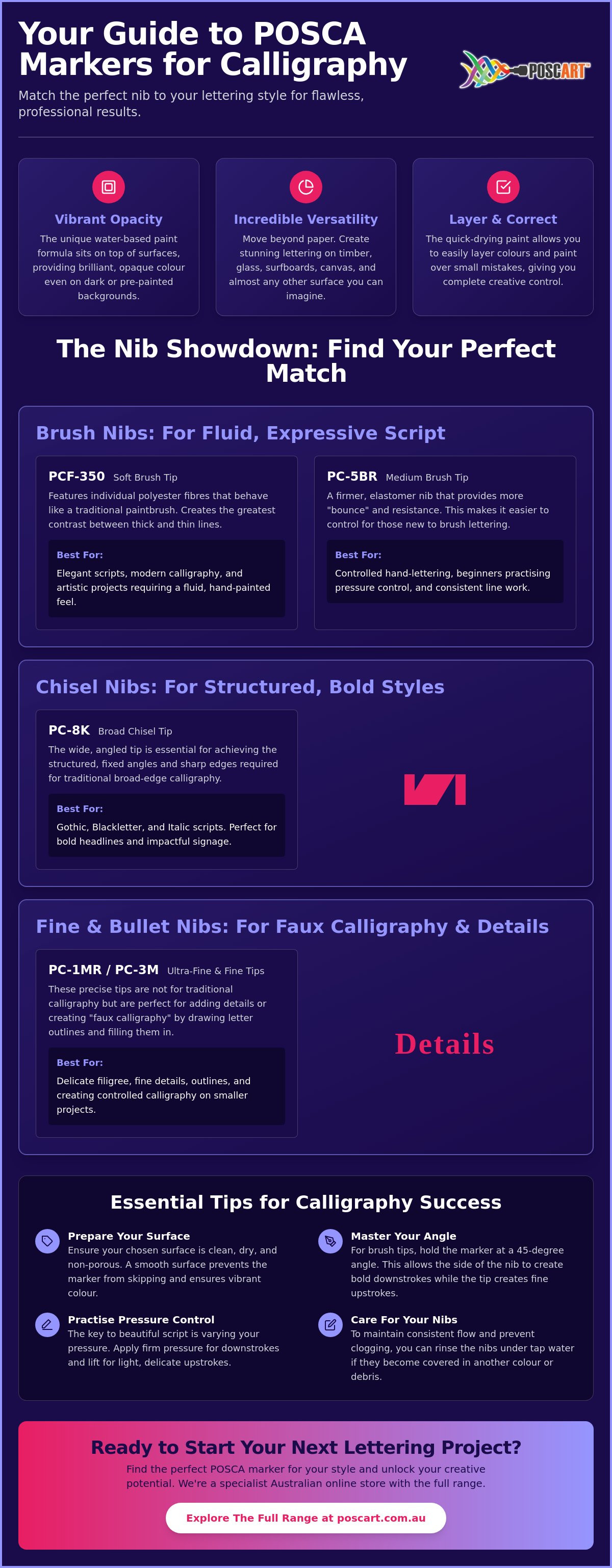
- PCF-350 Brush Tip: Features a soft, polyester fibre brush that behaves like a traditional paintbrush. It offers the greatest contrast between thick and thin lines.
- PC-5BR Medium Brush: Utilises a firmer, elastomer nib. It provides more "bounce" and resistance, making it easier to control for those new to brush lettering.
Mastering the PCF-350 for Script
The PCF-350 is a favourite for traditionalists. Because the nib is made of individual fibres, it spreads beautifully under pressure. To get the most out of this marker, hold it at a 45-degree angle to the page rather than upright. This position allows the side of the brush to do the heavy lifting on your downstrokes. Practise a "press and release" technique: apply firm pressure as you move the pen downwards to create a thick line, then gradually lift as you curve into an upward stroke. This creates those elegant loops and tapering tails seen in professional script. It is no surprise that the PCF-350 is a core component in many curated POSCA Marker Sets designed for illustrators and letterers.
The PC-5BR: Control and Consistency
If you find the PCF-350 a bit too "wild" or soft, the PC-5BR is your solution. The rubber-like tip doesn't splay as much, which means your line weights stay more consistent throughout a long piece of text. It's particularly effective for mid-sized lettering on shop signs or large canvases where you need a steady hand. The PC-5BR is the go-to for artists who need more resistance in their nib to maintain precision during fast-paced projects. If you're struggling to decide which brush will best suit your specific surface, reach out to our team for a personalised recommendation based on your project goals.
Both markers use the same high-quality, water-based acrylic paint found across the POSCA range. This means you can mix and match them with other tip sizes without worrying about colour mismatches. By varying your pressure, you can master the art of the swell and bring a professional, hand-crafted feel to every word you write.
Mastering Gothic and Broad-Edge Styles with Chisel Tips
Achieving the geometric precision of Gothic or Blackletter styles requires a specific type of nib geometry. While brush tips are the champions of organic flow, chisel tips provide the fixed width necessary for structured, broad-edge calligraphy. The ability to create sharp, consistent angles makes these some of the best posca markers for calligraphy when your project demands an architectural or historical aesthetic.
The structural nature of the chisel nib means it doesn't splay or change shape under pressure. Instead, it produces a consistent line width based on the angle at which it meets the surface. This predictability is essential for styles like Italic or Foundational Hand, where the relationship between thick and thin is strictly defined by the pen's position. It's a different discipline than brush work, requiring a steady hand and a locked wrist to maintain a uniform look across your entire alphabet.
Blackletter Basics with the PC-8K
The PC-8K Broad Chisel Tip is the ideal starting point for traditional calligraphy projects. Its 8mm nib allows you to execute the dramatic, heavy strokes of Blackletter with a single pass. Use the sharp corner of the chisel to pull away for delicate hairlines and decorative flourishes that add character to your work. For the heavy vertical strokes, or minims, the flat edge provides a solid, opaque block of pigment. If you want to add intricate shadows or fine outlines to your Gothic letters, consider using a POSCA PC-5M Australia model to create a multi-layered effect.
Large Scale Lettering with the PC-17K
For those taking their calligraphy to the streets or onto large-scale signage, the PC-17K Extra-Broad Chisel Tip is indispensable. The massive 15mm nib allows for high-visibility lettering that mimics the look of a wide flat brush. This marker is a key tool in the Big Job Coverage Set, specifically designed for covering large areas with opaque colour. Managing paint flow on vertical surfaces like walls is a learned skill; keep your strokes steady and avoid over-saturating the nib to prevent drips. To keep your work professional at this scale, try using a chalk line to ensure your baselines remain perfectly horizontal.
Mastering these tools is about muscle memory and angle consistency. By keeping your nib at a steady 45-degree angle to your baseline, you'll find that the markers do most of the hard work for you. Whether you're customising a skateboard or creating a formal piece of art, these chisel tips are the best posca markers for calligraphy for any broad-edge application.
Faux Calligraphy and Fine Detailing with Bullet Tips
While brush and chisel tips have line variation built into their shape, bullet tips offer a consistent, monoline stroke. This doesn't mean they aren't suitable for calligraphic styles. In fact, many artists consider bullet tips the best posca markers for calligraphy when practising "faux calligraphy." This technique involves writing in a standard script and then manually adding thickness to the downstrokes to mimic the look of a flexible nib. It's a fantastic way to maintain total control over your letterforms, especially on tricky surfaces where a flexible brush might skip.
To create faux calligraphy, start by writing your word in a loose, cursive style using a fine bullet tip. Identify every stroke where your pen moved downwards and draw a second, parallel line next to it. Once you fill in that gap with more paint, you've created the "swell" effect without needing a specialised brush pen. This method is highly effective for beginners because it allows you to plan your spacing before committing to heavy lines. If you're unsure which nib size will work for your specific project, reach out to the PoscART team for expert guidance.
The PC-1MR for Technical Precision
The PC-1MR Ultra-Fine tip is a specialist tool featuring a 0.7mm calibre tip encased in a metal ring. This technical construction ensures the nib doesn't splay, providing a consistent hairline that is perfect for micro-calligraphy and intricate filigree. You can use it to add tiny, decorative flourishes inside larger letters or to create incredibly detailed borders. Many Australian illustrators use these fine lines in conjunction with POSCA Pencils to add shading and texture to their mixed media pieces. The PC-1MR 0.7mm tip is the best choice for tiny lettering on jewellery or small stones.
Modern Monoline with the PC-3M and PC-5M
In Australian cafe culture, you'll often see "monoline" lettering on menu boards and windows. This style uses a single, consistent line weight rather than the thick-and-thin contrast of traditional scripts. The PC-3M Fine Bullet is the "Goldilocks" size for this work; it's thick enough to be legible from a distance but fine enough for detailed card making and bullet journaling. For bolder, street-inspired bubble lettering or chunky block styles, the PC-5M Medium Bullet is the industry standard. It provides a clean, rounded finish that looks professional and modern. To learn more about getting the most out of these markers, explore our guide on POSCA Pen Techniques. Whether you're layering colours or creating crisp outlines, these bullet tips are essential for any kit focused on the best posca markers for calligraphy.
Essential Tips for Calligraphy Success on Every Surface
The longevity of your creative projects depends heavily on surface preparation. While POSCA markers are incredibly versatile, rough textures like raw timber or unprimed stone can act like sandpaper on your nibs. For the best posca markers for calligraphy to maintain their precision, always aim for the smoothest surface possible. Sanding back timber or applying a light coat of primer to a canvas can prevent your markers from skipping and save your nibs from premature wear. A smooth foundation allows the paint to glide, ensuring those delicate upstrokes remain crisp and clean.
Australia’s harsh environmental conditions also play a role in how your work lasts. If you’re creating outdoor signage or customising a surfboard, you must seal your work with a water-based spray varnish. This protects the pigment from UV fading and moisture. Keeping your tools organised is just as important for long-term success. Storing your pens in a POSCA Marker Case ensures they stay horizontal, which keeps the pigment evenly distributed and ready for your next session. Proper storage prevents the ink from settling, so you don't have to shake them as vigorously before you start lettering.
Nib Maintenance and Replacement
Even with careful use, calligraphy nibs can eventually become fuzzy or clogged with surface debris. One of the best features of many POSCA models is that the nibs are reversible. If your line is losing its crispness, simply pull the nib out, flip it around, and reinsert it for a brand-new writing surface. When flipping isn't enough, you can find Replacement Nibs to extend the life of your markers without needing to buy a whole new pen. If you experience a "dry" stroke while lettering, don't pump the marker directly on your artwork. Use a piece of scrap paper to get the flow back to avoid accidental paint blobs on your final piece.
Surface-Specific Calligraphy Hacks
Lettering on raw timber requires a different approach than working on a primed canvas. Wood is porous and can "bleed" the paint along the grain, while canvas offers more resistance and texture. You can find detailed advice on preparing different materials in our guide on What Surfaces Do POSCA Pens Work On?. Always allow each colour to dry completely before layering a new one. This prevents the nib from picking up wet paint from the surface, which is the quickest way to ruin a clean calligraphy stroke. By respecting the drying times and preparing your base, you ensure the best posca markers for calligraphy deliver the professional results your art deserves.
Elevate Your Lettering Journey Today
Finding the best posca markers for calligraphy is the first step toward mastering everything from elegant script to bold Gothic murals. We've explored how matching the right nib to your specific style ensures professional results, whether you're using the fluid PCF-350 Brush Tip for organic swells or the structured PC-8K Chisel for historical Blackletter. Remember that successful calligraphy relies as much on your preparation as it does on your tools. Keeping your surfaces smooth and your markers well-maintained ensures your lines stay crisp and your colours remain vibrant throughout your creative process.
PoscART is an Australian family-owned and operated business, and we take pride in being dedicated POSCA specialists for artists nationwide. We maintain an extensive range with all 8 tip sizes in stock, ready to ship directly to your studio. To ensure your creative environment is as comfortable as it is productive, you can learn more about Sit Spot for ergonomic office furniture that supports your artistic practice. If you need help selecting the perfect set or want to discuss surface preparation for a specific project, reach out to our specialised team at PoscART today. We're genuinely invested in your creative outcomes and can't wait to see your hand-lettering transform. It's time to pick up your pens and bring your next masterpiece to life.
Frequently Asked Questions
Which POSCA pen is best for beginners to calligraphy?
The PC-5BR Medium Brush is often the most supportive tool for those new to the craft. Its firmer elastomer tip provides more resistance than traditional brushes, helping you control your line weights without the pen feeling too flexible. If you prefer a more stable experience, the PC-3M Fine Bullet is another contender for the best posca markers for calligraphy when practising the faux calligraphy technique.
Can I do brush lettering with a standard bullet tip POSCA?
You certainly can, though it requires a different technique known as faux calligraphy. Instead of relying on pressure to change line width, you draw your letters normally and then manually add a second line to every downstroke to create the "swell." This allows you to achieve a professional look with markers like the PC-5M or PC-3M that don't have a flexible nib.
Do POSCA markers bleed through calligraphy paper?
POSCA paint markers rarely bleed because the water-based acrylic paint sits on the surface rather than soaking into the fibres. However, thin or low-quality paper can still warp or "ghost" if you apply too much paint in one area. For the best results, use a heavy-weight paper or cardstock of at least 160gsm to ensure your calligraphy remains crisp and the page stays flat.
How do I stop my POSCA marker from blobbing during fine lettering?
Avoid pumping the marker nib directly onto your creative project to prevent accidental blobs. Always prime your marker on a piece of scrap paper until the flow is consistent before moving to your final piece. If you notice paint building up around the nib, wipe it clean with a damp cloth. Dried paint debris can often cause the valve to stick and release too much pigment at once.
Is the PCF-350 brush tip difficult for a novice to control?
The PCF-350 features soft polyester fibres that behave like a traditional paintbrush, which can be challenging for novices to master. It requires a delicate touch and a consistent 45-degree angle to achieve the desired line variation. Beginners often find the firmer PC-5BR elastomer brush much easier to handle as it offers more "bounce" and returns to its original shape more predictably after every stroke.
Can I use POSCA markers for calligraphy on fabric or t-shirts?
POSCA markers work effectively on fabric, though the texture of the material will influence how sharp your lines appear. For calligraphy on t-shirts, choose a fine-weave cotton and iron the design on the reverse side once it is dry to make the paint permanent. Using the best posca markers for calligraphy on fabric allows you to create personalised gifts that can withstand a gentle wash.
How do I make my POSCA calligraphy permanent on glass?
To make your lettering permanent on glass, you can bake the item in a domestic oven at 160°C for 45 minutes. This process sets the acrylic paint into the surface, making it resistant to light handling. If the item cannot be baked, applying a clear, water-based spray varnish is an alternative method to protect your artwork from scratches and moisture.
What is the best POSCA set for someone starting hand-lettering?
A PC-3M or PC-5M set is a fantastic choice for anyone starting their hand-lettering journey. These bullet-tip markers are incredibly versatile and allow you to practise basic letterforms and faux calligraphy on almost any surface. PoscART also offers custom bundles that allow you to mix and match different tip sizes, so you can build a kit that perfectly fits your specific creative goals.
General Information
This article is provided as general information only to help customers compare and choose POSCA markers, acrylic markers, art supplies, creative tools and related products. Product details, colours, finishes, surface suitability, availability, pricing and usage results may vary. Always check the individual product page, manufacturer information, age guidance, surface instructions and safety recommendations before purchasing or using a product.