







POSCA Pen Projects for Kids: Creative Activities and Easy Ideas for 2026
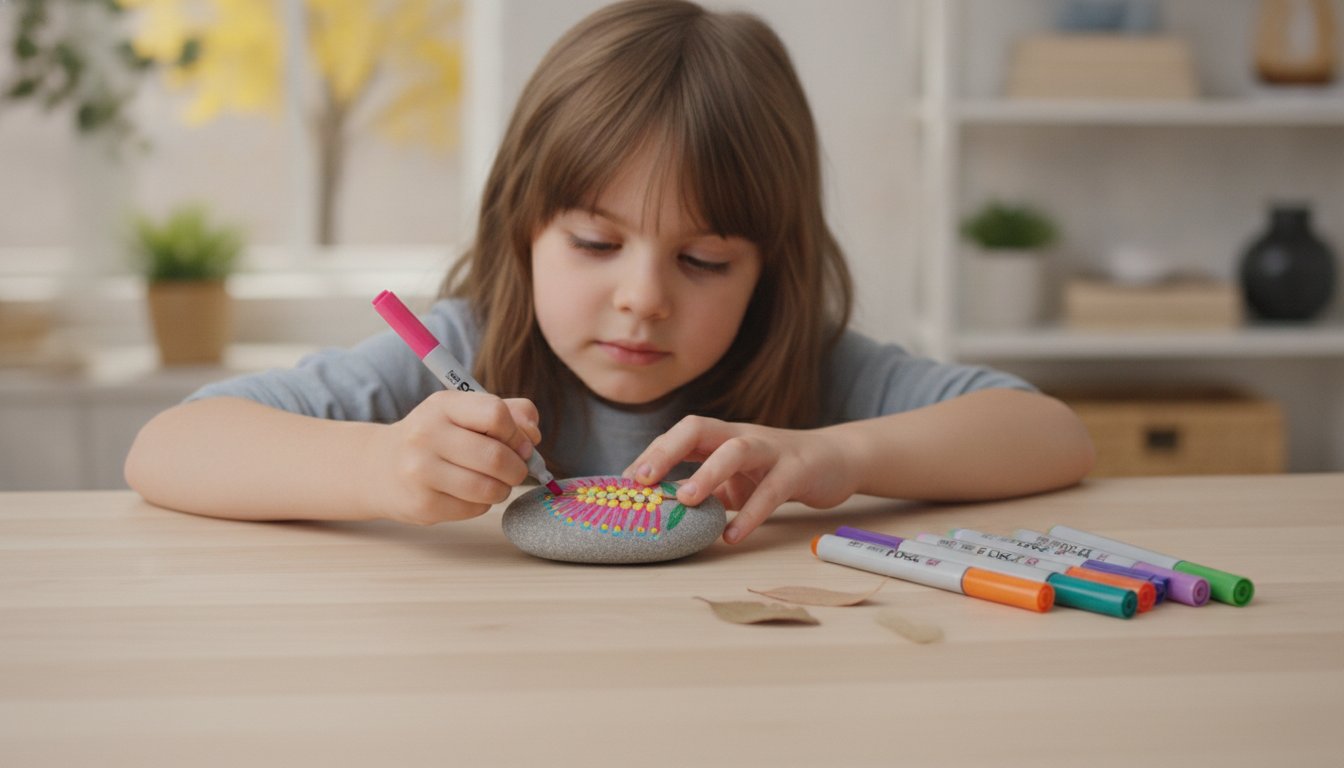
What if you could give your children a full palette of vibrant acrylic paint without a single drop ever hitting the carpet? Most Australian parents want to encourage artistic expression, yet the thought of open paint pots and stained clothes often leads to choosing "safe" activities that lack real creative excitement. You likely agree that the best activities are those that keep kids focused for an hour while producing something they're actually proud to show off. By introducing posca pen projects for kids, you provide them with professional-grade tools that are surprisingly easy to use and even easier to clean up.
This guide will help you move beyond simple paper drawings to create durable, gift-worthy artworks that last. We'll explore how to transform everything from garden stones to school pencil cases into colourful masterpieces using the most reliable techniques for 2026. You'll learn why the PC-5M is a favourite for small hands, how to prepare different surfaces, and the best ways to ensure their designs don't fade. It's time to swap the messy brushes for a more organised way to create together.
Key Takeaways
- Understand why odourless, non-toxic POSCA markers offer a low-mess alternative to traditional paints while keeping your home surfaces clean.
- Identify the best nib sizes for your child’s development, from the easy-to-grip PC-5M to the finer PC-3M for intricate detail work.
- Discover a variety of engaging posca pen projects for kids that encourage upcycling everyday objects into personalised pieces they can proudly display or gift.
- Find inspiration in the Australian backyard with nature-themed activities and practical ideas for labelling your own home herb garden.
- Learn professional tips for organising your art station and maintaining your markers, including how to swap out worn nibs to keep them performing like new.
Why POSCA Paint Markers are the Ultimate Creative Tool for Australian Kids
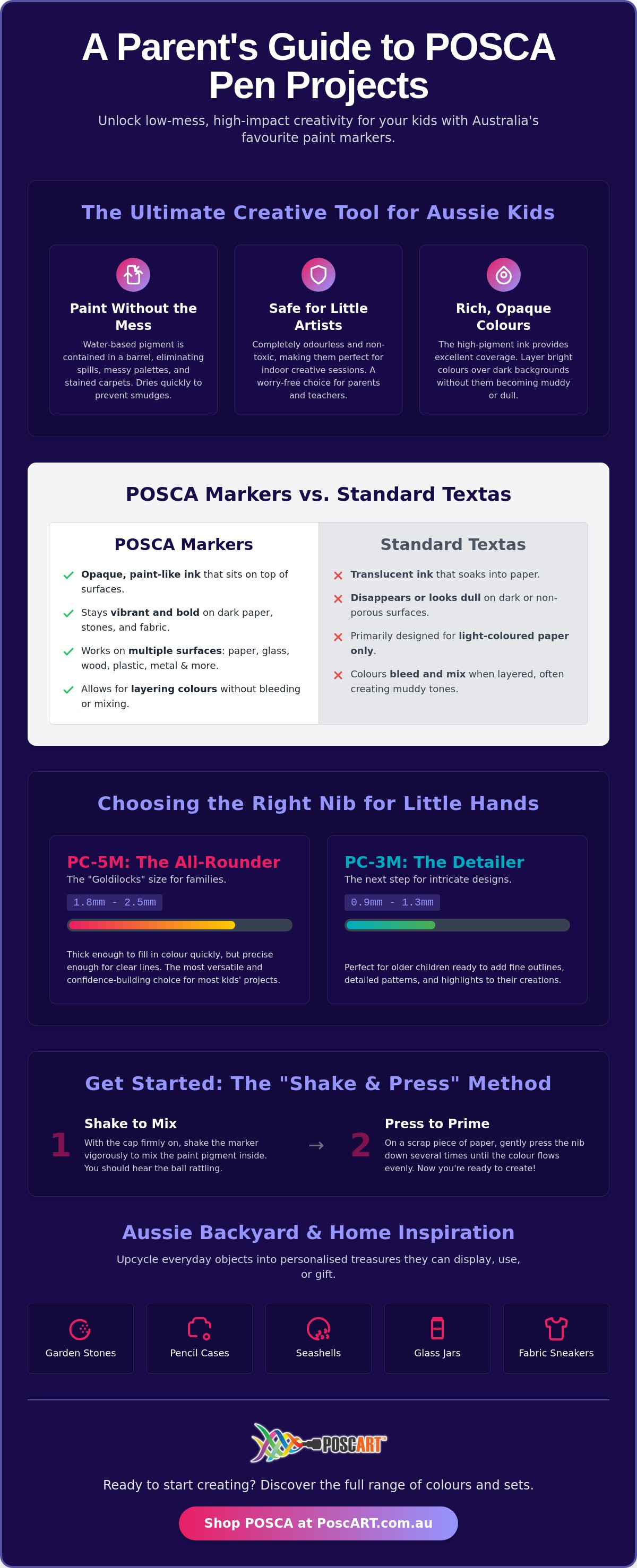
Traditional art sessions often end with more paint on the tabletop than the paper. POSCA markers solve this by housing water-based pigment ink inside a controlled barrel. Unlike standard acrylics that require jars of water and messy palettes, these pens are ready to go immediately. They are completely odourless and non-toxic; this makes them a safe choice for indoor activities and home art stations. You don't have to worry about harsh fumes or complicated setups before the creativity begins.
The ink is remarkably opaque. This means your children can layer bright yellow over a deep blue without the colours turning into a muddy mess. Because the paint dries so quickly, the common problem of smudged sleeves and ruined masterpieces is virtually eliminated. A Paint marker offers a level of control that brushes simply cannot match, especially for younger creators who are still developing their fine motor skills.
To better understand how to get the most out of your markers, watch this helpful video:
Safety and Preparation for Young Artists
While POSCA markers are designed for ease of use, a little preparation goes a long way. Setting up a dedicated creative zone with old newspaper or a silicone mat protects your furniture from stray marks. These markers meet international safety standards, providing peace of mind for parents and teachers alike. Before starting any posca pen projects for kids, teach them the "Shake and Press" method. Shake the marker with the cap on to mix the pigment, then gently press the nib on a scrap piece of paper until the colour flows. This simple habit prevents "flooding" and keeps the ink flow consistent throughout their project.
The Difference Between POSCAs and Standard Textas
Most standard textas use translucent ink that disappears on dark backgrounds. In contrast, POSCA markers sit on top of the surface, remaining vibrant even on black cardboard, river stones, or dark sneakers. Their versatility is unmatched; they can grip onto seashells, glass, and even fabric with ease. By providing the same high-pigment results used by professionals, these markers bridge the gap between simple play and genuine artistic creation, making every child feel like a gallery-ready artist. Using high-quality tools encourages kids to take their time and focus on the finer details of their work.
Choosing the Right POSCA Pen Sizes for Little Hands
Selecting the correct tip size is the most critical step in ensuring your child enjoys their creative time. If a nib is too fine, it can snag on rough surfaces; if it's too broad, it becomes difficult to manage for smaller drawings. Matching the marker to the child's age and the project's scale prevents frustration and keeps the focus on the fun of creating.
The POSCA PC-5M Medium Bullet Tip is widely considered the "Goldilocks" size for Australian families. It provides a 1.8mm to 2.5mm line that is thick enough to fill shapes quickly but precise enough for clear lettering. Research shows that art is important for early childhood development, and having a tool that responds predictably to pressure helps children build confidence in their fine motor skills. This medium tip is the most versatile option for most posca pen projects for kids.
For older children who have graduated to more intricate designs, the POSCA PC-3M Fine Bullet Tip is the logical next step. It offers a 0.9mm to 1.3mm line, perfect for adding highlights, patterns, or outlines. When working on massive projects like cardboard box cubby houses or large-scale posters, the broad PC-8K chisel tip is the most efficient choice for filling large areas. Conversely, keep the ultra-fine PC-1MR tapered tips for your teenagers. These metal-ringed nibs are professional-grade and require a light touch that younger, more enthusiastic artists might not have mastered yet.
The PC-5M: The All-Rounder for School Projects
The beauty of the PC-5M lies in its durability. Its polyester nib is incredibly resilient, standing up well to the heavy-handed pressure often applied by primary school students. It's the ideal companion for school posters, science dioramas, and the ever-popular hobby of rock painting. For a deeper look at how to get the most out of this specific tool, see our guide on Mastering the POSCA PC-5M.
Starter Sets vs. Individual Colours
If you are looking for a birthday gift, a POSCA Marker Set is typically more cost-effective than buying pens one by one. Sets provide a curated range of colours that work harmoniously together and often come in handy storage cases. However, if you're building a custom collection, always include "hero" colours like White and Gold. These shades allow kids to add professional-looking highlights and metallic flair to any surface they choose. If you're unsure which set fits your needs, our team is always happy to help you find the right supplies for your next project.
Age-Appropriate POSCA Projects: From Fine Motor Skills to Teen Masterpieces
As children grow, their artistic needs evolve from simple sensory play to complex, detailed designs. Providing professional-grade tools allows them to experience the "Pride of Production," where the final result looks polished enough to display on a shelf or gift to a grandparent. Engaging in these activities offers documented Social and Emotional Benefits of Arts Participation, such as improved self-regulation and a sense of mastery. By choosing the right posca pen projects for kids, you can match the activity to their specific developmental stage.
Pointillism, or dot art, is a particularly effective technique to introduce early on. It serves as a calming, focus-building activity that helps children develop patience while creating vibrant patterns. Because POSCA markers provide consistent ink flow, kids can focus on their placement rather than struggling with a dripping brush. Exploring different surfaces and craft materials keeps the experience fresh and exciting for every age group.
Junior Projects (Ages 5-8): Texture and Colour
For younger artists, the focus should be on bold colours and simple shapes. Rock Monsters are a fantastic entry point; children can use a PC-5M to apply a solid base colour to a river stone before adding silly eyes and teeth. Leaf art provides a wonderful excuse for a backyard scavenger hunt. Drawing intricate white or gold patterns on dried gum leaves creates a beautiful contrast. You can also upcycle delivery boxes by turning them into colourful robots, teaching kids that art can be made from almost anything found around the home.
Intermediate Projects (Ages 9-12): Customisation and Detail
At this stage, children often want to personalise their belongings to reflect their budding identity. Personalised canvas pencil cases are a practical project that makes school supplies feel unique. If they have an old pair of white canvas sneakers, they can transform them into "Doodle Shoes" using fine-tipped markers. Since the ink is temporary on non-porous surfaces until sealed, window art is another excellent option. Kids can create festive decorations on glass that simply wipe off with a damp cloth when the season ends.
Advanced Projects (Ages 13+): Fine Art and Mixed Media
Teenagers can push the boundaries of the medium by tackling larger, more permanent canvases like skateboard decks. The timber surface provides an excellent grip for the pigment, allowing for professional-looking graphics. To achieve realistic shading and depth, they can experiment with combining POSCA Pencils with their markers. This mixed-media approach is one of the more advanced POSCA Pen Techniques that empowers older students to create gallery-quality work. These posca pen projects for kids transition naturally into lifelong artistic hobbies.
Aussie Backyard Inspiration: Nature-Themed POSCA Ideas
The Australian backyard is a living gallery of textures and colours. From the deep greens of eucalyptus leaves to the iron-rich reds of outback stones, the local landscape provides endless materials for posca pen projects for kids. Using the natural world as a canvas teaches children to observe their environment closely while creating art that feels deeply connected to their home. It's a brilliant way to turn a simple afternoon outdoors into a productive creative session.
One practical way to involve kids in the garden is through "Citizen Science" projects. You can have them create personalised herb garden markers by painting flat river stones or wooden stakes. Because these markers will be exposed to the elements, it is essential to understand what surfaces POSCA pens work on and how they react to different textures. These small projects help children learn about botany while practising their organisation skills in a fun, colourful way.
Painting Native Flora and Fauna
Drawing iconic Australian animals is a great way to practise basic shapes. To draw a simple Koala, start with a large grey circle for the head and two smaller ones for the ears. Use a PC-5M to fill the base and a finer PC-3M for the fuzzy ear details and the large black nose. For native flowers like Waratahs or Wattle, the "Brights" palette is ideal. You can also create "Story Stones" featuring Australian animals for imaginative play. These stones become fantastic tools for storytelling, allowing kids to narrate the adventures of a Cockatoo or a Kangaroo across the lawn.
Coastal Finds: Shells and Driftwood
If you've spent the school holidays at the beach, your collection of shells and driftwood can be transformed into lasting souvenirs. Before starting your posca pen projects for kids, ensure all beach finds are cleaned with fresh water and dried completely. Salt and sand can clog the marker nibs, so this preparation step is vital for the longevity of your pens.
A white PC-3M is particularly effective for creating delicate, lace-like patterns on dark-coloured shells. For driftwood, the porous nature of the timber will soak up some ink, so you might need two layers for maximum vibrancy. To protect these artworks from the salt air and keep the colours bright, apply a quick coat of water-based spray varnish once the ink is dry. If you need advice on which markers work best for specific coastal textures, feel free to get in touch with our creative team.
Setting Up for Success: Organising and Maintaining Your POSCA Art Station
Setting up a dedicated space for posca pen projects for kids is about more than just having a table; it's about teaching the value of high-quality tools. To ensure your markers last for years rather than months, correct storage is vital. Most POSCA markers should be stored horizontally. This position prevents the pigment from settling too heavily at one end, which keeps the ink flow consistent every time your child starts a new project. At PoscART, we specialise in providing POSCA Storage solutions and expert advice to help you keep your collection in peak condition.
Even the most careful young artist can sometimes be a bit heavy-handed. If you find a nib has become frayed or pushed in, you don't need to throw the whole pen away. The process of replacing POSCA nibs is simple and cost-effective. You can gently pull the damaged nib out with tweezers and slide a fresh one in. If a pen appears "dried out", it's often just a case of paint drying on the tip. Simply remove the nib and soak it in a small bowl of warm water for a few minutes to dissolve the blockage. Once dry, pop it back in, give the pen a good shake, and it'll be as good as new.
The "Lid On" Habit: Teaching Marker Care
Teaching children the "click" habit is the single best way to preserve your art supplies. That distinct clicking sound when the cap is replaced ensures an airtight seal, preventing the water-based ink from evaporating. You can make this part of the cleanup fun by helping them organise their markers by colour or tip size into specialised cases. When properly maintained, a single POSCA pen can outlast dozens of cheaper alternatives, making them a more sustainable choice for your home art station.
Creating a Portable Art Kit
Creativity shouldn't be limited to the kitchen table. You can assemble a travel-ready Gift Set containing a few primary colours and a selection of different tip sizes. Pair these with a high-quality sketchbook from our Books and Pads range to keep their drawings in one place. Whether you're heading to a café or on a long road trip, having a portable kit ready ensures that inspiration can strike anywhere. Making posca pen projects for kids accessible on the go is a great way to keep them engaged without relying on screens. Explore the full range of genuine POSCA markers at PoscART today!
Ready to Launch Your Next Creative Adventure?
Starting posca pen projects for kids is one of the most rewarding ways to bridge the gap between simple play and genuine artistic expression. By selecting the right tools, like the resilient PC-5M bullet tip, you ensure that even young artists can achieve vibrant, smudge-free results on almost any surface. Whether you are upcycling old sneakers or creating nature-themed story stones from the backyard, these markers provide a professional finish that children can be truly proud of. Maintaining your art station with horizontal storage and teaching the "lid click" habit will keep your supplies performing beautifully for years to come.
As a genuine POSCA specialist and an Australian family-owned and operated business, PoscART is here to support your creative journey. We offer fast national shipping to help you get ready for the school holidays or your next big weekend project. If you have questions about specific surfaces or need help choosing the perfect palette from our curated Marker Sets, reach out to our friendly team for expert guidance. We can't wait to see what your family creates next.
Frequently Asked Questions
Are POSCA pens safe for kids to use on their skin?
POSCA markers are not recommended for use on skin as they aren't cosmetic products. Although the ink is water-based and non-toxic, it's designed for craft surfaces like paper and stone rather than the body. If your child accidentally draws on themselves, wash the area with warm soapy water immediately. For intentional face painting, it's better to use products specifically designed and tested for skin safety.
How do I get POSCA paint out of school uniforms or clothes?
You should wash the garment immediately with cold water and soap while the paint is still wet. Because POSCA contains acrylic pigment, it becomes much more difficult to remove once it has fully cured into the fabric fibres. For stubborn stains on school uniforms, you might need to use a commercial stain remover before a standard machine wash. Always avoid using hot water, as heat can set the paint permanently.
Do I need to seal POSCA art on rocks if they are going in the garden?
You definitely need to seal your painted rocks with a water-based clear varnish if they're staying outdoors. While the paint is water-resistant once dry, the harsh Australian sun and heavy rain will eventually cause the design to fade or flake off. Applying two thin coats of spray or brush-on varnish ensures your posca pen projects for kids remain vibrant and protected against the elements for a long time.
Can POSCA markers be used on black paper or dark card?
POSCA markers work brilliantly on black paper and dark card because the ink is completely opaque. Unlike standard felt-tip pens that use translucent dyes, these paint pens use high-quality pigments that sit on the surface of the paper. This allows light colours, like white or pastel yellow, to show up vividly against a dark background. It's a fantastic way to make school posters or birthday cards stand out.
How long do POSCA pens take to dry between layers?
The ink typically takes between 60 seconds and 2 minutes to dry depending on the humidity and the surface. You'll know it's ready when the shiny wet look turns to a flat, matte finish. It's best to wait until the first layer is completely dry before adding details on top. This prevents the colours from mixing and keeps your lines sharp and clean throughout the project.
What should I do if my child leaves the lid off and the pen dries out?
You can usually fix a dried-out pen by removing the nib and soaking it in a bowl of warm water. Since the paint only dries in the tip and not inside the barrel, clearing the blockage will restore the ink flow. Once the nib is soft again, dry it with a paper towel and reinsert it. Give the marker a vigorous shake and prime the tip to get back to creating.
Are POSCA pens permanent on plastic toys or lunchboxes?
The paint is not permanent on smooth plastic surfaces and will eventually scratch off with regular use. While it's great for customising a toy for display, items like lunchboxes that undergo frequent washing will lose their design quickly. If you want the artwork to last on a plastic surface, you'll need to apply a compatible clear sealer to protect the paint from friction and moisture.
Which POSCA set is best for a primary school-aged child?
A starter set of PC-5M medium bullet tip markers is the most effective option for primary school students. These pens are sturdy enough to handle enthusiastic drawing while providing enough precision for most school assignments. They are the most versatile choice for various posca pen projects for kids, offering a great balance between coverage and detail. Buying a set also provides a curated colour range that works perfectly for most hobby crafts.
General Information
This article is provided as general information only to help customers compare and choose POSCA markers, acrylic markers, art supplies, creative tools and related products. Product details, colours, finishes, surface suitability, availability, pricing and usage results may vary. Always check the individual product page, manufacturer information, age guidance, surface instructions and safety recommendations before purchasing or using a product.