







POSCA PC-1MR Ultra Fine: The Australian Artist’s Guide to Precision Outlining
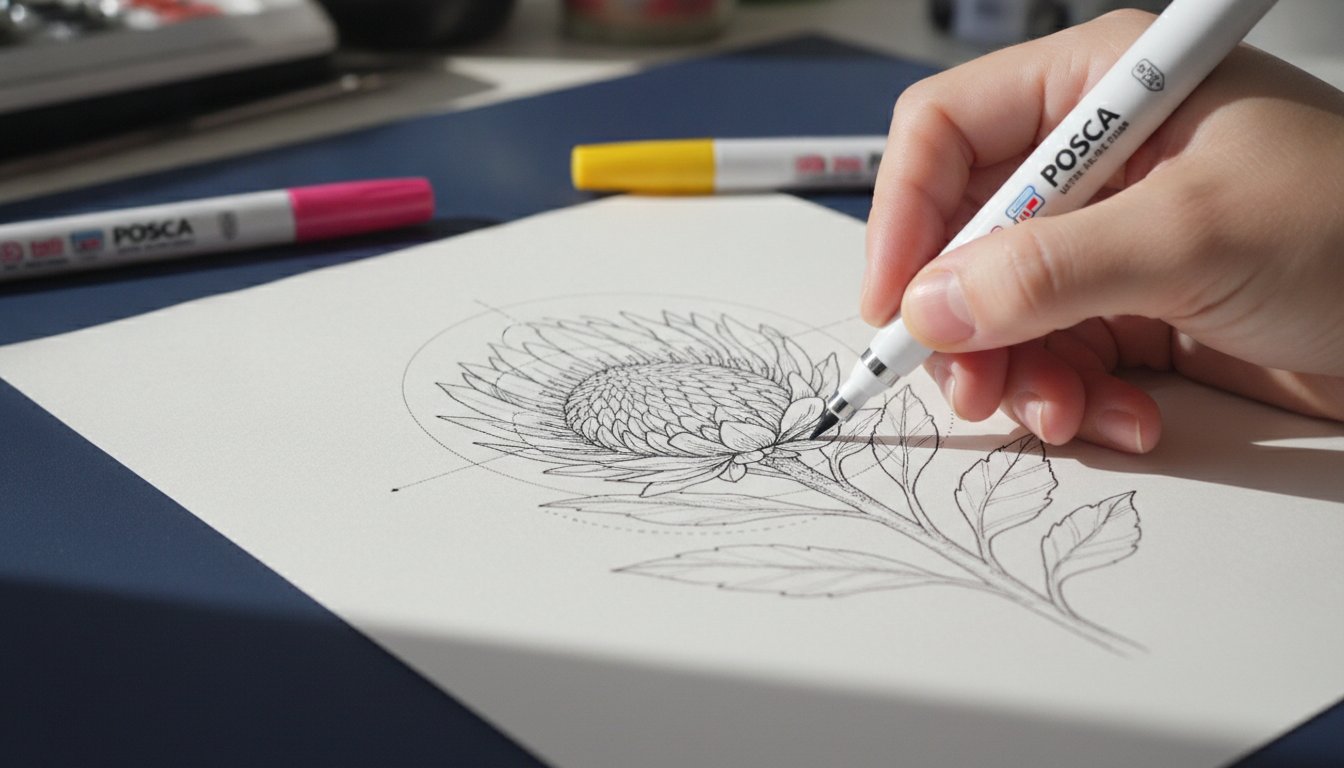
The smallest marker in your kit shouldn't be an afterthought; it should be your most reliable technical instrument. While many creators assume all fine-liners are interchangeable, the posca pc-1mr ultra fine offers a level of structural precision that standard felt tips simply can't match. You know the struggle of inconsistent line weights or ink bleeding into porous surfaces just as you're adding those final, critical details. It's frustrating when a tool limits your creative potential instead of supporting it.
This guide will show you how to harness the 0.7mm pin tip to elevate your outlining and technical illustrations. We'll dive into which Australian art surfaces best suit the specialised metal-ringed nib and share essential maintenance tips to keep your ink flowing smoothly. From understanding surface preparation to achieving flawless consistency, you're about to transform how you approach fine-scale detailing.
Key Takeaways
- Understand why the 0.7mm metal-ringed pin tip is the essential tool for achieving structural precision in technical drawings and fine-line illustrations.
- Learn how to use the posca pc-1mr ultra fine to create crisp highlights and delicate outlines that won't bleed into your paper or porous surfaces.
- Discover expert layering techniques that allow you to add intricate details over broader acrylic marker strokes for professional-grade depth and contrast.
- Master the maintenance habits required to keep your ultra-fine markers in peak condition, including the importance of horizontal storage and proper tip priming.
Understanding the POSCA PC-1MR Ultra-Fine: The Precision Specialist
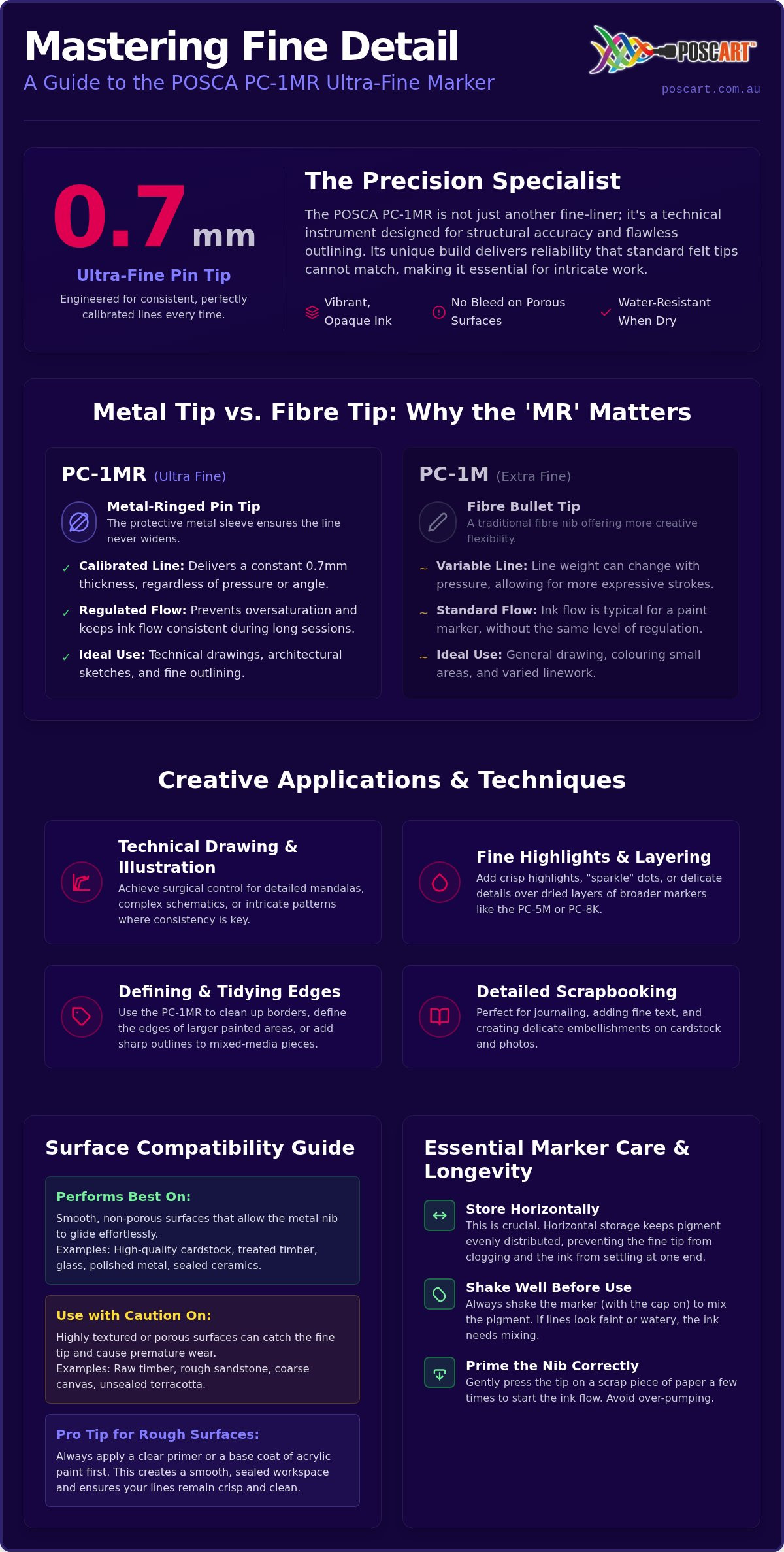
The posca pc-1mr ultra fine stands apart as the dedicated precision instrument in the POSCA hierarchy. While other tips focus on coverage or expressive strokes, the PC-1MR is engineered for technical drawing and structural accuracy. It produces a perfectly consistent 0.7mm line, providing a level of reliability that's essential for intricate mandalas or architectural sketches. Australian artists often reach for this model when they need a tool that behaves more like a technical pen than a standard paint marker. Unlike the slightly more flexible PC-1M, this marker maintains its exact width from start to finish.
Its water-based pigment ink is another standout feature. Even at such a delicate scale, the colour remains completely opaque and vibrant. This allows you to lay down crisp, solid lines over darker backgrounds without the ink fading or becoming translucent. It's the go-to tool for final, high-contrast outlines that define a piece of work. The ink is lightfast and water-resistant once dry, ensuring your fine details last on various surfaces. You can find the full range of colours as individual POSCA pens to suit your specific project needs.
To better understand how this precision tool performs in a real-world project, watch this helpful video:
Metal Tip vs. Fibre Tip: Why the 'MR' Matters for Your Art
The 'MR' in the name stands for 'Metal Ringed', which refers to the specialised housing around the nib. This metal sleeve protects the ultra-fine point and ensures the line never widens, even if you tend to apply a bit of extra pressure. In contrast, the PC-1M extra-fine bullet tip uses a traditional fibre nib that offers more flexibility for varying line weights. The PC-1MR is 'calibrated', meaning it delivers a constant thickness regardless of the angle you hold the pen. The ring also helps regulate the flow of the pigment-rich ink, preventing the nib from becoming oversaturated or dry during long sessions. This makes the posca pc-1mr ultra fine an invaluable asset for technical illustrations or delicate scrapbooking where uniform detail is the priority.
Creative Applications and Outlining Techniques for Australian Artists
The posca pc-1mr ultra fine is the ultimate choice for projects that demand high-level definition. Whether you're working on intricate mandalas, detailed scrapbooking layouts, or complex technical illustrations, this marker provides the surgical control needed for delicate linework. It's particularly effective for adding fine highlights or "sparkle" dots over dried layers of broader markers like the PC-5M or PC-8K. To get steady lines on 3D objects or vertical canvases, try bracing your pinky finger against the surface for stability. This simple trick helps maintain the consistent 0.7mm width without the tip skipping, even on curved surfaces like ceramic pots or custom sneakers. Ensure each layer is completely touch-dry before adding these fine details to prevent the colours from mixing.
Technical Drawing and Detailing on Different Surfaces
The calibrated metal tip performs best on smooth, non-porous surfaces. Treated timber, polished metal, and high-quality cardstock allow the nib to glide effortlessly without resistance. However, Australian artists should be cautious with highly textured materials like raw sandstone or rough timber. These porous surfaces can catch the fine tip, causing ink spatter or premature wear on the nib. Always apply a clear primer or a base coat of acrylic paint first to create a level, sealed workspace. This preparation ensures your edges stay crisp when "tidying up" larger paintings or defining the borders of a mixed-media piece. If you're unsure about a specific material, feel free to ask our creative team for advice on surface compatibility to ensure your project looks its best.
Maintenance, Nib Care, and Choosing Your PC-1MR Set
Proper storage is the foundation of marker longevity. Unlike larger bullet tips that can sometimes handle vertical storage, the posca pc-1mr ultra fine requires horizontal storage. This keeps the pigment evenly distributed and prevents the fine metal housing from clogging or the ink from settling too heavily at one end. If your lines start to look faint or watery, it's often a sign that the pigment hasn't been mixed correctly before use. A quick shake is usually enough to redistribute the paint, but consistent horizontal placement ensures a smooth flow every time you pick it up.
Deciding between a curated wallet and individual markers depends on your creative workflow. Wallets are fantastic for building a foundational palette, but for technical outliners, certain colours like Black and White will always run out first. You can easily replenish your kit through the PoscART individual pens collection to ensure your favourite detailing shades are always ready. This approach is more cost-effective for artists who rely heavily on specific colours for their signature style.
How to Correctly Prime and Clean Your Ultra-Fine Markers
Activating an ultra-fine tip requires a gentle touch to avoid flooding the delicate metal housing. Follow these steps for a perfect prime:
- Shake the marker thoroughly with the cap on to engage the mixing ball.
- Press the nib onto a scrap piece of paper using short, controlled pulses.
- Avoid long, heavy presses which can cause ink to pool around the ring.
If the tip feels scratchy, it might be clogged with dried paint or surface debris. You can carefully rinse the metal-ringed tip under warm water to clear the obstruction. If the nib is physically worn down, you can find replacement nibs to restore the marker's precision. Knowing when to deep clean versus when to simply re-prime will extend the life of your posca pc-1mr ultra fine and prevent unnecessary ink waste.
Perfect Your Professional Outlines Today
Mastering the posca pc-1mr ultra fine allows you to move beyond basic sketching and into the world of high-definition technical illustration. By understanding the unique metal-ringed tip and committing to proper horizontal storage, you ensure every line remains as crisp as the first. This specialised tool is the secret to adding those final, intricate details that transform a hobbyist project into a professional masterpiece. As a family-owned Australian business, we pride ourselves on being your local source for authentic supplies and expert guidance. We carry an extensive range of ultra-fine colours in stock to help you find the exact shade for your signature style. If you're ready to refine your technique or need help choosing the right set, contact the PoscART team for expert advice on your next creative project. We can't wait to see the incredible precision you bring to your next canvas.
Frequently Asked Questions
What is the difference between POSCA PC-1MR and PC-1M?
The main difference lies in the tip construction and line consistency. The PC-1MR features a calibrated 0.7mm metal-ringed tip that produces an unchanging line weight. In contrast, the PC-1M uses a fibre bullet tip which allows for slight variations in thickness depending on your pressure. Choose the MR for technical precision and the M for more expressive sketching.
Can you refill the POSCA PC-1MR ultra-fine markers?
Standard POSCA markers aren't designed to be refilled with bulk ink. Once the paint reservoir is empty, the marker has reached the end of its life cycle. To keep your kit sustainable and cost-effective, we recommend purchasing individual pens to replace your favourite outlining colours rather than buying entirely new sets every time one pen runs dry.
Is the PC-1MR tip replaceable if it gets damaged?
You can indeed replace the tips on these markers if they become clogged or damaged. Replacement nibs are available for the posca pc-1mr ultra fine, allowing you to restore surgical precision without discarding the entire pen. This is particularly useful if you've accidentally used the marker on a rough surface that has frayed the delicate 0.7mm point.
How do I stop my PC-1MR from skipping on the page?
Skipping often occurs when the pigment isn't reaching the nib or when surface debris clogs the metal housing. Start by giving the marker a thorough shake and re-priming it on a scrap piece of paper. If the issue persists, gently rinse the tip under warm water to dissolve any dried acrylic paint that might be obstructing the flow of your posca pc-1mr ultra fine.
Are PC-1MR markers permanent on fabric and glass?
The ink is permanent on porous surfaces like fabric, especially if you heat-set it with an iron on the reverse side. However, on non-porous surfaces like glass, the paint can be scraped off or wiped away with a damp cloth. To increase durability on glass, you'll need to apply a protective clear coat or bake the item if the material allows.
How long does it take for the PC-1MR ink to dry on non-porous surfaces?
On non-porous surfaces like treated timber or metal, the ink typically becomes touch-dry within two to five minutes. Environmental factors like high humidity can extend this time. For the best results, let your work sit for a full 24 hours before applying any sealants to ensure the acrylic pigment has completely stabilised on the surface.
General Information
This article is provided as general information only to help customers compare and choose POSCA markers, acrylic markers, art supplies, creative tools and related products. Product details, colours, finishes, surface suitability, availability, pricing and usage results may vary. Always check the individual product page, manufacturer information, age guidance, surface instructions and safety recommendations before purchasing or using a product.