


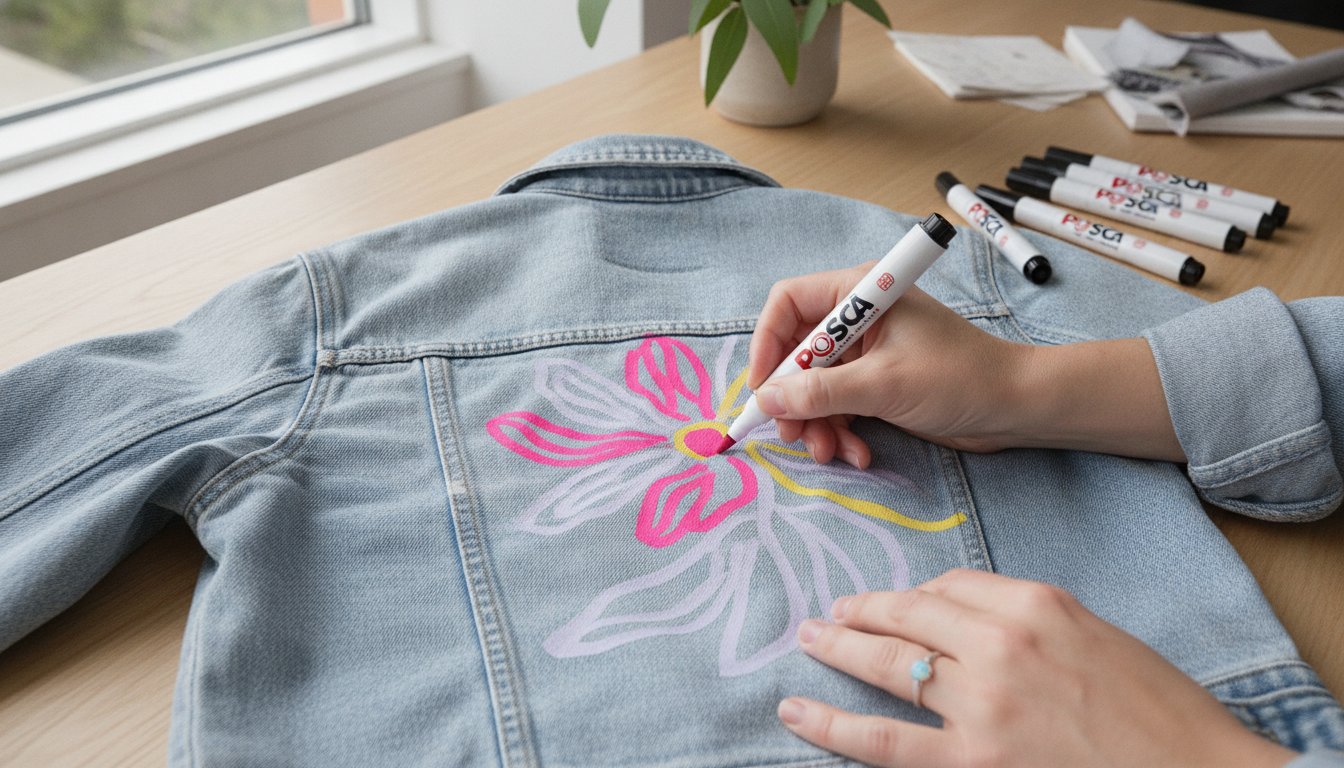
Have you ever looked at a plain pair of canvas sneakers or a thrifted denim jacket and wondered if you could turn it into a custom piece of wearable art without the design washing away? It is a common concern for many Australian creatives who fear that their hard work might bleed into the fabric fibres or disappear in the laundry. We understand that hesitation; there is nothing more frustrating than seeing a vibrant project lose its edge because the surface wasn't prepared correctly or the heat-setting process was skipped.
This guide will show you how to master using posca on fabric by employing professional preparation and fixing techniques that help your designs stay vibrant. You will gain the confidence to transform your favourite clothes, shoes, and bags into unique statements that reflect your personal style. We'll cover everything from selecting the right POSCA marker tip sizes for rough textures to the precise steps needed to heat-set your work, ensuring you have the right knowledge for a successful creative outcome. Whether you are a student or a professional artist, you will find the practical advice needed to take your textile art to the next level; even industry leaders in custom apparel like A1 Promotions Ltd. recognise that the secret to a professional-grade garment lies in the quality of the finish.
Key Takeaways
- Learn why pre-washing your garments is essential to remove industrial coatings that can prevent ink from bonding properly to the surface.
- Discover why the POSCA PC-5M Medium Bullet Tip is the preferred choice for Australian textile projects and how to layer colours without damaging the fabric fibres.
- Master the professional heat-setting techniques required to make your posca on fabric designs last through the wash.
- Understand the critical differences between natural and synthetic fibres to ensure your acrylic markers absorb correctly and remain vibrant.
- Get expert advice on maintaining your tools, including how to use replacement nibs when working on rougher textile surfaces.
Preparing Your Textiles for POSCA Art
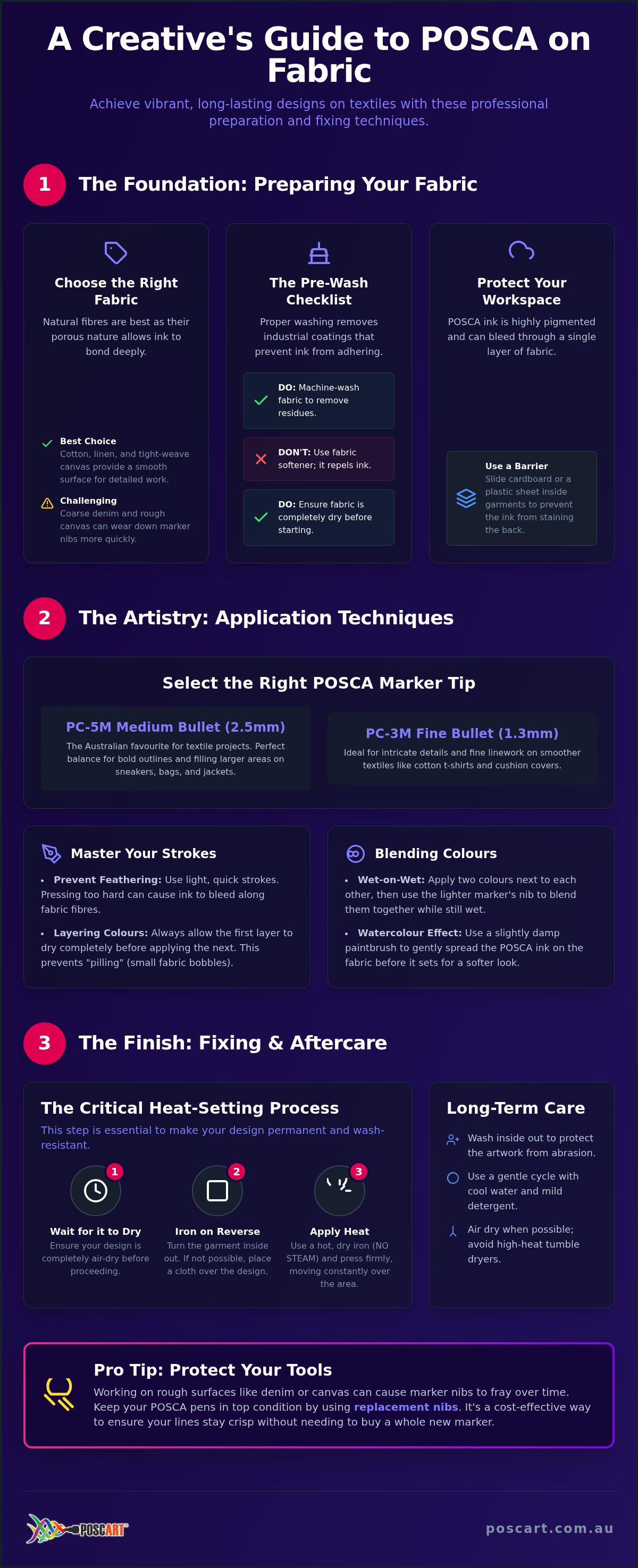
Success with posca on fabric starts long before you prime your first pen. If you apply ink directly to a brand-new garment, you are likely painting onto industrial "sizing" or chemical coatings used during manufacturing to keep textiles crisp. These coatings act as a barrier; they cause your Paint marker ink to sit on the surface rather than bonding with the material. Without proper preparation, your design will likely crack or wash away after the first laundry cycle.
Choosing the Right Fabric for Your Project
Natural fibres like cotton and linen are the gold standard for textile art because their porous nature allows the acrylic ink to penetrate deeply. Tight-weave cotton provides the smoothest surface for fine detail work and complex patterns. If you are working on heavier textures like denim or coarse canvas, be aware that the rough surface can wear down your marker tips over time. PoscART stocks replacement nibs specifically for this reason, allowing you to refresh your tools without needing to replace the entire marker.
The Pre-Wash Checklist
Always machine-wash your fabric before you begin to ensure all residues are gone. Skip the fabric softener; these products leave a waxy coating that repels water-based acrylics. Once washed, ensure the material is bone-dry before you start. Even a hint of moisture can cause your lines to bleed and blur, ruining the crispness of your artwork. For leather or faux-leather items that cannot go in the wash, use a humid sponge to gently wipe the surface, removing any dust or protective factory waxes that might interfere with adhesion.
Before you start drawing, slide a piece of thick cardboard or a plastic sheet inside your t-shirt, cushion cover, or bag. POSCA ink is highly pigmented and fluid; it will bleed through a single layer of fabric and stain the back of your garment if you don't use a barrier. This simple workspace setup protects your project and ensures your posca on fabric design remains clean and professional from the very first stroke.
Application Techniques: Matching Tips to Textures
Applying posca on fabric requires a different approach than working on paper or wood. For iconic Australian projects, such as customising canvas surf-brand sneakers or personalising school bags, the POSCA PC-5M Medium Bullet Tip is the standout favourite. Its 2.5mm nib provides the perfect balance between covering larger areas and maintaining enough control for bold outlines. If you are working on smoother textiles like a fine cotton tee, the PC-3M Fine Bullet Tip is better suited for intricate linework and delicate details.
Feathering is a common hurdle for beginners. This happens when the ink spreads along the fabric fibres, creating a fuzzy edge. To prevent this, use light, quick strokes rather than pressing the nib firmly into the weave. If you need to layer colours, patience is your best tool. Always allow the first coat to dry completely before adding a second layer. Applying wet ink over a damp surface can cause the fabric to "pill," resulting in small, unsightly bobbles that ruin the professional finish of your textile art.
Selecting Your POSCA Marker Set
The weave of your material dictates your choice of tip. Coarse surfaces like heavy denim or canvas shoes act like sandpaper on your markers. While Conserving textile art is a long-term goal, the immediate health of your tools matters too. Using replacement nibs ensures you don't have to discard a full marker just because the tip has become frayed by an abrasive texture.
Blending Colours on Fabric
Soft gradients are achievable using a "wet on wet" technique. Apply your first colour and immediately follow with a second, using the nib of the lighter marker to blend the two where they meet. For a more subtle, watercolour effect, you can use a slightly damp brush to spread the POSCA ink before it sets. This technique works beautifully on light-coloured cotton. If you have any questions about which set is right for your specific project, feel free to reach out to our creative support team for advice.
Fixing and Caring for Your Finished Fabric Art
Once your masterpiece is dry, the final and most critical stage is heat-setting. This process is more than just a finishing touch; it is the science of bonding the acrylic resin within the ink directly to the textile fibres. Without this step, your posca on fabric design remains a surface layer that is vulnerable to the friction of daily wear and the agitation of a washing machine. By applying controlled heat, you ensure the pigment becomes a long-lasting part of the garment's character.
The Step-by-Step Ironing Method
Ironing is the most reliable way to secure your artwork on natural materials like cotton or linen. Always turn your item inside out or place a sheet of greaseproof paper between the iron and the painted surface to act as a protective barrier. If you are working with synthetic blends, ensure your iron is on a lower setting to avoid scorching the material. To effectively heat-set your design, you must iron the reverse side of the material for at least four minutes without using any steam.
For delicate items or non-ironable synthetics like polyester or nylon, a hairdryer is an effective alternative. Hold the dryer approximately 30cm away from the surface and move it in small, circular motions for several minutes. This provides enough heat to cure the ink without risking heat damage to sensitive fabrics.
Washing and Daily Care
Preserving the vibrancy of your textile art depends heavily on your laundry routine. A 30-degree wash is a suitable temperature to prevent the acrylic from cracking or fading over time. Always wash your personalised items inside out and avoid harsh Australian bleach-based detergents that can strip the colour from the fibres. While your design is durable, treating it with care will keep it looking fresh for years to come.
Over time, even the most well-maintained designs might show signs of wear. The beauty of using acrylic markers is that you can easily touch up faded areas by simply reapplying the ink and re-fixing the design. If you enjoy experimenting with different materials, you might like to explore our broader guide on what surfaces POSCA pens work on to see how these techniques translate to mixed-media projects.
Ready to Customise Your Wardrobe?
Mastering posca on fabric opens up a world of creative possibilities for your clothing and accessories. Once you have finished your custom designs, you might look for other ways to elevate your outfit; adding a statement piece from Broochella can perfectly complement your hand-painted textile art. By ensuring your textiles are pre-washed and choosing the correct marker tip for your fabric's texture, you've already done the hard work to ensure a professional result. Remember that the final heat-setting step is what transforms a temporary drawing into a durable piece of wearable art that can withstand regular use and washing.
As a local, family-owned Australian business, PoscART is here to support your creative journey with expert advice and authentic Uni Mitsubishi Pencil products. We provide fast national shipping across Australia, so you can get started on your next project without delay. If you need help selecting the right colours or tip sizes for your specific material, we're always ready to help you find the perfect match.
Browse our range of genuine POSCA markers at PoscART and start your textile project today!
It's time to grab your favourite jacket or pair of sneakers and let your imagination take over. We can't wait to see what you create!
Frequently Asked Questions
How do you make POSCA permanent on fabric?
You make POSCA permanent by heat-setting the design once the ink has dried completely. The most reliable method is ironing the reverse side of the material for at least four minutes on a setting appropriate for the fabric type without using any steam. This process bonds the acrylic pigment to the textile fibres. For materials that can't be ironed, using a hairdryer for several minutes provides a similar curing effect to secure the artwork.
Can you wash clothes painted with POSCA markers?
Yes, you can wash clothes decorated with posca on fabric, provided they have been correctly heat-set first. It's best to use a cold or 30-degree cycle and always turn the garment inside out to protect the artwork from the agitation of the machine. You should avoid using harsh bleach-based detergents or fabric softeners, as these can gradually break down the acrylic bond and lead to premature fading of your design.
Do POSCA pens bleed through t-shirts?
These paint pens are highly pigmented and fluid, so they will often bleed through a single layer of fabric like a cotton t-shirt. To prevent staining the back of your garment or your workspace, always place a barrier such as thick cardboard or a plastic sheet inside the shirt before you start. This also provides a flatter, more stable surface, which helps you achieve cleaner lines and more consistent ink flow during application.
Can I use POSCA on leather shoes or bags?
You can certainly use these markers on leather and faux-leather surfaces like sneakers and handbags. Before you begin, wipe the surface with a humid sponge or a soft brush to remove any dust or factory protective coatings that might repel the ink. While the markers adhere well to leather, keep in mind that high-friction areas on shoes may eventually require a quick touch-up to maintain their vibrant and crisp appearance over time.
Do I need to prime fabric before using paint pens?
You don't need a traditional primer, but pre-washing your fabric is a non-negotiable step to remove industrial sizing or coatings. These factory treatments are designed to repel liquids, which can prevent your posca on fabric project from bonding correctly to the material. Starting with clean, bone-dry material ensures the ink penetrates the fibres as intended without the need for additional base coats or specialised fabric primers.
How long should I wait for POSCA to dry on fabric before ironing?
You should wait until the design is completely dry to the touch, which typically takes at least one hour depending on the humidity and how many layers of ink you've applied. Ironing while the ink is still damp can cause the design to smudge or stick to your protective paper. For the best results, many Australian artists prefer to let their work sit overnight to ensure every layer is thoroughly cured before heat-setting.
General Information
This article is provided as general information only to help customers compare and choose POSCA markers, acrylic markers, art supplies, creative tools and related products. Product details, colours, finishes, surface suitability, availability, pricing and usage results may vary. Always check the individual product page, manufacturer information, age guidance, surface instructions and safety recommendations before purchasing or using a product.