







POSCA on Chalkboard: The Australian Artist’s Guide to Permanent vs Temporary Art
That stunning hand-lettered menu you just finished might be a permanent fixture whether you planned for it or not. It’s a common frustration for many Australian creators who expect a clean slate but end up with "ghosting" or stubborn stains that refuse to budge. You want the vibrant, opaque colour that only a high-quality paint pen provides, yet you don't want to accidentally ruin a professional board or a personalised home display. This guide will show you exactly how to master using posca on chalkboard surfaces without the stress of permanent mistakes. We’ll explore the technical differences between acrylic paint markers and Uni Liquid Chalk, helping you choose the right tool for professional, crisp results every time. From preparing your surface to achieving those sharp, skipping-free lines with a PC-5M, you’ll learn how to create art that lasts exactly as long as you need it to.
Key Takeaways
- Distinguish between water-based acrylic paint and liquid chalk to ensure your design is either a permanent masterpiece or a temporary sign.
- Identify which surfaces are safe for posca on chalkboard art and why porous materials like chalkboard paint walls often require a different approach.
- Select the ideal marker tip size for your lettering, from ultra-fine details to bold headers, to maintain professional consistency across your work.
- Practise proper surface preparation and layering techniques to avoid ghosting and achieve the most vibrant, opaque colour possible.
Understanding POSCA Markers on Chalkboard Surfaces
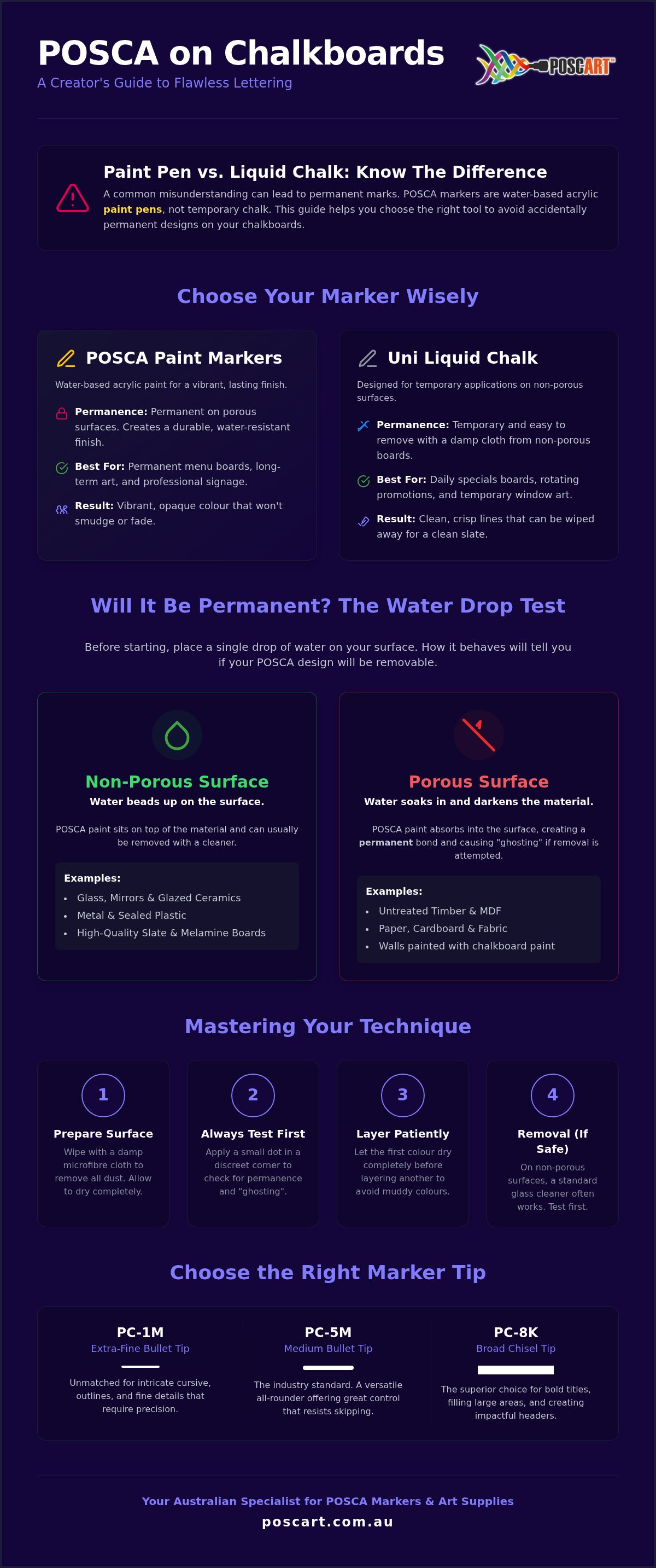
A common misconception among Australian artists is that POSCA markers are just another type of liquid chalk. In reality, POSCA markers are water-based acrylic paint pens. This distinction is vital because it fundamentally changes how the ink interacts with your surface. While traditional chalk wipes away with a dry cloth, a posca on chalkboard application is generally considered permanent on porous materials. The paint is designed to bond with the surface, providing a professional finish that won't smudge if someone accidentally brushes against it.
The result is a vibrant, opaque look that far exceeds the faded appearance of standard chalk. It's the gold standard for creating permanent menu boards or long-term signage in cafes and retail spaces. However, you must be cautious about "ghosting." This occurs when the paint seeps into the board's pores, leaving a faint outline behind even after you attempt to scrub it off. Using a paint marker on a low-quality or unsealed surface often leads to this permanent staining.
POSCA Paint Markers vs. Uni Liquid Chalk Markers
Choosing between these two depends entirely on your project's lifespan. If you're designing a daily specials board that needs frequent updates, Uni Liquid Chalk is your best friend. It offers a clean, wipe-away finish on non-porous surfaces. For static displays, the POSCA PC-5M medium bullet tip provides the precision and durability needed for intricate lettering. Always match your tool to your needs:
- POSCA: Permanent, water-resistant, and high-opacity for long-term art.
- Uni Liquid Chalk: Temporary, easy to remove, and ideal for rotating promotions.
Preparing and Testing Your Chalkboard for POSCA Art
Before you start your design, you must ensure your surface is pristine. Old chalk dust acts as a barrier, preventing the paint from adhering correctly and potentially clogging your marker nib. Wipe the board down with a damp microfibre cloth and let it dry completely. For the best control on slightly textured surfaces, the PC-5M Medium Bullet Tip is the industry standard. It offers a consistent flow that resists skipping on grainy textures, making it a favourite for professional sign writers.
Be particularly careful with "chalkboard paint" walls. Unlike high-quality slate, these painted surfaces are highly absorbent. Because of the unique properties of acrylic paint, the pigment will sink into the wall's texture and become permanent. If you aren't sure about your surface, always perform a test patch in a discreet corner first. This simple step prevents the heartbreak of a ruined feature wall or a stained expensive board.
The Porous vs. Non-Porous Surface Test
To determine if your posca on chalkboard project will be removable, use the simple "Water Drop Test." Place a single drop of water on the board and observe the reaction carefully.
- Non-Porous: Water beads up on the surface. Removal is usually possible on glass, metal, or high-quality slate.
- Porous: Water soaks in and darkens the material. Paint becomes permanent on timber, MDF, or chalkboard-painted walls.
If you're still uncertain about which marker suits your specific board, feel free to reach out to our creative team for tailored advice.
Mastering Chalkboard Techniques and Removal Tips
Achieving professional lettering with posca on chalkboard surfaces starts with selecting the correct nib. For intricate cursive or fine details, the PC-1M is unmatched. Conversely, for bold titles that need to pop from across a room, the PC-8K chisel tip is the superior choice. Sourcing your markers from a specialist like PoscART ensures you have access to the full spectrum of nib sizes required for professional results. When you want to layer colours, patience is your best tool. You must wait for the first coat to dry completely before adding the next layer. If you rush, the wet paint will blend, leading to muddy results rather than the crisp finish these pens are known for.
Many modern "chalkboards" found in Australian shops are actually non-porous plastic, vinyl, or melamine. These synthetic surfaces are perfect for a hybrid approach. Use permanent POSCA for your branding and borders, then use Uni Chalk markers for price lists or daily specials that require frequent updates. This method keeps your display consistent while allowing for easy changes. Understanding the composition and behavior of modern paints helps you predict how the acrylic film will sit on these synthetic materials compared to traditional slate.
How to Remove or Seal Your Chalkboard Artwork
If your board is non-porous, you can remove POSCA using a household glass cleaner or a mild solvent. Don't use abrasive scrubbers; they can scratch the delicate black coating and leave permanent marks. For artworks intended to stay forever, especially in harsh outdoor Australian conditions, apply a few light coats of spray varnish. This protects the pigment from UV fading and ensures your hard work remains vibrant through heat and rain.
Bring Your Chalkboard Vision to Life
Mastering the use of posca on chalkboard surfaces allows you to create vibrant, professional displays that stand the test of time. By identifying whether your board is porous or non-porous and selecting the correct nib for the job, you can achieve crisp lines without the fear of accidental smudging. Whether you choose the permanent finish of acrylic paint markers or the flexibility of Uni Liquid Chalk, your creative possibilities are endless.
As a specialist Australian POSCA retailer, PoscART provides an extensive range of individual pens and custom bundles tailored to your specific needs. Our team offers expert knowledge on surface compatibility to ensure your project is a success from the very first stroke. Need advice on the best markers for your project? Contact the PoscART team today. We can't wait to see the incredible signs and artworks you'll organise and create.
Frequently Asked Questions
Is POSCA permanent on a chalkboard?
Whether your design is permanent depends on the board's porosity. Most traditional boards are porous; the acrylic paint will soak in and stay for good. If you're using posca on chalkboard surfaces that are non-porous, like glass or high-quality slate, you can usually wipe it away. Always test a small corner first to avoid permanent ghosting on your display.
How do I get POSCA pen off a chalkboard without ruining it?
Removing posca on chalkboard surfaces that are non-porous is best achieved with a microfibre cloth and a standard glass cleaner. Avoid using abrasive scrubbers or harsh chemicals that might strip the black finish. If the paint is stubborn, a gentle circular motion with a damp cloth usually does the trick. For porous boards, you may need to sand and repaint the surface.
Can I use POSCA markers on a blackboard wall?
You can use these markers on blackboard walls, but treat the artwork as a permanent installation. Chalkboard paint is highly absorbent, so the acrylic pigment bonds deeply with the wall's texture. This makes it impossible to wipe away like traditional chalk. It's a fantastic way to create a lasting mural, but ensure you're happy with the design before you start.
What is the difference between a paint pen and a chalk marker?
The main difference lies in the ink's composition and its intended lifespan. Paint pens contain water-based acrylic that dries into a durable, water-resistant film. Chalk markers use liquid chalk designed for temporary displays on non-porous surfaces. While both offer vibrant colour, a paint pen provides a more opaque finish that won't smudge as easily as a standard chalk marker.
General Information
This article is provided as general information only to help customers compare and choose POSCA markers, acrylic markers, art supplies, creative tools and related products. Product details, colours, finishes, surface suitability, availability, pricing and usage results may vary. Always check the individual product page, manufacturer information, age guidance, surface instructions and safety recommendations before purchasing or using a product.