







POSCA Paint Pens on Metal: The Ultimate Australian Guide to Prep, Paint, and Protect
Have you ever spent hours detailing a custom metal sign or a piece of garden art, only to watch your hard work flake away after the first intense summer storm? It's a common frustration for many Australian creators. We understand the disappointment of seeing a vibrant design peel off a smooth surface or watching rust spots slowly bleed through your favourite colours. While metal presents a unique challenge because it's non-porous, using posca paint pens on metal can produce stunning, permanent results if you follow the correct technical steps.
In this guide, we'll show you how to transform everything from recycled tins to bespoke jewellery into lasting works of art. You'll gain the confidence to choose the perfect marker tip for your project and learn exactly how to shield your work from UV damage and rain. We'll break down the essential "Prep-Paint-Protect" workflow, ensuring your next creative venture on metal is as durable as it is beautiful. Whether you're a professional designer or a weekend hobbyist, you'll find the practical advice needed to master this versatile surface.
Key Takeaways
- Learn why degreasing with isopropyl alcohol and light sanding are essential steps to prevent paint from peeling off smooth metal surfaces.
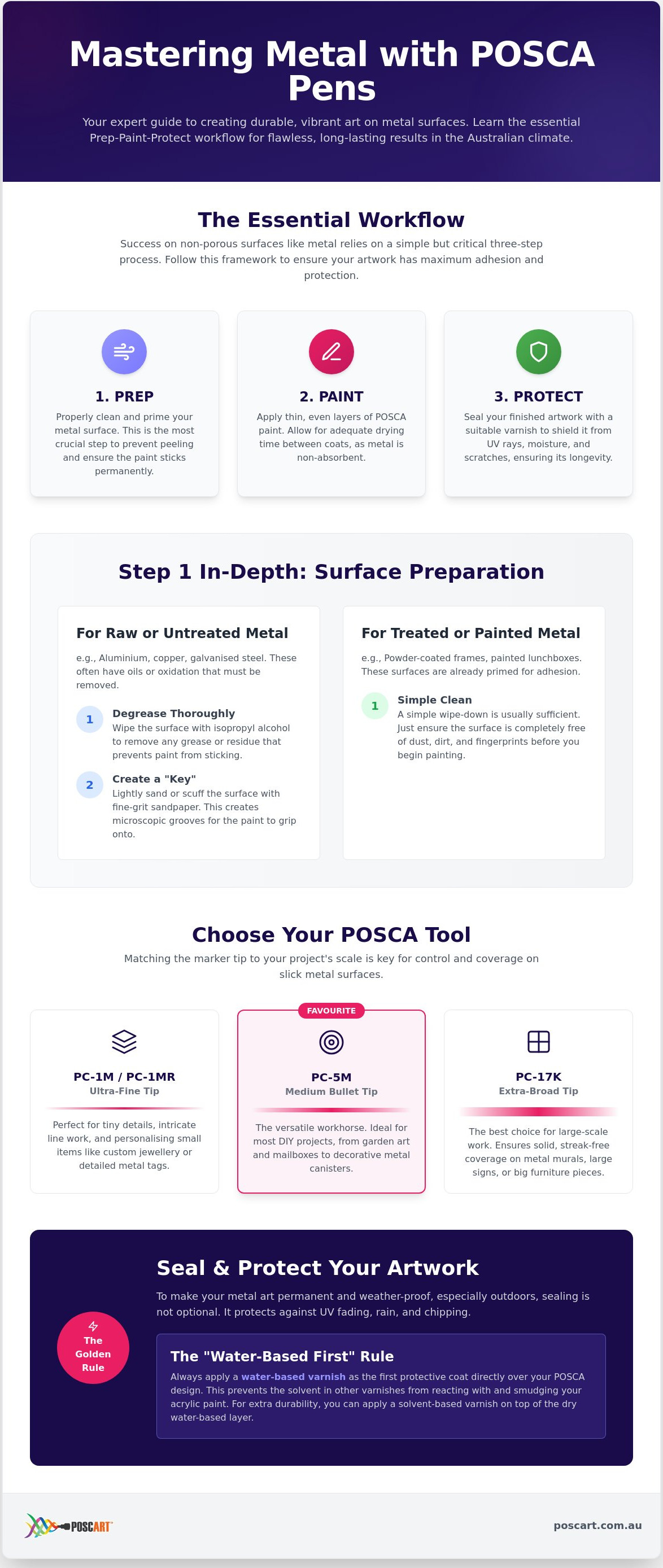
- Discover how to select the right tip size for your project, including why the POSCA PC-5M is a versatile favourite for most DIY metal art.
- Master the technique of using posca paint pens on metal by applying thin, even layers and allowing for extended drying times on non-porous surfaces.
- Understand the critical "Water-Based First" rule for varnishing to ensure your design remains vibrant and permanent against the Australian elements.
Understanding Metal as a Canvas for POSCA Markers
Metal isn't like canvas or paper. It doesn't absorb what you put on it. Instead, the paint sits right on the surface. This creates a vibrant look, but it also makes the artwork vulnerable to scratches. Using posca paint pens on metal requires a shift in mindset. You're building a layer, not staining a material. This is where the Prep-Paint-Protect framework becomes your best friend. It ensures your hard work doesn't just look good today, but stays that way for years.
Many people reach for a standard permanent marker for metal projects. However, these often use translucent dyes that fade quickly under the harsh Australian sun. In contrast, understanding the paint marker composition helps you see why POSCA is different. These markers use a high-quality acrylic paint that provides a thick, opaque layer. It covers dark surfaces easily and stays bright for much longer than a simple ink pen. The pigment is suspended in a water-based solution that, once dry, forms a tough and flexible film.
To better understand this concept, watch this helpful video:
Identifying Your Metal Type: Raw vs. Treated
Not all metals are created equal. Raw metals like aluminium, copper, or brass often have a thin layer of oil or oxidisation on them. You'll need to degrease these thoroughly to ensure your paint doesn't slide off. If you're working with galvanised steel, like a garden bucket or a letterbox, you're dealing with a zinc coating designed to stop rust. This is great for longevity, but the texture can be slightly greasy to the touch. It requires a bit more effort during the cleaning stage.
Treated metals are often a dream to work with. If you're customising a powder-coated bike frame or a painted metal lunchbox, the hard work is mostly done. These surfaces already have a key that helps the paint from your POSCA markers stick. You just need to ensure they're clean and free of fingerprints before you start. Always check if the metal has a wax or silicone coating, as these will need to be removed first.
Why Water-Based Acrylic Works on Metal
The success of posca paint pens on metal lies in the acrylic formula. This paint is incredibly flexible once dry. It can handle the slight expansion and contraction of metal as it heats up in the sun. This flexibility prevents the design from cracking or popping off the surface immediately. It's a reliable choice for the varied Australian climate.
Because the formula is water-based and non-toxic, it's a fantastic choice for personalising household items. You can safely decorate stainless steel water bottles or school lunchboxes without worrying about nasty fumes. The pigment load is so high that even a single pass often covers the shiny surface completely. This gives you the professional, solid finish every artist craves while remaining safe for the whole family to use.
This versatility extends beyond standard household goods; many pet owners even use these pens to add a splash of colour to metal pet tags. For those who want to complement their DIY projects with professionally finished gear, you can visit Pet ID Tags Australia to explore their full range of custom pet accessories.
Choosing the Right POSCA Marker for Your Metal Project
Success with posca paint pens on metal depends on matching the marker tip to the project scale. Selecting the right tool is the difference between a frustrating attempt and a professional finish. For most Australian DIY enthusiasts, the POSCA PC-5M Medium Bullet Tip is a favourite choice. It acts as a versatile workhorse, offering a line width between 1.8mm and 2.5mm that handles everything from decorative canisters to garden furniture with ease. Its bullet shape allows for consistent paint flow even on slick, non-porous surfaces.
If you're tackling something tiny like custom jewellery or intricate engraving-style illustrations, the PC-1MR and PC-1M are suitable options. These ultra-fine tips provide the control needed on smooth surfaces where the paint has a tendency to slide if applied too heavily. Conversely, industrial-sized projects like metal murals or large signage require the PC-17K. This extra-broad chisel tip ensures you get solid coverage without the visible overlap lines common when using smaller markers on big sheets. Choosing a broader tip for large areas also helps maintain a wet edge, which is vital for a streak-free finish on metal.
Recommended Tip Sizes for Metal Detail and Coverage
Selecting the right nib ensures your paint flows correctly and lasts longer on metallic surfaces. Consider these pairings for your next project:
- PC-1MR and PC-1M: Ideal for fine line work on jewellery, watches, or small hand tools where precision is the priority.
- PC-3M and PC-5M: These are the standard options for customising bikes, helmets, and lunchboxes, balancing detail with coverage.
- PC-8K and PC-17K: Use these for filling large areas on metal sheets, lockers, or automotive parts to ensure a solid colour block.
These broader tips are also ideal for personalising professional gear; for example, you can check out ProX for rugged flight cases that provide a large, durable metal surface for customising your audio or lighting equipment.
Working with Metallic and Fluorescent POSCA Colours
The metallic and fluorescent ranges offer unique advantages when using posca paint pens on metal. Gold and silver markers are reliable for adding accents that either complement raw steel or provide a high-contrast pop against dark-painted surfaces. The metallic pigment contains a subtle shimmer that catches the light beautifully on reflective surfaces. If you're working on a dark bike frame or a black metal sign, fluorescent colours offer an intensity that standard pigments can't match. Always test your colour opacity on a small, hidden area first. Because metal doesn't absorb the paint, some lighter shades might require a second coat to achieve full vibrancy.
With dozens of colours available in the range, finding the right match for your aesthetic is part of the creative journey. If you're feeling stuck on which combination will work for your specific surface, reach out to our creative support team for a personalised recommendation based on your project goals.
Preparation Steps for Maximum Adhesion on Metal
Preparing the surface is the most critical stage of the entire process. If the base isn't right, the paint won't stay. Because metal is non-porous, any barrier between the marker nib and the surface will cause the paint to flake or peel later. While following a methodical approach to cleaning and texturing ensures a reliable bond, keep in mind that results may vary based on the texture and absorbency of the specific metal you are using. Achieving professional outcomes with posca paint pens on metal requires these four essential steps:
- Step 1: Degrease. Thoroughly clean the metal using isopropyl alcohol or warm soapy water to remove all traces of oil and grease.
- Step 2: Sand. Lightly scuff smooth or glossy metals to create a "key" that the paint can grab onto.
- Step 3: Clear debris. Use a wire brush to scrub away any existing rust or flaking old paint that might compromise the new layer.
- Step 4: Prime. Apply a metal-specific primer if the object is raw aluminium or steel, or if it will be handled frequently.
The Importance of Degreasing
Even invisible fingerprints can cause POSCA ink to bead or repel. Your skin naturally produces oils that act as a release agent for water-based acrylics. If you don't remove these oils, you'll notice the paint "separating" as you draw. For a clean canvas, use a lint-free cloth and a high-quality degreaser. Isopropyl alcohol is a reliable choice in Australia for this task because it evaporates quickly and leaves no residue. Ensure the surface is completely dry before you start; any trapped moisture under the paint layer can lead to bubbling when the metal heats up in the sun.
Sanding and Priming for Industrial Metals
Smooth metals like stainless steel or polished aluminium are often too slick for paint markers to grip. You need to create a microscopic texture. Choosing a fine grit sandpaper, specifically between 400 and 600 grit, allows you to scuff the surface without leaving deep, visible scratches. This process provides a physical bond for the acrylic film. If you're working with raw, untreated metals, a spray-on etch primer is a wise investment. It chemically bites into the metal, providing a suitable foundation for your colours. For more detailed advice on handling different materials, refer to our POSCA Surface Guide. Taking these extra minutes to prepare your canvas will prevent your hard work from chipping off the moment it's touched.
Painting Techniques and Layering on Metal Surfaces
Painting on metal requires a steady hand and a bit of patience. Because the surface is non-absorbent, the paint behaves differently than it does on canvas or wood. If you apply too much pressure or move too slowly, the paint can pool or "slide" across the slick surface. The trick is to apply thin, even layers. This builds a stable foundation that won't chip away easily once it's dry. Achieving professional results with posca paint pens on metal often comes down to how you manage these initial coats.
One of the great advantages of using posca paint pens on metal is the ability to fix mistakes. Since the paint sits on top of the surface rather than soaking in, you can easily "erase" errors with a damp cloth before the acrylic sets. This gives you the freedom to experiment with complex designs on items like custom bike frames or metal signage without the fear of a permanent blunder. Blending is also possible while the ink is still wet. You can swirl two colours together directly on the metal to create smooth gradients or sunset effects, provided you work quickly before the first layer begins to tack off.
Managing Drying Times on Non-Absorbent Metal
The Australian climate plays a huge role in how quickly your art sets. In the dry heat of Perth or Adelaide, your paint might feel dry to the touch in minutes. However, in the humid conditions of Queensland or the Northern Territory, you'll need to wait much longer. A good rule of thumb is to wait at least 15 to 20 minutes between layers. To tell if a layer is truly dry, look at the finish. Wet paint has a glossy sheen; as it dries, it transitions to a consistent matte look. If you're in a hurry, use a hair dryer on a low, cool setting to speed up the process safely. Avoid high heat, as this can cause the paint film to crack or bubble on the metal surface.
Advanced Techniques: Stencilling and Outlining
For those looking to achieve a professional edge, stencilling and outlining are game changers. Masking tape is particularly effective on flat metal surfaces like toolboxes or lockers to create crisp, geometric lines. Once your base colours are down, use the "White Pen Secret" to add small highlights. This simple addition creates a 3D effect that makes your artwork pop against the metallic background. To dive deeper into these methods, explore our POSCA Pen Techniques guide. If you're unsure about how a specific colour will layer on your project, get in touch with our team for expert advice.
Sealing and Protecting Your Metal Art from the Aussie Elements
Completing your design is a huge milestone, but on a non-porous surface, your work isn't finished until it's sealed. Unlike paper or wood where the pigment sinks into the fibres, the acrylic from posca paint pens on metal sits entirely on the surface. This makes it vulnerable to the friction of daily use and the harsh reality of the Australian climate. Without a protective barrier, even a light scratch or a heavy downpour can begin to lift your artwork. Sealing is the mandatory final step in the Prep-Paint-Protect workflow that ensures your creativity stands the test of time.
The most important rule for protecting your work is the "Water-Based First" rule. Because POSCA markers are water-based, using a heavy solvent-based spray varnish directly over the top can sometimes dissolve or "re-activate" the paint, causing your crisp lines to bleed or run. Always start with at least two thin coats of a water-based acrylic spray varnish to lock the design in place. Once this safety layer is dry, you can apply a more heavy-duty UV-resistant topcoat if the item will live outdoors. Remember to apply multiple thin coats rather than one heavy, thick layer. On slick metal, heavy sprays tend to sag or drip, creating an uneven finish that's difficult to fix.
Choosing the Right Varnish: Matte, Satin, or Gloss
The finish you choose can dramatically change the aesthetic of your project. A gloss varnish is a fantastic choice for metallic colours or jewellery, as it enhances the reflective properties of the paint and gives the metal a polished, professional look. If you've decorated an industrial item like a toolbox or a locker, a matte or satin finish might feel more appropriate, providing protection without the high-shine glare. For outdoor garden sculptures or letterboxes, look specifically for a varnish labelled "UV-Resistant." The Australian sun is notorious for bleaching pigments, and a high-quality UV filter will keep your colours vibrant for much longer.
One vital tip: never use a brush-on varnish directly over your POSCA art. The physical friction of the bristles, combined with the liquid varnish, will almost certainly smudge your design. Stick to aerosol sprays for a "touchless" application that preserves your fine details.
Long-Term Maintenance and Care
Once your metal art is sealed and cured, it's remarkably durable, but it still requires sensible care. For personalised lunchboxes or drink bottles, always stick to hand-washing with a soft sponge and mild detergent. The high heat and abrasive chemicals in a dishwasher will eventually break down even the toughest varnish. If you notice the finish becoming dull or "chalky" after a few years in the garden, it's a sign that the Aussie sun has done its work. Simply clean the surface, dry it thoroughly, and apply a fresh "top-up" coat of spray varnish to restore the protection. By following these simple steps, your posca paint pens on metal projects will remain a colourful part of your home for years to come.
Bring Your Metal Projects to Life
Mastering the use of posca paint pens on metal opens up a world of creative possibilities, from personalising garden furniture to creating bespoke jewellery. By following the Prep-Paint-Protect workflow, you've learned that success lies in the details: degreasing the surface properly, choosing the right nib for the scale of your project, and applying a water-based seal to guard against the elements. These essential steps ensure your designs don't just look vibrant today but remain durable for years to come.
At PoscART, we're proud to be an Australian family-owned and operated business providing authentic, Japanese-made POSCA markers to creators across the country. Whether you're a professional designer or a weekend hobbyist, we support your journey with fast national shipping from our local warehouse. If you have questions about a specific metal surface or need advice on the best varnish for your climate, reach out to our friendly team today. We're here to help you choose the right tools so you can start your next project with total confidence. We can't wait to see what you create!
Common Questions About Using POSCA Markers on Metal
Are POSCA pens permanent on metal without varnish?
No, they are not permanent on non-porous surfaces like metal unless you apply a sealant. While the paint becomes water-resistant once dry, it remains sitting on the surface rather than soaking in. This means it can be easily scratched or rubbed off with regular handling. To ensure your design is permanent, you must apply a clear spray varnish to lock the pigment to the metal and prevent it from flaking away over time.
How do I stop POSCA pens from scratching off my metal water bottle?
Proper preparation and sealing are the keys to durability on high-touch items like drink bottles. Start by degreasing the bottle with isopropyl alcohol to remove skin oils that can repel the paint. Once your design is finished, apply at least two coats of a water-based acrylic spray varnish. For the longest life, always hand-wash your bottle in cool soapy water; avoid the dishwasher as the high heat and harsh chemicals will eventually strip the artwork.
Can I use POSCA markers on a car or bike frame?
Yes, you can use these markers on a car or bike frame, provided the surface is clean and you seal the work afterward. These markers work beautifully on powder-coated or painted metal surfaces because the frame is already primed. Since these items are exposed to the Australian sun and road debris, using a UV-resistant spray varnish is mandatory. This protects your creative work from fading and prevents moisture from getting under the paint film.
Do I need to prime metal before using paint pens?
Priming is recommended for raw metals or items that will face heavy use, though it isn't always necessary for decorative pieces. If you are working on raw aluminium or steel, a spray-on etch primer provides the best foundation for posca paint pens on metal. For already painted or powder-coated items, a thorough clean and a light scuff with fine-grit sandpaper is usually enough. Priming ensures the paint has a "key" to grab onto, which significantly reduces the risk of chipping.
What is the best varnish for POSCA on metal in Australia?
A water-based acrylic spray varnish is the safest and most effective choice for the first layer of protection. Brands like Helmar or Krylon offer reliable acrylic sprays that won't smudge your design. For outdoor projects, look for a "UV-Resistant" label to combat the intense Australian sun. Always choose a spray rather than a brush-on varnish. Brushing can re-activate the water-based paint and cause your fine details to bleed, whereas a spray provides a touchless, even finish.
Can POSCA pens be used on rusty metal surfaces?
You shouldn't apply these markers directly over loose rust as the paint will eventually flake off with the oxidised metal. For a lasting finish, you must first remove flaking rust with a wire brush and treat the area with a metal primer. Once the surface is stable and clean, you can use your posca paint pens on metal as normal. Applying paint directly to active rust traps moisture underneath, which will eventually cause the rust to spread and push your artwork off.
How long does it take for POSCA to dry on metal?
POSCA paint typically feels dry to the touch on metal within 10 to 20 minutes, depending on the local humidity. Because metal is non-absorbent, the drying process takes longer than it does on paper. In humid parts of Australia, you might need to wait 30 minutes between layers to ensure the paint has set properly. If you are layering colours, wait until the previous coat has a matte finish. Using a hair dryer on a cool setting can help speed this up safely.
Are POSCA markers food-safe for use on metal cutlery or plates?
No, these markers are not food-safe and should not be used on surfaces that come into direct contact with food or drinks. While the paint is non-toxic and water-based, it is not designed to be ingested or used on eating surfaces. You can safely decorate the outside of a metal mug or the rim of a decorative plate, but avoid any areas where lips or food will touch the paint. Additionally, the paint is not durable enough to withstand the friction of cutlery.
General Information
This article is provided as general information only to help customers compare and choose POSCA markers, acrylic markers, art supplies, creative tools and related products. Product details, colours, finishes, surface suitability, availability, pricing and usage results may vary. Always check the individual product page, manufacturer information, age guidance, surface instructions and safety recommendations before purchasing or using a product.