







Best Rock Painting Markers: Australian Artist''s Guide 2026
A masterpiece on sandstone shouldn't vanish after a single week of the intense Australian sun. You've likely felt the sting of a marker skipping across rough basalt or seen your intricate lettering bleed the moment a sealer touches the stone. It's frustrating when the harsh climate turns a creative afternoon into a faded memory, especially when you're brimming with fresh POSCA rock painting ideas but lack the gear to execute them. We're here to change that by sharing the professional techniques and high-performance tools required to create rock art that truly lasts.
You'll discover how to achieve vibrant, opaque colour on dark river stones and master fine detail control for complex mandalas. This guide covers everything from selecting the right tip geometry to protect against fraying, to ensuring your kindness rock garden remains a permanent fixture in your local neighbourhood. Let's ensure your art stands up to the elements.
Key Takeaways
- Discover why high-density acrylic pigment is essential for achieving vibrant, opaque colour on dark Australian river stones and porous basalt.
- Master the art of surface preparation and the "shake and prime" routine to bring your most intricate posca rock painting ideas to life without wasting ink.
- Learn to navigate rough textures using valve-action technology that ensures a steady paint flow and prevents nib damage on uneven surfaces.
- Secure your outdoor art against the harsh Australian sun and rain with the "mist coat" sealing technique for a durable, professional finish.
Selecting the Best Markers for Rock Painting: Why POSCA Leads the Pack
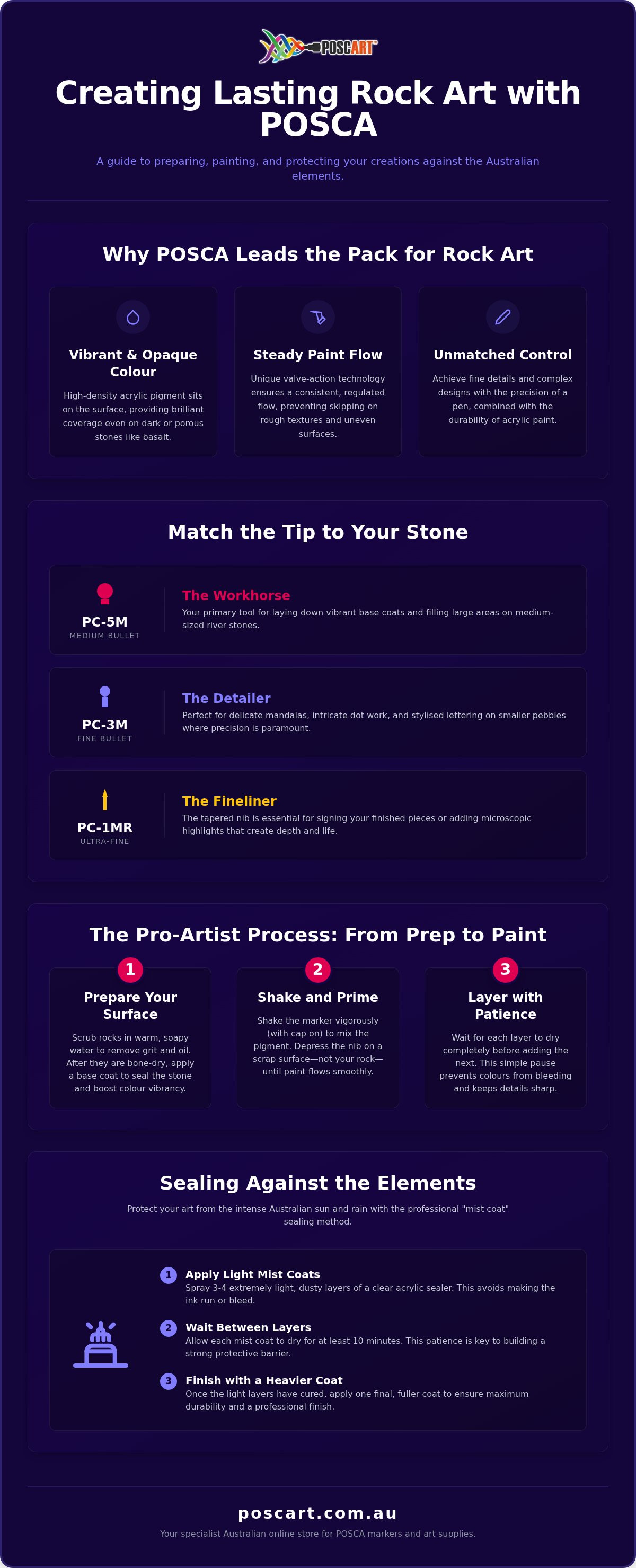
While ancient creators relied on ochre and charcoal throughout the history of rock art, modern artists require tools that conquer dark, porous surfaces. Unlike alcohol-based markers that bleed deep into the stone and lose their vibrancy, POSCA markers use a high-density water-based acrylic pigment. This ensures your posca rock painting ideas remain bright and opaque even on dark basalt or textured river stones. The paint sits on the surface rather than being swallowed by the rock's pores, providing a professional finish every time.
The secret to their reliability on rough Australian sandstone lies in the unique valve-action technology. An internal ball bearing thoroughly mixes the pigment while the pressure-sensitive valve regulates a consistent flow. This mechanism prevents the frustrating skipping or sudden ink dumps common with inferior pens on uneven surfaces. Choosing a POSCA PC-5M Medium Bullet Tip provides a level of detail control that traditional craft paint simply cannot match. It's much easier to execute complex designs with the precision of a pen while maintaining the durable, weather-resistant qualities of acrylic paint.
Choosing the Right Tip Size for Your Stone
Matching your nib to your canvas is vital for a professional result. Different stones demand different geometries to ensure your posca rock painting ideas translate perfectly from mind to medium.
- PC-5M Medium Bullet Tip: This is your primary workhorse for laying down vibrant base coats and filling large sections on medium-sized river stones.
- PC-3M Fine Bullet Tip: Use this for delicate mandalas, intricate dot work, and stylised lettering on smaller pebbles where precision is paramount.
- PC-1MR Ultra-Fine Tip: The tapered nib is essential for signing your finished pieces or adding those microscopic highlights that create depth and life.
Preparation and Technique: Getting Professional Results with Paint Pens
Achieving a gallery-quality finish begins long before the nib touches the stone. Scrub your rocks in warm soapy water to remove grit and oils that hinder paint adhesion. Once bone-dry, applying a base coat is a strategic move. It seals the surface, meaning you'll use less ink from your markers while making your posca rock painting ideas significantly more vibrant. A solid background also prevents the stone's natural texture from competing with your design.
Before you begin, master the "shake and prime" routine. Shake the marker vigorously with the cap on to mix the pigment thoroughly. Depress the nib on a scrap piece of paper, not your stone, until the paint flows smoothly. This prevents accidental flooding on your canvas. Crisp designs require patience. Wait for each layer to dry completely before adding the next. This simple pause prevents colours from bleeding and keeps your details sharp and professional.
Mastering Fine Details and Outlines
Rounded surfaces present a unique challenge for stability. By following professional POSCA pen techniques, you can learn to anchor your hand against the stone to maintain control. Use the PC-3M for bold outlines that define your characters against the base colour. If you make a mistake, don't panic. You can layer opaque white over errors once dry or gently scrape away excess paint with a fine tool. If you're unsure which tip suits your specific project, feel free to ask our creative support team for advice.
Sealing and Care: Protecting Your Rock Art from the Australian Elements
In the harsh Australian climate, where UV indices regularly soar, an unsealed rock is a temporary one. If you're leaving your posca rock painting ideas in kindness gardens or hidden for geocachers, sealing is mandatory. Without it, the intense sun and heavy rainfall will eventually cause the pigment to flake or fade. Professional sealing preserves the technical synergy between the stone and the acrylic pigment you've carefully applied, ensuring your creative efforts aren't washed away by the first summer storm.
Many artists make the mistake of spraying a heavy layer of solvent-based varnish immediately. This often causes the acrylic ink to run or bleed because the solvents react with the paint. Instead, use the "mist coat" method. Apply three to four extremely light, dusty layers of clear acrylic sealer, waiting ten minutes between each. This builds a protective barrier without saturating the paint, ensuring your work stays crisp. Once these light layers have cured, you can apply a final, heavier coat for maximum durability.
Your choice of finish dictates the final mood of the piece. A gloss varnish provides a "wet look" that makes colours pop on dark river stones, giving them a polished, professional appearance. Satin offers a subtle, sophisticated sheen, while matte maintains the natural, earthy texture of the rock, which is often preferred for more organic designs.
Weatherproofing for Longevity
UV resistance is your best defence against the Australian sun. High-quality sealants act as a sunscreen for your art, preventing the vibrant pinks and yellows from dulling over time. For more advanced tips on stone permanence and other materials, consult the POSCA Surface Guide. Finally, protect your investment through proper post-project care. Store your markers horizontally to prevent the pigment from settling or the nib from drying out. This ensures they're primed and ready for your next creative session.
Ready to Transform Your River Stones?
Mastering professional rock art requires a blend of technical knowledge and the right creative tools. By prioritising thorough surface preparation and employing the mist coat sealing method, you ensure your work survives the intense Australian elements. Whether you're exploring fresh posca rock painting ideas for a community project or refining your fine-line mandalas, the quality of your pigment dictates the longevity of your art.
PoscART is an Australian family-owned and operated specialist committed to providing genuine POSCA products with efficient national shipping. We offer custom bundles curated for every artist level to help you build a professional kit without the guesswork. Contact the PoscART team to find the perfect markers for your next project and enjoy the confidence that comes with using market-leading supplies. We're excited to support your creative journey and see your vibrant stones brighten up the neighbourhood.
Frequently Asked Questions
Do I need to prime my rocks before using POSCA markers?
Priming is highly recommended because it prevents the porous stone from drinking up your expensive ink. By applying a base coat, you create a smooth, non-absorbent surface that allows your posca rock painting ideas to shine with maximum opacity. This simple step not only improves the final look but also extends the life of your markers significantly.
Are POSCA markers permanent on rocks if they get rained on?
These markers are water-based but become remarkably durable on porous surfaces like stone once they've fully cured. While they'll survive a light rain shower, they aren't completely waterproof without a protective layer. Over time, moisture and friction will wear the paint away. For any rocks intended for the garden, a specialised sealer is necessary to ensure the design remains permanent.
What is the best way to seal my painted stones for outdoor use?
A high-quality clear acrylic spray is the most reliable way to protect your stones from the elements. This creates a hard, weatherproof shell that prevents moisture from reaching the paint. It's vital to choose a UV-stabilised product to stop the vibrant colours from dulling under the harsh sun. This finish keeps your art looking fresh regardless of the weather.
Can children use these markers for rock painting safely?
Yes, these markers are a popular choice for families and schools because they are non-toxic and odourless. Unlike permanent markers that use harsh chemicals, these are safe for indoor use and won't cause irritation. While the paint is permanent on the rock, it's easily removed from skin with warm soapy water. They're perfect for introducing younger artists to the hobby.
General Information
This article is provided as general information only to help customers compare and choose POSCA markers, acrylic markers, art supplies, creative tools and related products. Product details, colours, finishes, surface suitability, availability, pricing and usage results may vary. Always check the individual product page, manufacturer information, age guidance, surface instructions and safety recommendations before purchasing or using a product.