







How to Fix a Dry POSCA Pen: The 2026 Australian Artist’s Guide
Have you ever reached for your favourite PC-5M mid-project, only to find the paint has stopped flowing while the nib feels like sandpaper against your paper? It is incredibly frustrating to feel like you're wasting money on a marker that still feels heavy with paint, which is why knowing how to fix a dry posca pen is such an essential skill for any creator. We understand that a scratchy nib can ruin a delicate art project, but a dry tip rarely means your marker is ready for the bin.
This guide will teach you how to revive your favourite paint markers and restore smooth, opaque paint flow using professional maintenance techniques. We'll explore everything from soaking clogged nibs to knowing when to swap in a genuine replacement from PoscART, ensuring your creative process stays as vibrant and fluid as possible. By the end of this guide, you will be able to save your supplies and get back to your canvas with total confidence.
Key Takeaways
- Perform the sensory "clink" test to immediately identify whether your marker is truly depleted or simply requires a quick nib revival.
- Follow our step-by-step guide on how to fix a dry posca pen using a gentle warm water soak to safely dissolve stubborn paint clogs.
- Extend the lifespan of your POSCA PC-3M and PC-5M models by utilising reversible tips or genuine replacement nibs from specialist stockists like PoscART.
- Implement professional storage habits, such as keeping markers horizontal and ensuring airtight seals, to protect your paint pens against the drying effects of the Australian climate.
Diagnosing Your POSCA Marker: Is it Empty or Just Clogged?
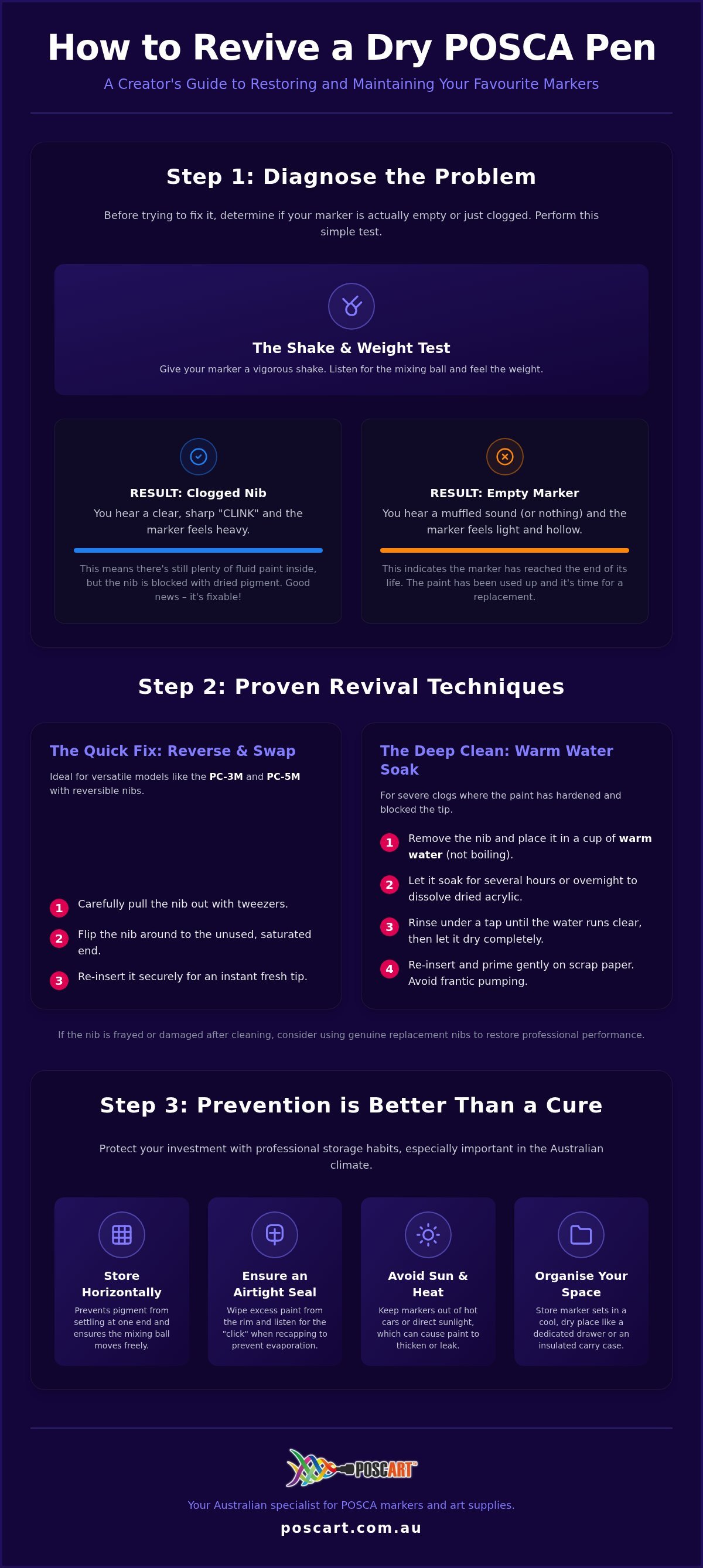
Before you spend time learning how to fix a dry posca pen, you must determine whether your tool is actually empty or simply suffering from a blockage. Start with a visual inspection of the tip. If the nib looks frayed, fuzzy, or has a crusty layer of dried colour around the base, you are likely dealing with a clog or physical wear rather than a lack of paint. A Paint marker relies on a precise valve system to deliver acrylic pigment, and even a small amount of dried residue can halt the entire process.
The Shake and Weight Test for Paint Flow
Pick up your marker and give it a vigorous shake. You are listening for the distinct, sharp "clink" of the internal mixing ball. If the sound is clear and metallic, your paint is still fluid and ready for use. A muffled or non-existent sound suggests the pigment has settled into a thick sludge at the bottom, requiring a longer, more rhythmic shaking session to re-incorporate the materials.
Pay close attention to the physical weight of the barrel in your hand. A full PC-5M or PC-3M feels notably heavier and more "solid" than a depleted one, which often feels like a hollow plastic shell. A clogged valve occurs when paint is present but the internal mechanism is stuck; a depleted marker is simply a tool that has reached the end of its pigment life. Knowing this distinction is the first step in learning how to fix a dry posca pen effectively. If your nib is beyond saving but the barrel is still heavy, you can find replacement nibs at PoscART to restore your favourite pen without buying a whole new unit.
Proven Techniques to Revive Dried POSCA Pen Nibs
If your marker passed the "clink" test but the ink remains stubborn, don't panic. Many creators assume a scratchy tip means the end, but knowing how to fix a dry posca pen often involves simple maintenance. For versatile models like the PC-5M and PC-3M, you can use the "reverse and swap" trick. These nibs are reversible; simply pull the nib out with tweezers, flip it around, and re-insert it to access a fresh, saturated surface. It's a brilliant way to restore smooth paint flow mid-project without waiting for a soak.
The Warm Water Soak and Deep Cleaning Method
For severe clogs where the pigment has hardened, a deep clean is essential. Carefully remove the nib and place it in a container of warm water. Avoid boiling water, as extreme heat can damage the synthetic fibres. Let it soak overnight to dissolve the acrylic binders. In the morning, rinse the nib under a lukewarm tap until the water runs clear. If the fibres are too frayed to hold a sharp edge after cleaning, it's time to utilise replacement nibs to restore a professional line.
Once your nib is clean and dry, re-insert it and prime the marker on a scrap piece of paper. Press down firmly but briefly. Avoid repeated, frantic pumping, as this can flood the internal valve and lead to messy leaks. A controlled, steady approach ensures the paint saturates the nib evenly. If you're still experiencing issues after a deep clean, you can always check our frequently asked questions for more specialised troubleshooting tips.
Preventing Dry-Outs in the Australian Climate
The Australian climate presents unique challenges for art supplies. High temperatures can quickly alter the viscosity of your water-based acrylic ink, leading to premature thickening or separation. While learning how to fix a dry posca pen is a vital skill, prevention is always more efficient. Keeping your markers away from direct sunlight and heat sources ensures the paint remains fluid and easy to prime. Excessive heat often causes the air inside the barrel to expand, which can lead to unexpected leaks once you remove the cap.
Horizontal storage is the preferred method for most POSCA sizes. This orientation prevents the pigment from settling too heavily at either end of the barrel, which reduces the risk of the valve clogging. It also ensures the mixing ball can move freely during your next session, maintaining that essential metallic sound that indicates your paint is well-mixed and ready for the canvas.
Professional Storage and Cap Maintenance
A perfect seal is your first line of defence against evaporation. Regularly check the rims of your marker caps for dried paint build-up. Even a tiny crust of acrylic can break the airtight seal, causing the nib to dry out overnight. We recommend organising your POSCA marker sets in a cool, dry place, such as a dedicated drawer or an insulated carry case. Follow this simple studio pack-down checklist to protect your investment:
- Wipe any excess paint from the marker rim before recapping.
- Listen for the "click" to confirm the cap is fully engaged.
- Store the markers horizontally in a shaded area.
- Avoid leaving pens in hot cars or near sunny windows.
By mastering these habits, you will rarely need to search for how to fix a dry posca pen again. Consistent maintenance keeps your tools in peak condition for every creative project.
Master Your Marker Maintenance
Mastering the art of marker care ensures your creative flow is never interrupted by a stubborn nib. By using the sensory clink test to diagnose your tools and applying the gentle warm water soak method, you now have the professional skills required for how to fix a dry posca pen without needing a total replacement. Remember that horizontal storage and clean cap rims are your best defence against the harsh Australian heat. These simple habits protect your investment and keep your colours vibrant for every project.
As a specialist Australian store, we're here to support your creative journey with expert advice and authentic supplies. Explore our range of genuine POSCA markers and accessories at PoscART to keep your studio fully equipped. We can't wait to see what you create next with your revived kit.
Frequently Asked Questions
Can I use boiling water to fix a dried out POSCA pen?
You should never use boiling water to revive your markers. While heat helps dissolve acrylic pigment, boiling temperatures can permanently warp the synthetic fibres of the nib and damage the internal valve mechanism. Stick to lukewarm or warm tap water to safely soften the paint without compromising the structural integrity of your favourite art supplies.
How long should I soak a POSCA nib to remove a stubborn clog?
A standard soak for a moderately dried nib usually takes about an hour, but stubborn clogs require an overnight stay in warm water. If you are researching how to fix a dry posca pen that hasn't been used for months, a longer soak ensures the water penetrates deep into the core of the nib to dissolve hardened acrylic binders completely.
What should I do if the paint is leaking from the side of the nib?
Leaks generally occur when the internal valve is flooded or the nib isn't seated correctly. Remove the nib, clean the area with a damp cloth, and re-insert it firmly. Ensure you aren't pumping the marker too aggressively on hard surfaces, as this can force paint around the sides of the tip rather than through the centre.
Are all POSCA pen tips replaceable if they get too dry?
Most popular models, including the PC-3M and PC-5M, feature replaceable or reversible nibs. However, the ultra-fine PC-1MR has a fixed metal-ringed tip that cannot be removed or replaced. For other sizes, keeping a stash of genuine replacement nibs from PoscART is a cost-effective way to manage how to fix a dry posca pen when cleaning isn't enough.
General Information
This article is provided as general information only to help customers compare and choose POSCA markers, acrylic markers, art supplies, creative tools and related products. Product details, colours, finishes, surface suitability, availability, pricing and usage results may vary. Always check the individual product page, manufacturer information, age guidance, surface instructions and safety recommendations before purchasing or using a product.