







What Surfaces Do POSCA Pens Work On? The Ultimate Australian Artist’s Guide
The secret to POSCA mastery isn't just about the pen in your hand; it's about understanding the "thirst" of the surface beneath it. While you might wonder what surfaces do posca pens work on, the real magic happens when you pair the right tip size with the perfect preparation. Most Aussie artists have felt that frustration when a vibrant design bleeds into raw timber or flakes off a glass jar. You want your creative projects to endure, whether you're customising a surfboard for the coast or decorating river stones for a gift.
This guide reveals how to achieve a professional finish on dozens of materials while providing the technical knowledge to keep your colours bright. As your local specialists at PoscART, we'll walk you through choosing primers, selecting the ideal markers, and sealing your work for longevity. From textiles to terracotta, you'll gain the confidence to transform any everyday object into a long-lasting work of art.
Key Takeaways
- Learn the specific techniques for porous materials like timber and textiles to prevent ink feathering while achieving vibrant, natural adhesion.
- Discover exactly what surfaces do posca pens work on and how to properly clean and prime glass, metal, or plastic for a professional, scratch-resistant finish.
- Master the art of preparing Australian river stones and surfboards, including the essential sanding and sealing steps required for outdoor durability.
- Gain confidence in choosing the correct heat-setting or varnishing methods to ensure your custom creative projects remain vivid and long-lasting.
Porous Surfaces: Achieving Natural Permanence on Wood, Fabric, and Paper
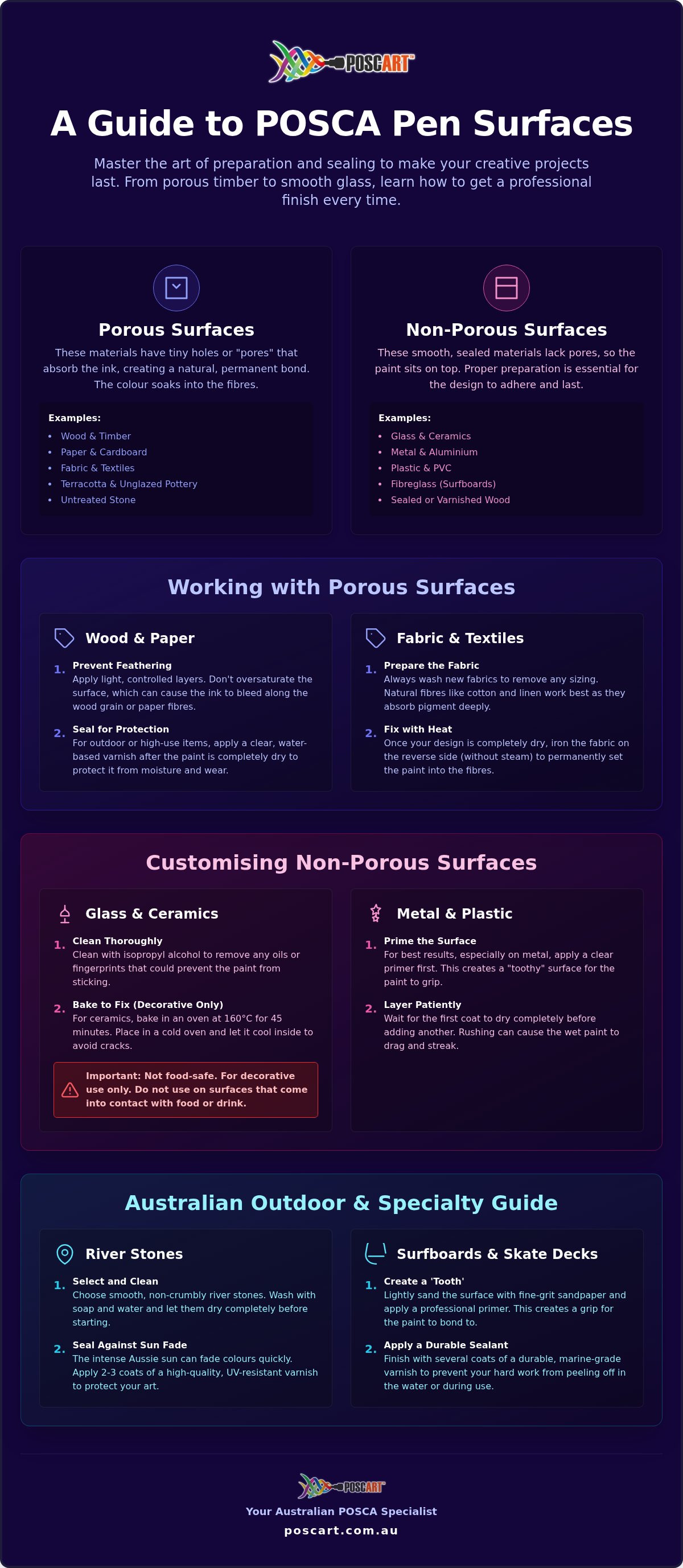
Porous materials like raw timber, cardboard, and textiles provide the ideal foundation for POSCA markers because the water-based pigment penetrates the fibres. This creates a natural bond that makes the artwork more durable than on smooth surfaces. A paint marker works by depositing acrylic pigment that dries quickly; however, on very "thirsty" materials, you might encounter feathering or bleeding. This often happens when the ink follows the grain of the wood or the weave of the paper. To manage this, apply light, controlled layers rather than saturating the surface.
The POSCA PC-5M Medium Bullet Tip is our top recommendation for these projects. Its versatile line width provides consistent colour laydown, making it perfect for customising wooden skate decks or adding bold designs to textured art paper. Understanding what surfaces do posca pens work on starts with identifying these absorbent foundations that "lock" the colour in naturally.
Fabric and Textiles: Fixation for Long-Lasting Wear
When working on textiles, preparation is the key to longevity. Always wash new fabrics first to remove industrial sizing and coatings that might block the ink. POSCA works best on natural fibres like cotton or linen because they absorb the pigment deeply, whereas synthetic blends can be less predictable. Once your design is bone dry, iron the fabric on the reverse side using a medium heat setting without steam. This crucial step fixes the pigment into the fibres, ensuring your calico tote bags or personalised t-shirts stay vibrant after use. It's a simple way to create professional-looking custom gear that handles regular wear.
Non-Porous Textures: Customising Glass, Metal, and Plastic with Precision
Non-porous surfaces like glass, metal, and plastic present a unique challenge because they lack the natural "tooth" found in timber. When exploring what surfaces do posca pens work on, it's vital to remember that on smooth textures, the paint sits on top rather than soaking in. To ensure your design sticks, cleaning is non-negotiable. Use isopropyl alcohol to strip away fingerprints and oils that prevent adhesion. For items like custom metal canisters, applying a clear primer provides the "key" needed for a permanent finish. If you're working on dark plastics, layering is essential. Wait for the first coat to dry completely before adding the next; otherwise, you'll simply drag the wet paint around. Knowing what surfaces do posca pens work on gives you the edge when customising everyday objects.
While we love seeing creative projects in the wild, always consider the environment. Following the Leave No Trace Seven Principles is essential when moving your art outdoors, particularly if you're tempted to paint in natural bushland.
Glass and Ceramics: From Shop Fronts to Decorative Vases
POSCA markers are a favourite for seasonal shop-front displays because the vibrant pigment stands out against the glass but remains removable with a scraper. For decorative ceramic vases, you can fix the design by baking the item in a domestic oven at 160°C for 45 minutes. Always place the piece in a cold oven and let it cool inside to prevent cracking. Remember that POSCA art is for decorative use only. It shouldn't touch food or drink areas as it isn't food-safe. If you have questions about specific applications, feel free to reach out to our creative team for expert guidance.
The Australian Outdoor Guide: Prepping and Sealing for Rocks and Surfboards
Australia's harsh climate demands a specialised approach when you're deciding what surfaces do posca pens work on for outdoor displays. Rock painting has become a staple for Aussie school projects and community trails, but the longevity of your work depends on selecting smooth, non-crumbly river stones. These porous minerals absorb the paint well, yet the intense Australian sun will quickly fade unprotected pigments. For larger outdoor murals or heavy-duty sports equipment, the PoscART The Big Job Coverage Set provides the broad tips and high-volume ink needed for expansive coverage. If you're customising surfboards or skateboards, a light sand with fine-grit paper and a professional primer are essential. This preparation creates the necessary "tooth" for the acrylic to bond to the fibreglass or treated timber, preventing your hard work from peeling off during the first surf session.
Sealing Your Masterpiece: Choosing the Right Varnish
Applying a high-quality sealant is the final step in protecting your creativity from the elements. Water-based spray varnishes are excellent for uneven textures like rocks or rough timber; they provide a uniform finish without the risk of dragging the ink. For smooth surfaces that handle high friction, a brush-on sealant can offer a thicker protective layer. Always apply multiple thin coats and allow each to dry completely. This patience ensures a professional finish that won't peel, cloud, or yellow over time. Most importantly, prioritise a UV-resistant coating. This protects your outdoor artwork from the extreme light conditions found across the country, keeping your colours vivid for years. Results will vary based on the specific coating and surface texture, so we always recommend testing a small, inconspicuous area first.
Ready to Transform Your Next Creative Project?
Mastering what surfaces do posca pens work on is the first step toward creating professional, long-lasting art. Whether you're layering vibrant pigments on raw timber or heat-setting custom designs on glass, the secret lies in matching your technique to the material's absorbency. By preparing your surfaces with care and choosing UV-resistant sealants, you can ensure your work withstands the intense Australian elements. As an authentic, family-owned specialist, PoscART is here to support your journey with the full range of genuine tips and fast national shipping. If you're ready to start your next masterpiece, explore our full range of genuine POSCA markers at PoscART and find the perfect tools for any surface. It's time to pick up your markers and let your creativity run wild.
Frequently Asked Questions
Are POSCA pens permanent on glass and plastic?
POSCA markers are naturally removable on non-porous surfaces like glass and plastic, though they can be made semi-permanent with specific fixing methods. For glass, baking the item in a domestic oven at 160°C for 45 minutes helps the pigment bond to the surface. For plastic, applying a water-based spray varnish is essential to prevent the paint from scratching off during regular handling or storage.
How do you make POSCA markers permanent on fabric?
You can fix POSCA designs on fabric by ironing the reverse side of the material once the paint is completely dry. Use a medium heat setting without steam for several minutes to set the pigment. Before you start, ensure the fabric has been washed to remove industrial coatings. This process helps the pigment penetrate the fibres, making your custom textiles more resistant to light washing.
Can you use POSCA pens on leather boots or sneakers?
Yes, POSCA pens work well on leather and synthetic sneakers, provided you prepare the surface first. Wipe the area with a damp cloth or a specialised leather cleaner to remove dirt and factory oils. Once your design is finished, it's vital to apply a flexible, water-based acrylic sealant to protect the artwork from cracking or peeling as the shoes crease during daily wear.
Do POSCA pens wash off in the rain if they are not sealed?
Unsealed POSCA art on non-porous surfaces like plastic or metal will likely wash off or smudge when exposed to rain. While the ink is more stubborn on porous materials like timber or stone, the colours will eventually fade or bleed under the harsh Australian elements. To protect outdoor projects from moisture and UV light, always apply a high-quality, water-based spray varnish.
Are POSCA markers dishwasher safe for mugs and plates?
No, POSCA markers are not dishwasher safe, and decorated items should be considered for decorative use only. Even after oven-baking, the paint can chip under the high heat and abrasive detergents of a dishwasher. Additionally, the ink shouldn't come into contact with food or drink areas. For the best results, gently hand-wash your custom ceramics using a soft sponge and mild soap.
What is the best way to seal POSCA on rocks for outdoor gardens?
The most effective way to seal rocks for the garden is by applying several thin coats of a UV-resistant, water-based spray varnish. This protects the pigment from fading in the sun and prevents moisture from lifting the paint. When considering what surfaces do posca pens work on for outdoor use, remember that porous river stones need this extra layer to maintain their vibrant look for years.
General Information
This article is provided as general information only to help customers compare and choose POSCA markers, acrylic markers, art supplies, creative tools and related products. Product details, colours, finishes, surface suitability, availability, pricing and usage results may vary. Always check the individual product page, manufacturer information, age guidance, surface instructions and safety recommendations before purchasing or using a product.