







Best POSCA for Filling Large Areas: A Guide for Big Creative Projects in 2026
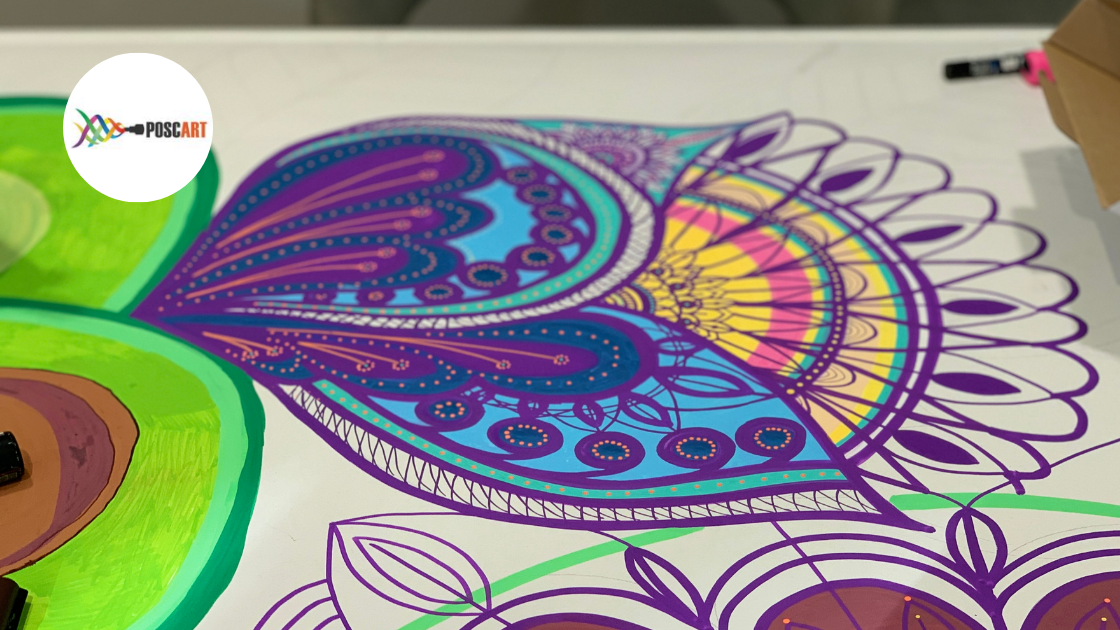
You might think grabbing the biggest marker in the shop is the only way to tackle a mural, but the largest tip can actually lead to the messiest streaks if you haven't mastered the paint flow. We've all felt that frustration when you're halfway through a massive timber commission or a fresh canvas and the ink starts skipping. Those dreaded overlapping lines can quickly turn a passion project into a headache. Finding the best posca for filling large areas isn't just about size; it's about matching the right tool to your specific surface to ensure a consistent, vibrant colour and finish every time.
In this guide, you'll discover which markers deliver the smoothest coverage for your big creative projects without the risk of running out of ink at the worst possible moment. We'll explore how to achieve a professional, opaque look on everything from concrete to fabric while saving you precious time and effort. From the broad 15mm chisel of the PC-17K to the expressive, controlled drips of the MOP'R PCM-22, we'll help you understand which tips provide the most reliable ink flow for your next large-scale masterpiece.
Key Takeaways
- Learn how the physics of acrylic paint causes track marks and how choosing a wider tip can significantly slash your project time.
- Compare the ultra-wide 15mm PC-17K with the PCM-22 MOP'R to decide between sharp, clean edges or expressive, organic drip effects.
- Discover why the PC-8K and PC-7M are often the best posca for filling large areas when you need a balance of precision and broad coverage.
- Master the "Wet-on-Wet" application technique to eliminate visible streaks and ensure a smooth, opaque finish on rough surfaces like timber or concrete.
- Find out how custom bundles provide the essential colour backups needed to complete large-scale art without running out of ink halfway.
Why Choosing the Right POSCA Matters for Large Surface Coverage
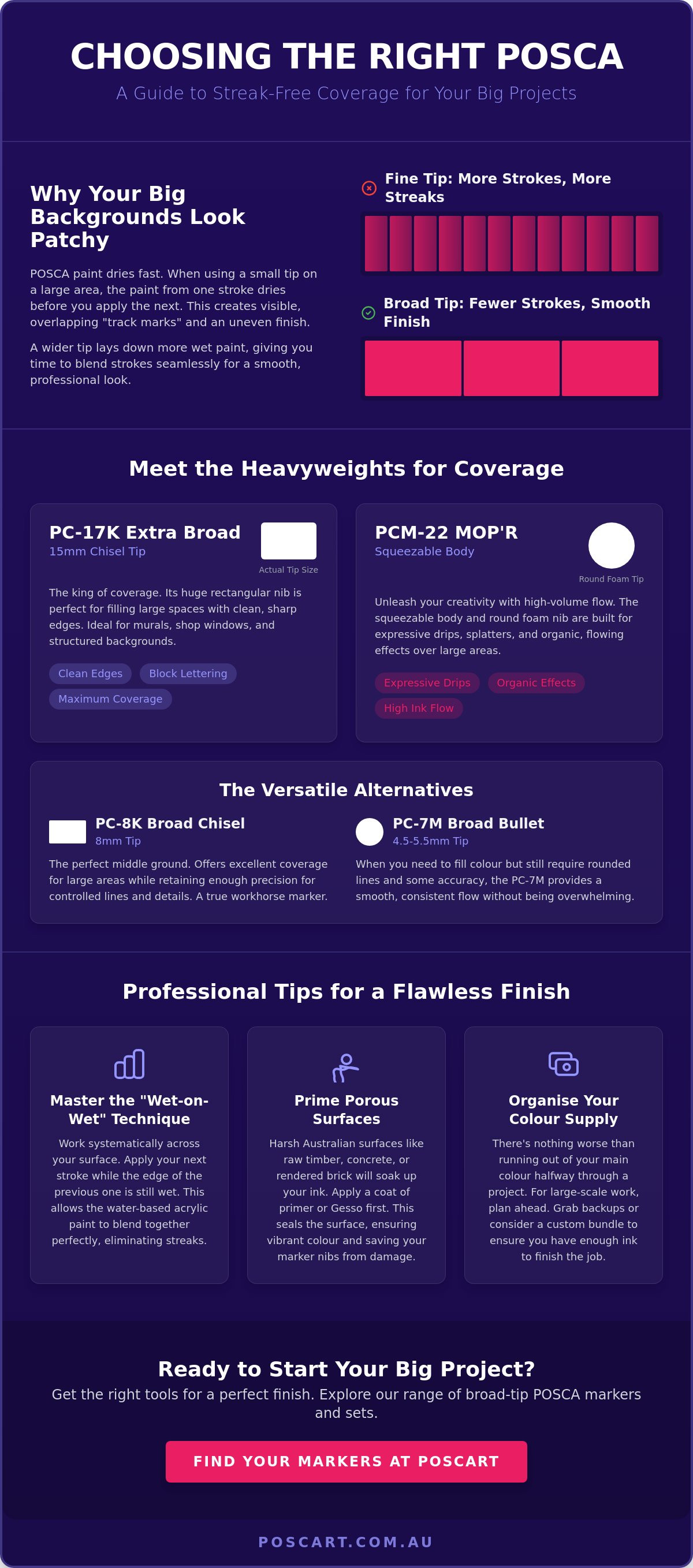
Choosing the right tool for a massive project is the difference between a professional mural and a patchy DIY job. When you use a fine tip for a large background, the paint dries at different rates across the surface. This leads to frustrating "track marks" where one stroke meets the next. A high-quality POSCA marker is designed to deliver a consistent flow, but the physical width of the nib determines how much wet paint stays active on the surface at once. If the paint dries before you finish the adjacent stroke, you lose the ability to blend them into a seamless field of colour.
Efficiency is king when you're working on a deadline. If you're using a 5mm tip to fill a square metre, you're making three times as many passes as you would with a 15mm PC-17K. This isn't just about tired arms; it's about ink management and pigment saturation. The best posca for filling large areas ensures that the ink remains opaque and vibrant across the entire area. If you choose a marker that's too small, you'll likely end up wasting ink on second and third coats just to hide the seams, which drives up the cost of your supplies and eats into your creative time.
To better understand how these markers behave on different scales, watch this helpful video:
The Problem with "Patchy" Backgrounds
POSCA paint is water-based and dries remarkably fast. This quick-dry feature is excellent for layering details, but it's a challenge for flat backgrounds. Once a stroke sets, any overlapping layer will appear slightly darker or more textured, creating visible seams. For a professional artist, a streaky mural can feel like a failure. It's vital to maintain a "wet edge" while you work. Using a broader tip allows you to cover more ground before the paint begins to cure, resulting in that coveted, screen-printed look.
Surface Prep: Priming for Maximum Coverage
Australian artists often work on harsh, thirsty surfaces. Raw timber and rendered brick walls, common in local backyards and urban spaces, are incredibly porous. They'll drink your ink before it has a chance to level out. Using a primer or Gesso creates a smooth "slide" that allows the marker to glide across the surface. This prep work is essential for large-scale art. It saves your nibs from grinding down on rough concrete and ensures you get the most out of your individual POSCA pens without needing multiple passes for opacity.
If you're planning a massive installation, consider starting with a dedicated set like The Big Job Coverage Set. This ensures you have the right nib sizes and enough ink to maintain consistency from one side of the wall to the other. The best posca for filling large areas is ultimately the one that lets you work fast enough to keep your edges wet and your colours bold.
The Heavyweights: PC-17K Extra-Broad vs. PCM-22 MOP’R
When you're staring down a massive blank space, you need serious firepower. The PC-17K and the PCM-22 MOP’R are the undisputed heavyweights for this task. While both markers cover distance, they do it with completely different personalities. One offers the precision of a massive chisel, while the other brings the high-volume flow of a squeezable bottle. Choosing between them depends entirely on your creative style and the specific surface you're tackling.
The PC-17K is often cited as the best posca for filling large areas when clean edges are your top priority. Its 15mm square chisel tip acts like a small paintbrush that never needs dipping. It’s perfect for structured backgrounds or bold, blocky lettering on shop windows. Because the nib is stiff, it doesn't deform under pressure, giving you total control over where the pigment lands. Just remember to keep the nib clean; a quick wipe with a damp cloth prevents dried paint from ruining those sharp corners.
PC-17K: The King of the Chisel
The rectangular nib of the PC-17K is a masterpiece of engineering for signage and structured backgrounds. You can use the broad flat edge to lay down massive blocks of colour or turn it on its side for slightly thinner, architectural lines. It's the go-to for artists who want their work to look crisp and intentional. To maintain the nib, always store the marker horizontally and ensure the cap is clicked shut to prevent that 15mm surface from drying out.
PCM-22 MOP’R: Speed and Soul
For artists who want more soul and less structure, the PCM-22 MOP’R is the sponge-tip revolution you've been waiting for. It features a round foam tip that can produce lines anywhere from 3mm to 19mm wide. The real magic is in the squeezable body. By varying your grip, you can flood a surface with ink or create those iconic street-art drips. It makes painting with markers feel more like using a spray can or a traditional mop, allowing for rapid coverage of massive shapes.
Comparing these two comes down to precision versus volume. The MOP’R puts down a lot of paint very quickly. This is brilliant for a bedroom mural where you have a lot of plasterboard to cover and want a textured, hand-painted feel. However, if you’re working on something like a surfboard background, the PC-17K is superior. It lays down a thinner, more even coat that’s easier to seal and won't run. If you're still stuck on which one to grab for your specific project, you can always check our frequently asked questions for more expert tips on nib selection.
Chisel Tip or Broad Bullet? Finding Your Perfect Coverage Partner
If the heavyweights we discussed earlier are the sledgehammers of the range, the PC-8K and PC-7M are the precision tools every artist needs for medium-to-large sections. Choosing the best posca for filling large areas often comes down to how you prefer to move your hand. Chisel tips require a specific, consistent angle to maintain a clean line, whereas bullet tips are omnidirectional. This means you can change direction mid-stroke without losing contact or changing the line width. This flexibility makes bullet tips a favourite for organic shapes on vertical walls where your arm position might shift as you move.
Deciding when to downsize is a strategic choice. While a 15mm nib is brilliant for wide-open spaces, it can be clumsy when you're filling large areas that have complex internal shapes or tight corners. Swapping to an 8mm or 5mm tip for these sections prevents accidental overruns. It allows you to maintain the same opaque pigment quality without sacrificing the "clean" look of your boundaries. Using a combination of sizes is the secret to a mural that looks professional from both a distance and up close.
Mastering the PC-8K Chisel
The PC-8K Broad Chisel is the undisputed workhorse for most Australian school projects and retail signage. Its 8mm tip is wide enough to cover a decent square metreage quickly but sharp enough to handle defined edges. The secret to a professional finish is the "ribbon" stroke. By keeping the flat edge of the nib perfectly flush against the surface and moving in long, continuous lines, you create a consistent ribbon of wet paint. You can also use the sharp corner for outlines before flipping it to the flat side for the fill, making it a highly efficient two-in-one tool.
The Case for the PC-7M Broad Bullet
While chisels love flat surfaces, the PC-7M Broad Bullet is the king of texture. Its rounded tip, measuring between 4.5mm and 5.5mm, is far more forgiving on rough surfaces like stone or rendered brick. Because you don't have to worry about the angle of the nib, you can focus entirely on the rhythm of your application. It produces a soft, "painted" aesthetic that lacks the architectural rigidity of a chisel. If you find the PC-7M is still a bit too chunky for your finer background details, you might want to consult our POSCA PC-5M Australia Guide to see how a medium bullet tip can bridge the gap for those tricky internal sections.
Ultimately, your "coverage partner" should match the surface and the style. For sharp, geometric fills, stick with the PC-8K. For anything organic, textured, or involving frequent changes in direction, the PC-7M will save you a lot of frustration. Having both in your kit ensures you're ready for any challenge the surface throws at you.
Professional Tips for Streak-Free Filling and Large-Scale Backgrounds
Achieving a flat, opaque finish on a massive scale is the ultimate test of an artist's technique. Even when you've selected the best posca for filling large areas, the way you move the marker across the surface determines the final quality. The biggest mistake most beginners make is treating a paint marker like a standard texta. Because POSCA contains real acrylic pigment, it behaves like paint; it needs to stay "active" while you're blending adjacent strokes to avoid those unsightly dark seams.
Rhythm and pace are your best friends here. If you stop halfway through a large block of colour to answer your phone or grab a coffee, the edge of your work will dry. When you return, the new wet paint will sit on top of the dried layer rather than merging with it, creating a visible line. Maintaining a steady, brisk pace ensures that you're always working into a wet edge. This is particularly vital in the dry Australian climate, where high temperatures can slash your working time significantly.
The Secret to the Seamless Fill
To get that professional, screen-printed look without using a brush or sponge, follow these three essential steps:
- Step 1: Shake the marker vigorously. You should hear the ball bearing rattling inside for at least 30 seconds. This ensures the pigment is fully suspended and the colour remains consistent from the first stroke to the last.
- Step 2: Prime the nib. Don't start on your masterpiece. Press the nib down on a scrap piece of cardboard or paper until the ink flow is heavy and consistent.
- Step 3: Work in overlapping wet rows. Use a "Vertical Column" approach for large walls. Start at the top and work your way down in columns about two nib-widths wide, ensuring each new stroke slightly overlaps the previous one while it's still wet.
Layering for Depth
Sometimes a single pass isn't enough for total opacity, especially on darker backgrounds. If you notice the paint starting to "pill" or lift, it's a sign you're overworking the surface while it's in a semi-dry state. Stop immediately and let it cure. Once it's bone dry, you can apply a second coat. In most parts of Australia, you'll only need to wait about 10 to 20 minutes between coats, but always do a "touch test" in a corner first. For more specific advice on how different materials react to these techniques, check out our guide on What Surfaces Do POSCA Pens Work On?
Mastering the best posca for filling large areas takes a bit of practice, but the results are worth the effort. If you're struggling with a specific surface or have questions about ink flow for your next big project, feel free to reach out to our creative support team for personalized advice.
Planning Your Next Big Project with PoscART Bundles
Stepping onto a job site or starting a large canvas without enough ink is a recipe for disaster. When you’re in the zone, the last thing you want is to run dry on your primary background colour. This is where strategic planning and bulk supplies become essential. Choosing the best posca for filling large areas is only half the battle; you also need to ensure you have the depth in your kit to finish what you started without frantic, mid-project trips to the shop.
Bundling your markers isn't just about saving money. It’s about ensuring colour consistency across your entire piece. Even within the same brand, slight variations can occur between different batches or tip sizes if the ink isn't mixed perfectly. By purchasing a dedicated set, you guarantee that your PC-17K background matches your PC-5M details perfectly. This professional approach prevents the "patchwork" look that can plague large-scale works when supplies are cobbled together from various sources.
The Big Job Coverage Set Explained
We developed PoscART The Big Job Coverage Set specifically for Australian muralists and large-scale creators who need serious volume. This set contains 24 markers, featuring a curated mix of PC-17K, PC-8K, and PC-7M tips. It provides total flexibility, allowing you to flood massive areas with the 15mm chisel while having the 8mm and 5mm options ready for secondary shapes and outlines. For local artists, this bundle is the most economical choice, providing a professional-grade toolkit that handles everything from school murals to commercial signage.
Customising and Storing Your Kit
A well-rounded kit often mixes the heavy hitters with more precise tools. While the PC-17K handles the heavy lifting for your base layers, keeping a few PC-5M markers on hand allows you to cut in around details without the bulk of a 15mm nib. Once you've invested in these larger markers, storage is critical for longevity. Always store your PC-17K, PC-8K, and PCM-22 markers horizontally. This keeps the pigment evenly distributed and prevents the massive nibs from drying out or becoming oversaturated at one end. Ensure the caps click firmly into place; a loose cap on a large marker can lead to a significant loss of paint in the dry Australian heat.
Order Your Supplies with Confidence
PoscART is the trusted local staple for creatives because we understand the unique demands of big projects. Whether you're customising a surfboard or painting an urban laneway, using genuine POSCA is non-negotiable for achieving that signature opaque finish. We pride ourselves on being a primary resource for the community, providing the tools and expertise you need to succeed. If you have a specific vision in mind, you can contact the PoscART team to organise your custom mural bundle. We’ll help you select the best posca for filling large areas so your next project is a seamless, streak-free success.
Bring Your Large-Scale Vision to Life
Mastering massive creative projects is all about having the right tools and a steady rhythm. You've seen how the PC-17K and PCM-22 MOP’R can transform your workflow, provided you match the nib to your surface and maintain a wet edge. By choosing the best posca for filling large areas and following the professional techniques we've discussed, you'll eliminate those frustrating streaks and achieve a vibrant, opaque finish that lasts. Whether you're tackling a rendered brick wall or a custom surfboard, the secret lies in preparation and having the right volume of ink on hand.
As a specialist Australian POSCA retailer, we're here to support your creative journey with our curated "Big Job" coverage sets and reliable national shipping for all your mural supplies. Don't let technical hurdles slow down your inspiration. Get expert advice on the best markers for your big project—contact us today to ensure you have everything you need for your next masterpiece. We're genuinely invested in your creative outcomes and can't wait to see the incredible scale of what you create next.
Frequently Asked Questions
Which POSCA pen has the widest tip available?
The PC-17K Extra Broad Chisel Tip features a 15mm wide nib, while the PCM-22 MOP'R offers a line width ranging from 3mm up to 19mm depending on pressure. These are the top choices when looking for the best posca for filling large areas quickly. The PC-17K provides a consistent rectangular stroke, whereas the MOP'R uses a round foam tip for broader, more expressive coverage on various creative surfaces.
How do I stop my POSCA markers from leaving streaks on large backgrounds?
Maintaining a wet edge is the most effective way to prevent visible streaks and overlapping lines. Work in small, vertical columns and ensure your next stroke overlaps the previous one before the paint has a chance to dry. Using a larger tip like the PC-17K reduces the number of passes required, which naturally minimises the risk of creating dark seams or patchy textures on your canvas or wall.
Can I use a PC-17K on a surfboard or skateboard?
You can certainly use the PC-17K on surfboards and skateboards, as the water-based acrylic paint adheres well to most prepared surfaces. For a surfboard, apply your design over a lightly sanded surface and finish with a professional-grade clear coat or resin to ensure the artwork survives the salt water. On skateboards, a clear acrylic spray will protect your large-scale graphics from the wear and tear of daily use.
How many PC-17K markers do I need for a 1-square-metre mural?
One PC-17K marker typically covers approximately 1 to 1.5 square metres, though this varies based on the porosity of your surface. Rough concrete or raw timber will absorb more ink, potentially requiring a second marker for full opacity. To avoid running out halfway through your mural, it is a smart move to have a spare marker or a dedicated bundle ready before you begin your project.
Is the POSCA MOP’R better than the PC-17K for filling space?
The PCM-22 MOP'R is generally faster for filling large, organic spaces due to its high-volume ink flow and squeezable body. It is the best posca for filling large areas if you want a textured, street-art aesthetic with drips and splatters. However, if you require sharp, architectural edges or perfectly flat blocks of colour, the PC-17K’s 15mm chisel tip remains the superior choice for professional precision and structured designs.
Can I refill a POSCA marker once it runs out during a big job?
POSCA markers are designed as non-refillable, sealed units to maintain the precise consistency and quality of the water-based paint. While some artists attempt to force them open, we don't recommend it as it can damage the valve system and lead to leaks or poor ink flow. For large-scale projects, it is much more reliable to invest in a set of markers to ensure you have a fresh, consistent supply of pigment.
What happens if the nib of my large POSCA marker dries out?
Most large POSCA nibs can be revived by removing them and soaking them in warm water overnight to dissolve dried paint. If the nib is physically damaged or frayed from rough surfaces like brick, you can simply swap it for a brand-new replacement. Keeping a few replacement nibs in your kit is an excellent way to extend the life of your markers without needing to buy a whole new paint pen.
Are POSCA markers permanent on large outdoor walls?
POSCA paint is naturally permanent on porous surfaces like brick, stone, and timber once it has fully cured. For outdoor murals exposed to the harsh Australian sun and rain, we recommend applying a UV-resistant clear varnish to protect the pigment from fading over time. This extra layer ensures your large-scale artwork remains vibrant and weather-proof for years to come, regardless of the local climate conditions and surface exposure.
General Information
This article is provided as general information only to help customers compare and choose POSCA markers, acrylic markers, art supplies, creative tools and related products. Product details, colours, finishes, surface suitability, availability, pricing and usage results may vary. Always check the individual product page, manufacturer information, age guidance, surface instructions and safety recommendations before purchasing or using a product.