







Best Markers for Rock Painting: The Ultimate Australian Artist’s Guide

You've spent hours meticulously detailing a garden stone only for the first coastal rain to wash your hard work into the dirt. Most Aussie crafters have felt that frustration when using the wrong tools. It's disappointing when standard markers for rock painting skip across rough sandstone or leave you with a streaky, transparent finish that lets the dull grey of the stone peek through. You need a reliable medium that matches your creative energy and stands up to the elements.
We're here to help you solve those common problems once and for all. This guide reveals why high-pigment acrylic paint markers are the superior choice for stone and how to select the perfect POSCA tips for every detail of your project. You'll learn how to achieve high opacity on the darkest pebbles and discover the best ways to make your rock art permanent against the harsh Australian sun. From fine-lining to broad coverage, we'll help you organise a professional kit that delivers vibrant results every time you pick up a pen.
Key Takeaways
- Learn why water-based acrylic pens provide the precision and control needed for complex rock art designs.
- Discover how to match the right nib size to your stone's surface to achieve professional outlines and smooth colour coverage.
- Understand the importance of high-opacity pigment and why POSCA stands out as the premier choice of markers for rock painting.
- Master the preparation and sealing techniques required to protect your creations from the harsh Australian elements.
- Explore how starting with a curated bundle can help you organise a complete palette of vibrant colours for your next outdoor project.
Why Paint Markers Are a Game-Changer for Australian Rock Artists
Paint markers are essentially portable acrylic paint housed in a convenient, pen-like barrel. Unlike standard felt-tips that use thin dyes, these tools feature a valve-action system to deliver highly pigmented, water-based acrylic ink. This ink sits on the surface of the stone rather than soaking in, providing the vibrant, opaque finish that artists crave. This technical advantage is precisely why they've become the preferred markers for rock painting across the country. While humans have been fascinated by the history of rock art for millennia, modern technology has finally provided a way to capture that creative spirit without the logistical headache of a traditional studio setup.
To see these tools in action and understand why they're so popular for community projects, watch this helpful video:
Convenience vs. Traditional Acrylic Brushes
Think about the last time you tried to paint a tiny detail on a pebble with a standard brush. You likely spent more time washing bristles and mixing colours on a palette than actually creating art. Paint pens eliminate these hurdles entirely. There are no messy water jars to spill and no need for bulky palettes. You simply shake the pen, prime the nib, and start drawing. This instant setup makes them a favourite for families at the park or school groups in the classroom. Because the paint flow is regulated through the nib, you get a consistent application that brushes simply can't match on irregular, porous surfaces. It's a faster, cleaner way to work that doesn't sacrifice professional quality.
The 'Found Art' Movement in Australia
Across Australia, from the suburban parks of Melbourne to the sun-drenched beaches of the Gold Coast, the 'Kindness Rock' movement has turned local walking tracks into outdoor galleries. This community-driven craze relies on artists leaving small, decorated stones for others to find, keep, or re-hide. Using professional-grade marker sets ensures your designs don't just look great on day one; they actually survive the coastal humidity and afternoon sun. Safety is paramount when contributing to these public displays. Since these rocks are left in natural environments, using non-toxic, water-based markers is essential to protect our local wildlife and ecosystems. Choosing a quality individual POSCA pen allows you to contribute to this movement with confidence, knowing your art is both vibrant and environmentally responsible.
Choosing Your Nib: Tip Sizes for Detail and Coverage
Selecting the right nib size is just as vital as choosing your colours. A common mistake beginners make is trying to use a fine tip on a rough, unprimed sandstone. The abrasive surface acts like sandpaper, wearing down the nib prematurely. Conversely, using a broad tip on a small, smooth river pebble limits your ability to create intricate designs. Successful artists always match their tool to the stone's topography. When sourcing your materials, remember there are environmental and legal considerations regarding where you collect stones; always stick to ethical sourcing from landscape suppliers or your own property.
Using professional markers for rock painting allows you to swap between different line weights to create depth. For most projects, you'll want a mix of broad coverage and sharp outlines. This variety ensures your background doesn't look streaky and your fine details remain crisp. It's about having the right tool for each stage of the creative process.
PC-3M and PC-5M: The Essential Rock Painting Duo
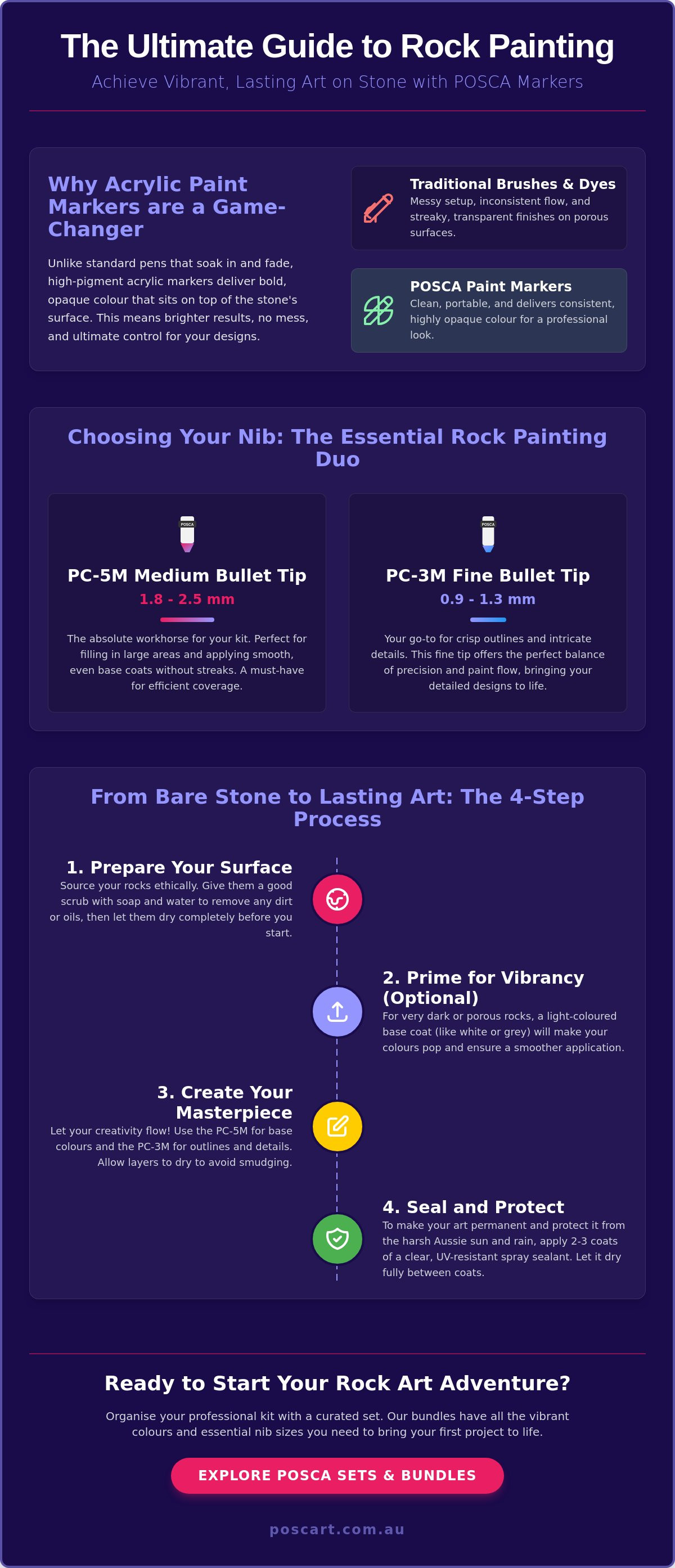
These two sizes cover 90% of your rock painting needs. The POSCA PC-5M Medium Bullet Tip is the absolute standard for base coats. Its 1.8 to 2.5mm line width allows you to fill in large background areas efficiently without wasting ink. Once your base is dry, the PC-3M Fine Bullet Tip (0.9 to 1.3mm) becomes your best friend. It offers the perfect balance for medium-level detail and crisp lettering. Together, these pens allow you to block out shapes and add secondary patterns with ease. They're the reliable workhorses that every Aussie hobbyist should have in their kit.
Fine Liners for Intricate Mandalas and Patterns
If you're moving into professional-level dot work or complex mandalas, you'll need the precision of the PC-1M or PC-1MR. The PC-1MR features an ultra-fine tapered tip that's ideal for tiny accents. To avoid clogging these delicate tips on porous, dusty rocks, ensure your stone is completely clean and primed first. When layering light colours over dark backgrounds, wait for the bottom layer to be bone dry. This prevents the fine nib from picking up the darker pigment and muddying your work. These smaller nibs are sensitive, so a light touch is all you need to achieve stunning, professional results. If you're unsure which nib suits your specific project, feel free to reach out to our creative support team for personalised advice.
POSCA vs. The Rest: What Makes a Quality Rock Marker?
Walk into any craft store and you'll see dozens of generic multi-packs claiming to be the ideal markers for rock painting. This often leads to choice paralysis for beginners who just want a pen that works. While these cheap alternatives might look tempting, the difference in chemical composition is vast. Most budget pens use thin, dye-based inks that behave more like watercolours. When applied to porous stones, these inks soak into the surface, leaving you with a dull, transparent finish. POSCA markers utilize a professional-grade acrylic pigment that sits on top of the rock, resulting in a vibrant, "pop" effect that mimics a traditional painting.
Choosing between water-based and oil-based markers is another critical decision. Oil-based pens often have a strong chemical odour and take a long time to dry, which makes layering almost impossible. Water-based acrylic markers are odourless, non-toxic, and dry in minutes. This fast drying time is essential for the layering techniques that define modern rock art. It allows you to build complex designs without the colours bleeding into one another, providing a level of control that cheap alternatives simply can't provide.
Opacity and Layering Capabilities
The hallmark of a high-quality marker is its opacity. If you've ever tried to paint on dark basalt or granite with a standard felt-tip, you know the frustration of the colour simply disappearing. Cheap markers often look "watery" and require four or five coats just to show up. POSCA's formula is designed for maximum coverage. You can successfully paint bright white or yellow directly over a black base once the first layer is dry. This high pigment load is what makes them so versatile. To understand how this pigment reacts with different textures, you can read our guide on What Surfaces Do POSCA Pens Work On? for more technical insights.
Lightfastness and Longevity in the Sun
The Australian sun is notoriously harsh on pigments. UV radiation can cause inferior inks to fade to a ghostly grey in just a few weeks. Professional markers are rated for lightfastness, meaning the pigments are chemically engineered to resist UV degradation. This is particularly important for the "hide and seek" rock community. If you're leaving your art in a sunny park or on a beach, you want it to stay vibrant for the next person who finds it.
Nib durability is the final piece of the puzzle. Rough stones act like sandpaper on delicate tips. While cheap pens are disposable once the nib frays, POSCA markers are built for longevity. Many of their models feature reversible or replacement nibs, allowing you to refresh the pen without buying a whole new unit. This makes them a more sustainable and cost-effective choice for serious artists who frequently work on abrasive surfaces.
Preparing and Sealing Your Rocks for Permanent Results
Your creative journey doesn't end when the last stroke of colour is applied. In the Australian climate, high UV levels and sudden tropical downpours can quickly degrade unprotected artwork. To ensure your hard work lasts, you must follow a disciplined preparation and sealing routine. Skipping these steps often leads to the paint flaking off or fading within weeks. By taking the time to prep correctly, you give your markers for rock painting the best possible surface to bond with, ensuring vibrant results that stand the test of time.
The first step is always a thorough clean. Scrub your rocks in warm, soapy water to remove stubborn dirt, grease, or loose minerals. Even a tiny amount of dust can prevent markers for rock painting from adhering properly to the stone's surface. Once scrubbed, let the rocks dry completely in the sun. Moisture trapped in the pores of the stone can cause bubbles to form under your paint later on, especially when the rock heats up outdoors.
Cleaning and Priming the Surface
A smooth surface yields the best results. If you're working with dark basalt or porous sandstone, consider using a white POSCA marker as a dedicated primer. Applying a solid base coat of white allows your top colours to appear more vibrant and opaque. For rough stones, you might need two base layers to fill in the deeper crevices before starting your main design. Smooth river pebbles usually require less prep, but they still benefit from a quick wipe with rubbing alcohol to remove any natural oils from your hands before you start drawing.
Varnish and Finishing Touches
Once your design is bone dry, you need to apply a protective seal. Gloss varnishes are popular because they make the acrylic colours pop and give the stone a polished, wet look. Matte finishes are better for a natural, earthy aesthetic. When applying a spray varnish, use light, even coats from about 20 centimetres away. Avoid saturating the rock in one go, as this can cause the ink to bleed or run. For those branching out into other mediums, our guide on Sealing POSCA on Glass offers similar expert advice for delicate surfaces.
Getting the finish right is the key to professional-looking art. If you need help choosing the right sealant for your specific local environment, get in touch with our specialist team for expert guidance on Australian-proof finishes.
The Best POSCA Sets and Bundles for Stone Art
Starting your collection with a curated set is often more practical than buying loose pens one by one. Bundles offer a cohesive range of shades that work together perfectly, saving you the guesswork of colour theory. For those who have moved beyond the basics and want a professional-grade toolkit, the POSCA PC-3M bundle provides an extensive palette of 45 colours. This set is particularly useful for detailed hobbyists who need every possible shade for complex shading and gradients.
When choosing markers for rock painting, consider the environment you're depicting. Australia's natural beauty often calls for specific palettes. Earth Tone sets are excellent for depicting outback scenes, while Pastel sets are ideal for softer, coastal-inspired designs. These themed collections ensure your art feels grounded and intentional rather than just a random assortment of bright colours. Having a structured set also makes it much easier to keep track of your inventory as your hobby grows.
Custom Colour Palettes for Advanced Designs
While bundles are a great foundation, advanced artists often prefer to build a personalised palette. You can mix and match individual markers to create a unique Australian landscape kit. This might include deep eucalyptus greens, ochre reds, and sandy beiges. The real advantage of being able to purchase individual POSCA pens is the ability to replace your most-used colours without buying a whole new set. You'll likely find yourself running through white and black much faster than other shades. Adding metallic highlights with gold and silver POSCA pens can also elevate a simple stone into a piece of jewellery-like art.
Organising Your Rock Painting Kit
A growing collection requires proper maintenance to ensure your investment lasts. Keeping your markers stored horizontally is the most effective way to prevent the pigment from settling unevenly or the nib from drying out. An organised workspace leads to a more fluid creative process. For a deep dive into the best storage options, check out our guide on POSCA Marker Cases Australia.
If you enjoy painting on location, building a portable "field kit" is a game-changer. A small, durable case with a selection of your favourite markers for rock painting, a few cleaned stones, and a rag allows you to find inspiration at the beach or in the bush and start creating immediately. This level of organisation ensures you're always ready when a creative spark hits, making the hobby more accessible and enjoyable for artists of all skill levels.
Elevate Your Next Rock Art Project
Armed with the right knowledge, you're ready to transform ordinary stones into vibrant works of art. Remember that the secret to longevity lies in the preparation and the quality of your pigments. By choosing high-opacity, UV-resistant tools, you ensure your designs withstand the elements and bring joy to the community for years to come. Whether you're mastering fine mandalas with a tapered nib or blocking out bold backgrounds, having a reliable set of markers for rock painting makes all the difference in your creative flow.
Success in this hobby comes down to matching your tools to your environment. From the initial scrub in soapy water to the final protective spray of varnish, each step helps preserve your vision. As an Australian family-owned specialist and genuine POSCA stockist, we're dedicated to helping you find the perfect supplies for your specific needs. We provide specialised advice for Australian artists to ensure your projects achieve professional results every time. Need help choosing the right markers? Contact our creative team at PoscART today! We can't wait to see what you create on your next rock-hunting adventure.
Frequently Asked Questions
Are POSCA markers permanent on rocks without sealer?
POSCA markers are water-resistant once dry, but they aren't fully permanent against heavy rain or abrasion without a sealer. In the harsh Australian climate, unprotected acrylic pigment can flake or fade over time. Applying a clear, weather-proof varnish is the only way to ensure your artwork survives the elements if you plan to leave your rocks outdoors in public parks or gardens.
What is the best way to clean rocks before painting?
Scrubbing your stones in warm, soapy water with a stiff brush is the most effective method for preparation. This removes stubborn dust, moss, and natural oils that prevent the paint from bonding to the surface. Always let the rock dry completely in the sun before you start using your markers for rock painting to avoid trapped moisture causing bubbles in your design.
Can kids use POSCA markers for rock painting safely?
Yes, POSCA markers are non-toxic and water-based, making them safe for children to use under adult supervision. They don't have the strong chemical odours found in oil-based pens, which is a major benefit for indoor craft sessions. Keep in mind that the paint is permanent on porous materials like clothing, so it's a good idea to use an apron or old clothes during their creative projects.
How do I stop my paint markers from drying out on rough stones?
Prevent nib damage by using a light touch and avoiding excessive scrubbing on abrasive surfaces like sandstone or granite. If a nib becomes frayed or clogged with rock dust, you can often remove it and rinse it under warm water to restore the flow. Many professional models also allow you to install replacement nibs to extend the life of the pen without needing to buy a new marker.
Which POSCA tip size is best for writing words on small rocks?
The PC-3M Fine Bullet Tip is generally the best choice for lettering on average-sized pebbles. If you're working on very small stones or need ultra-fine script for detailed quotes, the PC-1M or PC-1MR tapered tip provides the necessary precision. These smaller sizes allow for legible text without the ink bleeding together, ensuring your personalised messages remain sharp and clear on the stone's surface.
Do I need to prime my rocks before using paint pens?
Priming isn't strictly necessary for smooth river stones, but it's highly recommended for porous rocks like sandstone. A base coat of white paint or a dedicated primer prevents the stone from "drinking" the ink, which can lead to dull colours. This step ensures your markers for rock painting deliver the most vibrant and opaque results possible on the very first pass, saving you time and ink.
What kind of varnish should I use to seal my rock art?
A clear acrylic spray varnish is the most reliable option for protecting your art in Australian conditions. Look for a product with UV protection to prevent the pigments from fading in the afternoon sun. You can choose between gloss, satin, or matte finishes depending on your preference. Gloss varnishes are particularly popular because they make the acrylic colours appear more saturated and give the stone a polished look.
How long do POSCA markers take to dry on stone?
POSCA ink typically touch-dries in about two to five minutes on most stone surfaces, depending on the local humidity. While the surface might feel dry quickly, it's best to wait at least 24 hours before applying a varnish. This waiting period ensures the acrylic pigment has fully cured and won't smudge or bleed when the sealant is applied, resulting in a professional and permanent finish for your project.
General Information
This article is provided as general information only to help customers compare and choose POSCA markers, acrylic markers, art supplies, creative tools and related products. Product details, colours, finishes, surface suitability, availability, pricing and usage results may vary. Always check the individual product page, manufacturer information, age guidance, surface instructions and safety recommendations before purchasing or using a product.