







Which POSCA Pen is Best for Outlines? The Ultimate Artist’s Selection Guide (2026)
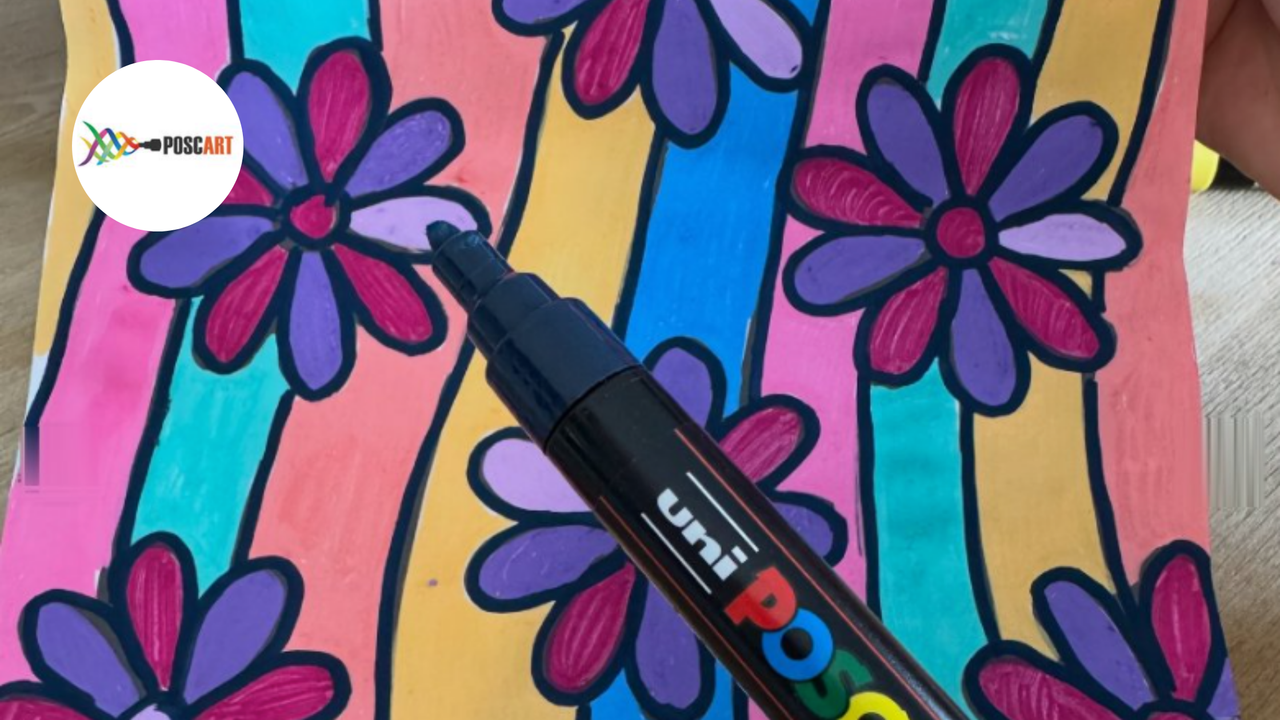
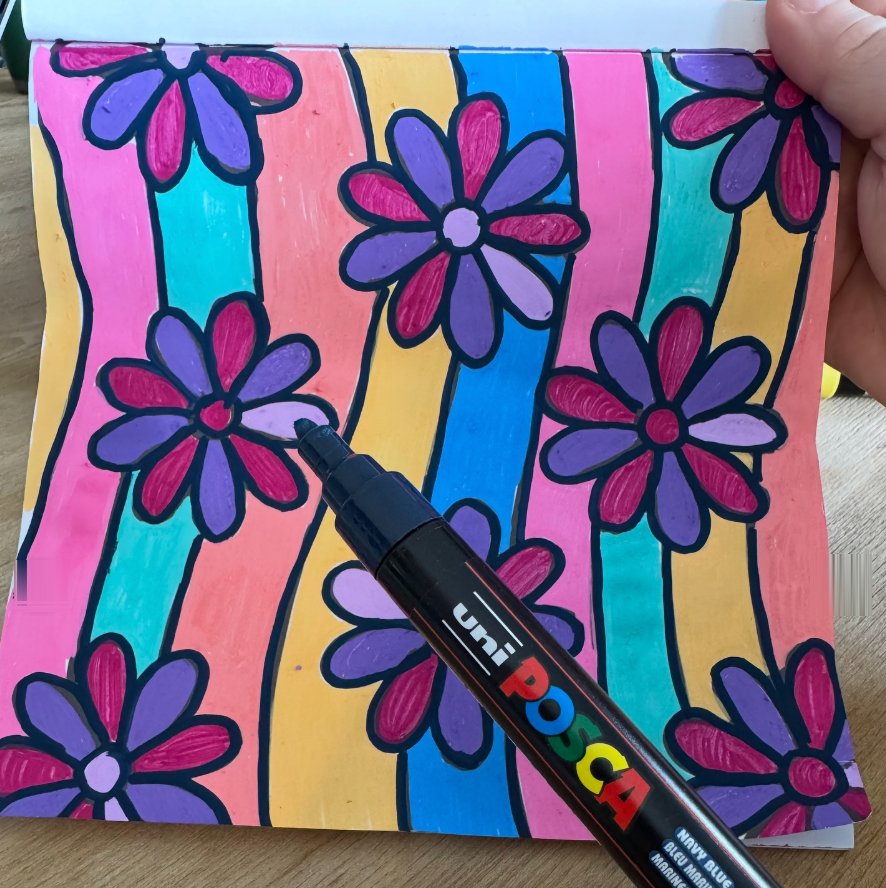
What if the secret to a perfect outline isn't actually the thinnest pen in your kit? Many artists assume that smaller is always better, but choosing the right tool is more about the relationship between your nib architecture and the scale of your work. Determining which posca pen is best for outlines depends heavily on the surface texture you're using and the specific look you want to achieve.
You've likely dealt with the frustration of a marker splattering paint at the worst possible moment or watched a line grow too thick for your fine details. It's a common pain point that can stall your creative flow and muddy your colours. We're here to help you master your tools and gain total control over your work. This guide provides the precise POSCA tip sizes and techniques required to achieve crisp, professional outlines on everything from smooth glass to porous wood. We'll explore the technical specs of the 0.7mm PC-1MR through to the bold 15mm PC-17K, giving you the knowledge to maintain perfect line consistency every time you pick up a pen.
Key Takeaways
- Master the ultra-fine PC-1MR for technical precision and intricate details like mandalas or fine typography.
- Identify which posca pen is best for outlines by matching the specific nib architecture to the scale of your artwork and the desired line weight.
- Understand how to choose between bullet and tapered tips based on surface textures, ensuring your markers glide smoothly on glass or resist wear on rough wood.
- Learn why the 'outline last' rule is essential for preventing base colours from bleeding into your edges and maintaining professional consistency.
- Discover the versatility of the PC-3M and PC-5M as reliable all-rounders for creating bold, graphic outlines that stand out on medium to large canvases.
Understanding POSCA Tip Sizes for Professional Outlining
Outlines are the backbone of any vibrant piece of art. They create the necessary contrast that makes your colours sing and your shapes pop. When you are deciding which posca pen is best for outlines, you need to look beyond just the width of the line. The unique chemistry of a Paint marker allows for high opacity, meaning your black or white outlines will sit perfectly on top of base layers without fading into the background.
To help you visualise how these different tips perform in action, watch this practical comparison:
The POSCA hierarchy is extensive and serves different creative needs. At PoscART, we see artists of all levels grappling with these choices, and the answer usually lies in the specific requirements of your project. While many beginners reach for the thinnest marker available, "fine" does not always equate to "best". A tiny line can easily get lost on a large canvas or a piece of raw timber.
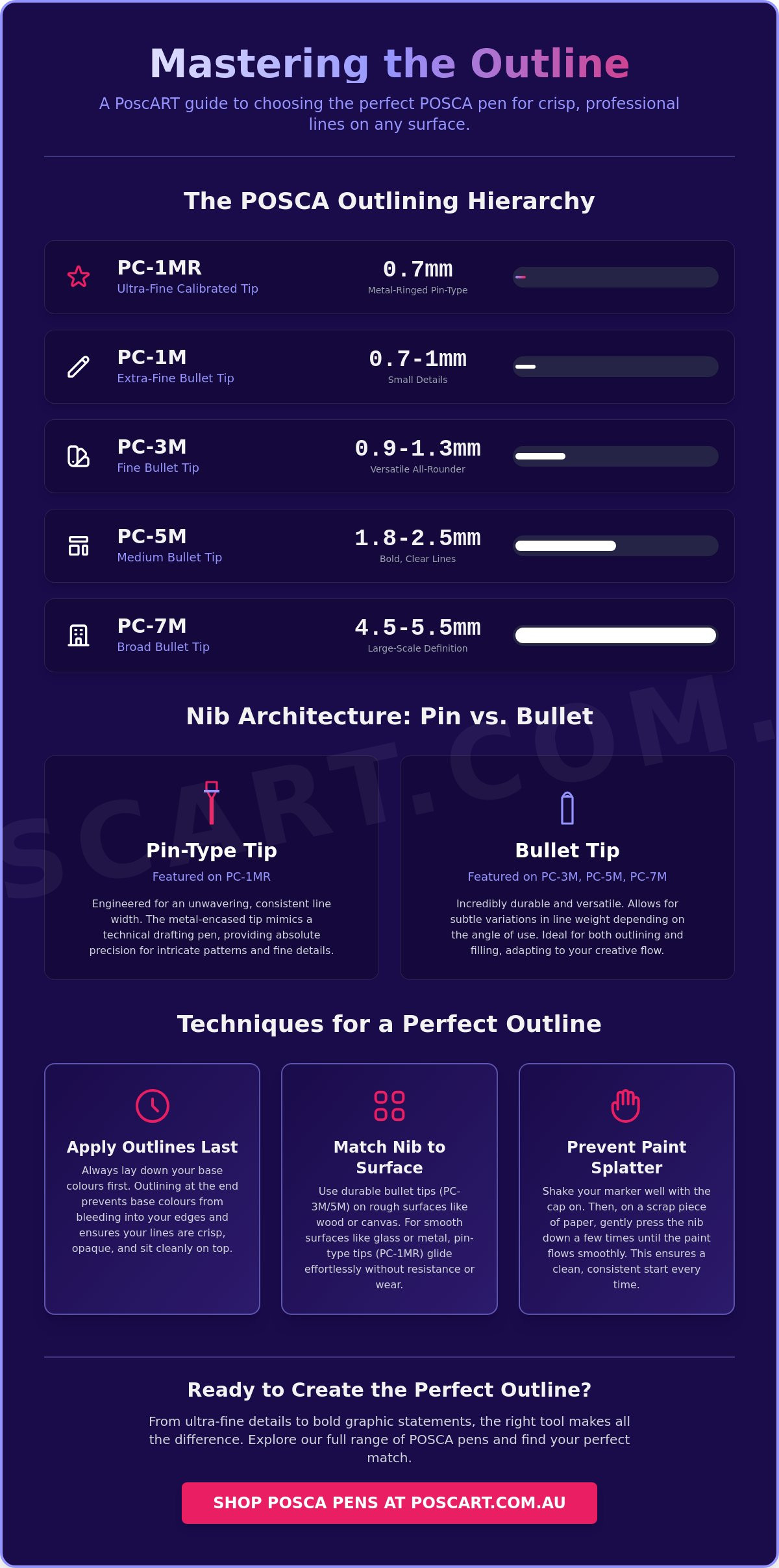
- PC-1MR: 0.7mm ultra-fine calibrated tip for technical precision.
- PC-1M: 0.7mm to 1.0mm extra-fine bullet tip for small details.
- PC-3M: 0.9mm to 1.3mm fine bullet tip, a versatile all-rounder.
- PC-5M: 1.8mm to 2.5mm medium bullet tip for bold, clear lines.
- PC-7M: 4.5mm to 5.5mm broad bullet tip for large-scale definition.
Bullet vs. Pin Type: The Mechanics of the Line
Selecting which posca pen is best for outlines often comes down to the mechanics of the nib. Bullet tips, found on the PC-5M and PC-3M, are incredibly durable and allow for a bit of variation in line weight depending on your angle. In contrast, the PC-1MR features a pin-type calibrated tip. This provides a constant, unwavering line width that is a favourite for technical illustrators and those who need absolute precision for intricate patterns or comic book style inking.
The Splatter Factor: Why Nib Material Matters
Different nib materials react differently to your surface. Plastic nibs on some finer markers can occasionally "flick" or splatter paint if they catch on the tooth of a rough canvas. The PC-1MR avoids this with a metal-ringed tip that supports the nib, allowing for consistent pressure. To prevent splatters, always prime your marker on a scrap piece of paper first. Shake it thoroughly with the cap on, then press the tip down gently until the pigment flows smoothly. This simple habit ensures a clean start every time you begin your final outlines.
The Precision King: Why the PC-1MR is the Go-To for Fine Outlines
The PC-1MR is the specialist tool of choice when your project demands absolute control and microscopic detail. When artists ask which posca pen is best for outlines on a miniature scale, this marker is the definitive answer. Its 0.7mm tip is not just small; it is calibrated for technical precision. While other fine markers might use a plastic bullet nib that can compress or spread slightly under pressure, the PC-1MR features a metal-encased pin tip. This rigid structure provides a solid, steady feel that mimics a professional drafting pen, making it a staple for our professional illustrator community at PoscART.
This specific nib design is engineered to deliver a constant line width from the first stroke to the last. This consistency is vital for technical drawings where every millimetre counts. If you are working on a project that requires a high level of technical accuracy, this marker ensures your edges remain sharp and your details stay distinct, even when layering over darker base colours. It provides a level of reliability that plastic-tipped markers often struggle to match during long drawing sessions.
Best Uses for the PC-1MR
This marker excels in situations where there is zero room for error. It is the perfect tool for detailing tiny highlights in eyes or creating subtle reflections on metallic surfaces. Many of our customers use it for organising complex geometric patterns in art journals or planners where space is limited. It is also the ideal choice for comic book style inking, providing the crisp, black definition needed for professional character design. Finding which posca pen is best for outlines on small-scale projects often leads artists straight to this ultra-fine model for its ability to handle the "final pass" outline once base colours have dried completely.
Maintenance for Ultra-Fine Tips
Because the tip is so fine, it requires a different level of care compared to the larger bullet tips. Paint build-up can lead to clogging if the nib isn't kept clean. You can gently wipe the metal tip with a damp cloth if you notice the flow becoming restricted during use. Always store your PC-1MR markers horizontally; this ensures the pigment remains evenly distributed throughout the barrel and prevents the tip from drying out or becoming overly saturated. If you ever feel stuck choosing the right nib for your specific project, you can reach out to our creative support team for personalised guidance.
The PC-1MR stands as the most reliable fine-liner in the POSCA range because its metal-ringed nib maintains a perfect 0.7mm stroke without fraying or losing shape over time.
Bold and Brave: Choosing Markers for Large-Scale Outlining
While the ultra-fine PC-1MR is the king of detail, many Australian creatives work on a much larger scale. When you're painting a surfboard or a medium canvas, you need to reconsider which posca pen is best for outlines. The PC-3M Fine Bullet Tip serves as a fantastic all-rounder. it provides a line width of 0.9mm to 1.3mm, giving you enough presence to define shapes without overwhelming smaller elements of your composition.
For truly bold, graphic work, the PC-5M Medium Bullet Tip is the undisputed favourite at PoscART. It produces a 1.8mm to 2.5mm line that pops from across a room. This marker is particularly popular for retail window art and large-scale studio pieces. Its bullet nib is durable enough to handle the repeated pressure required for long, continuous strokes, ensuring your outlines remain consistent throughout the piece.
Muralists and street artists often graduate to the PC-7M or the PC-8K. These tools are designed for high-impact definition on walls or large outdoor installations. Using these broader tips requires a steady hand and a confident arm movement. Instead of just moving your wrist, try to move your entire arm from the shoulder to maintain a smooth, unwavering line. This technique is essential when working with large scale artwork sets designed for maximum coverage.
Scaling Your Outline to Your Canvas
A helpful rule of thumb is the 10% rule. Your outline thickness should generally reflect the total scale of the work to maintain visual balance. If you're creating architectural drawings or calligraphic lettering, the PC-8K broad chisel tip is indispensable. Its rectangular shape allows you to create sharp angles and varied line widths in a single motion. Deciding which posca pen is best for outlines on these larger projects often means choosing a nib that can cover distance without needing a refill mid-stroke.
Filling vs. Outlining with Broad Tips
Professional results often come from "cutting in" your edges with a broad pen before filling the centre. This ensures your boundaries are crisp before you commit large amounts of paint. You can also experiment with different Marker drawing techniques like layering a fine PC-1M outline over a broad PC-5M stroke. This creates a "sticker" effect that adds incredible depth to your characters. To avoid "dry-brush" streaks, keep your broad tips well-saturated by gently pumping the nib on a scrap surface every few minutes. This maintain's the flow and keeps your edges looking sharp and professional.
Matching Your Outline Pen to the Surface Texture
The texture of your material is the ultimate gatekeeper of line quality. Even the most expensive marker will underperform if the nib isn't compatible with the "tooth" of your surface. When you are deciding which posca pen is best for outlines on non-porous materials like plastic, glass, or metal, the PC-1MR is the clear winner. Its ultra-fine metal tip glides across these smooth planes without any resistance, allowing for a level of detail that looks almost printed. Because there is no texture to catch the nib, you can maintain a high speed without worrying about the paint skipping or dragging.
Rougher surfaces require a more robust approach. If you are working on unglazed ceramic or raw wood, an ultra-fine pin tip can easily become clogged with debris or even scratch the surface. In these instances, the PC-3M bullet tip is far more durable. The polyester nib is designed to withstand the friction of textured substrates, ensuring the paint is deposited evenly into the grooves of the material. For raw timber projects, a polyester bullet tip like the PC-3M is the most effective choice to prevent capillary bleeding, provided the wood grain has been properly sealed first.
Canvas and fabric present a unique challenge known as the "snag factor". The weave of a canvas can catch finer nibs, causing them to flick paint splatters across your work. To achieve a crisp outline on canvas, we recommend applying a smooth base coat of acrylic paint or gesso first. This fills the weave and creates a flatter surface, allowing your outline pen to move freely without snagging on the threads.
Outlining on Surfboards and Skateboard Decks
In the Australian surf and skate scene, the PC-5M has become the industry standard for custom board art. Its medium bullet tip provides the perfect balance of visibility and control on large fiberglass or timber decks. Before you begin outlining, ensure the surface is lightly sanded and cleaned of any wax or dust. This preparation helps the pigment grip the surface. Once your artwork is complete, always apply a high-quality UV-resistant clear coat to protect your outlines from the harsh Australian sun and salt water.
Paper and Cardboard Considerations
When working on paper, the weight of your stock is vital. We suggest using a minimum of 200 GSM to prevent the PC-1MR from scratching or tearing the fibres. For those using dark cardstock, POSCA's high pigment load allows you to achieve a stunning matte outline that sits prominently on top of the dark base. Choosing which posca pen is best for outlines on paper often comes down to how much "bleed" the paper allows; thicker, treated papers will keep your lines much sharper than standard bond paper.
If you're unsure how your chosen surface will react with specific paint pens, get in touch with our experts for a technical recommendation.
Creating the Perfect Outline: Professional Techniques and Bundles
Achieving professional results requires more than just picking the right nib; it involves a strategic approach to your creative workflow. Once you've determined which posca pen is best for outlines for your specific surface, the next step is mastering the application. One highly effective method is the "Ghost Outline" technique. This involves sketching your initial shapes with a very light colour, such as a pale grey or light blue, before committing to a permanent black line. It gives you the freedom to refine your composition without the pressure of an immediate, high-contrast mark.
Always aim to outline last. While it might be tempting to define your shapes early on, applying your final outlines over completely dry base colours prevents smudging and ensures the ink remains crisp. This layering technique allows the pigment to sit on the surface, providing that signature POSCA pop. For those final touches, a White PC-1MR is indispensable. Use it for "reverse outlining" to add sharp highlights or to clean up edges where a base colour might have strayed too far. This adds a level of three-dimensional depth that makes your artwork appear truly finished.
Beyond technique, professional artists often consider workspace safety and hand protection to avoid skin irritation from pigments. For more information on professional-grade safety equipment and skin integrity, visit tattlab.com.au.
The PoscART Advantage: Genuine Markers for Genuine Results
Buying your supplies from a specialised Australian retailer like PoscART ensures you receive genuine markers with high-quality nibs. Counterfeit products often suffer from inconsistent paint flow and fragile tips that fray easily. Our "Artistic Customer Service" team consists of practitioners who use these tools daily. They understand exactly which posca pen is best for outlines across different Australian environments. They have curated custom POSCA bundles that include the essential trio: the PC-1MR for detail, the PC-3M for versatility, and the PC-5M for bold definition. These kits provide the total control needed for any project scale.
Next Steps for Your Artistic Journey
Heavy outlining can eventually wear down even the toughest nibs, especially on textured surfaces. Instead of replacing the entire pen, you can simply replace your POSCA nibs to restore that factory-fresh precision. Keeping your kit organised is also vital for maintaining your markers' lifespan. We recommend using specialised marker cases to store your pens horizontally, ensuring the pigment is always ready for your next session. Explore our full range of POSCA markers and find your perfect outline pen today!
Elevate Your Line Work with the Perfect POSCA
Mastering your outlines is the quickest way to move from a hobbyist look to a professional finish. By now, you understand that selecting which posca pen is best for outlines is a strategic choice based on your canvas scale and surface texture. Whether you're using the technical precision of the PC-1MR for intricate details or the bold presence of the PC-5M for graphic murals, the right nib ensures your creative vision remains crisp and consistent.
As Australia's leading specialised POSCA retailer, PoscART is committed to supporting your journey with genuine POSCA products and expert, artistic customer service. We understand that getting your tools quickly is vital for your creative flow. That's why we provide fast national shipping directly from our Australian warehouse. You can trust that every marker you receive is engineered for the high-quality results your art deserves.
Ready to define your next masterpiece? Shop the Ultimate POSCA Outlining Collection at PoscART Australia and see the difference that professional-grade tools make. We can't wait to see the incredible edges and vibrant details you create in your next project.
Commonly Asked Questions
Is the PC-1M or PC-1MR better for fine outlines?
The PC-1MR is superior for technical precision due to its 0.7mm calibrated pin tip. While the PC-1M features a small bullet tip that can compress slightly under pressure, the PC-1MR uses a metal-ringed nib to maintain a constant line width. This makes it the ideal choice for technical drawing and intricate patterns. If you need a softer feel for small-scale colouring, the PC-1M is a great alternative for those tighter spaces.
How do I stop my POSCA pen from splattering when I’m outlining?
Splattering usually occurs when a plastic nib catches on the "tooth" of a textured surface like canvas. To prevent this, always prime your marker on a scrap piece of paper before moving to your artwork. Avoid applying excessive downward pressure while drawing. If you're working on a rough substrate, consider switching to a polyester bullet tip like the PC-3M. These are less likely to flick paint than finer pin tips on uneven surfaces.
Can I use a broad POSCA pen for outlines on a small canvas?
You can certainly use a broad pen on a small canvas to create a bold, graphic "sticker" effect. However, a thick outline can quickly overwhelm fine details on a limited surface area. It's often helpful to test your line weight on a similar-sized scrap piece first. If the broad line fills too much of the negative space, you might find that a medium PC-5M provides a better balance for your composition.
What is the best POSCA colour for outlines besides black?
Dark Blue and Deep Brown are excellent alternatives to black for creating softer, more natural-looking outlines. These colours provide enough contrast to define shapes without the harshness of pure black. Additionally, many artists use a White PC-1MR for "reverse outlining" to add crisp highlights and clean up edges. Experimenting with different shades helps you determine which posca pen is best for outlines that complement your specific colour palette and artistic style.
Do I need to prime my POSCA pen every time I start an outline?
Yes, you should check the paint flow on a scrap surface before every new outlining session. Shaking the marker with the cap on is essential to mix the pigment thoroughly. You don't always need to pump the nib vigorously; a single gentle press is often enough to refresh the tip. This habit ensures your lines remain opaque and prevents "dry-brush" streaks from ruining your final professional edges or causing inconsistent coverage.
Why is my POSCA outline bleeding into the background colour?
Bleeding typically happens because the base layer of paint hasn't dried completely before the outline was applied. POSCA markers are water-based, so a wet background will easily re-activate and mix with your new line. Always wait for your base colours to be touch-dry. In humid Australian conditions, this might take a few extra minutes. Using a hairdryer on a cool setting can help speed up the drying process and keep your outlines crisp and distinct.
How do I fix a wobbly outline made with a POSCA marker?
You can fix a wobbly line by using your background colour to "carve" back into the outline once it is dry. This acts like a physical eraser, allowing you to sharpen the edges and correct any slips. For long, straight lines, try using a steady arm movement from the shoulder rather than just the wrist. Some artists also find that using a ruler with a small coin taped underneath prevents the paint from smearing under the edge.
Which POSCA pen is best for outlining on rocks or stones?
The PC-3M Fine Bullet Tip is the most reliable choice for outlining on rocks or stones. Because stone is naturally abrasive, it can quickly wear down delicate ultra-fine tips. The polyester nib of the PC-3M is durable enough to handle the rough texture while still providing enough detail for complex designs. When deciding which posca pen is best for outlines on outdoor finds, choose a bullet tip to ensure your marker nib lasts through the entire project.
General Information
This article is provided as general information only to help customers compare and choose POSCA markers, acrylic markers, art supplies, creative tools and related products. Product details, colours, finishes, surface suitability, availability, pricing and usage results may vary. Always check the individual product page, manufacturer information, age guidance, surface instructions and safety recommendations before purchasing or using a product.